LOR Format for MBA Abroad, The Complete Guide for Indian Students and Their Recommenders
Aastha Sharma
Recently • 8 min read
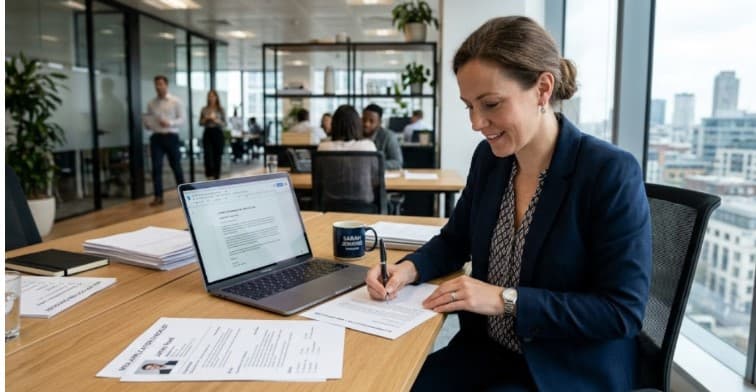
Of all the moving parts in an MBA application, the GMAT score, the essays, the resume, the interview, the Letter of Recommendation is the one that applicants have the least direct control over. Someone else is writing it. Someone else is submitting it. And yet it carries significant weight in how admissions committees evaluate your profile.
That combination, high stakes, low direct control, makes LORs the part of the MBA application that Indian applicants consistently handle worst. Either they pick the wrong recommenders, or they brief them poorly, or they leave the whole thing entirely up to someone who writes a well-meaning but completely ineffective letter.
This guide fixes that.
Planning to Study Abroad?
Get personalized guidance from experienced education counselors.
Students preparing MBA applications abroad typically work through the overall Study Abroad process, where LORs are one of the most important evaluation components.
First, What Is an MBA LOR Actually Trying to Do?
Before we get into format, let's understand purpose. Because most of the mistakes in MBA letters of recommendation come from not understanding what the document is for.
An MBA admissions committee already has your GMAT score, your transcripts, your essays, and your resume. If you're still clarifying how different application documents work together, it helps to understand the difference between an SOP vs Personal Statement, since each plays a different role in the admissions process. They know your academic history and your stated career goals. What they don't have, and what the LOR is specifically designed to give them, is a third-party, credible, professional perspective on who you actually are to work with.
Are you someone who steps up when things get hard? Do you bring others along with you when you succeed, or do you operate alone? How do you handle failure and feedback? Do people want to work with you? Would your boss go to bat for you?
These are the questions a strong letter of recommendation for MBA programs answers, and they're questions your essays and resume structurally cannot answer because you're the one writing them.
Who Should You Ask, The Recommender Selection Question

The Most Common Wrong Choice
The most common mistake Indian MBA applicants make in LOR selection is choosing recommenders based on seniority or title rather than relationship quality. A letter from a CEO who has met you twice is worth significantly less than a letter from a mid-level manager who has worked closely with you for two years.
MBA admissions committees, particularly at top programs in the US, UK, Canada, and Australia, are experienced readers of recommendation letters. They can tell the difference between a letter written by someone who actually knows you and a letter written by someone impressive who is doing you a favour by association.
What Actually Makes a Good Recommender
The best recommenders for an MBA LOR are people who have directly supervised your work, observed you under pressure, seen you lead or contribute to something meaningful, and can speak specifically to your professional character and potential.
Ideal recommenders include your direct manager, a senior colleague who has led projects with you, or a client-facing supervisor who has seen how you operate in high-stakes situations. For applicants with limited work experience, a professor who supervised significant research or a project mentor can work, but professional recommenders are strongly preferred for MBA applications.
The LOR Format for MBA, What the Letter Should Actually Cover
Standard Structure That Works
Unlike a formal letter of recommendation template for legal or employment purposes, MBA recommendation letters don't have a rigid required format, but the strongest ones tend to follow a clear structure:
Opening that establishes the relationship, how long the recommender has known you, in what capacity, and the nature of your working relationship. This immediately tells the admissions reader how much weight to give the rest of the letter.
Specific professional examples, this is the heart of the letter. Two or three concrete stories or examples that demonstrate your professional qualities. Not "she is an excellent communicator", but a specific instance where your communication made a measurable difference. Not "he shows strong leadership", but the specific project where your leadership turned around a difficult situation.
Assessment of your potential, the recommender's honest view of where you are headed professionally and why an MBA makes sense for your trajectory at this point in your career.
Closing endorsement, a direct, unambiguous statement about whether the recommender would recommend you for this program and why.
The Length and Tone That Works
Most MBA programs abroad specify a word count or character limit for recommendation letters, typically 400 to 1,000 words. If no limit is given, 500 to 800 words is the practical sweet spot. Longer isn't better. A tight, specific, well-evidenced 500-word letter outperforms a rambling 1,200-word one every time.
The tone should be professional but personal, this is someone who knows you speaking directly to an admissions committee, not a formal HR document. The best letters have a distinct voice that sounds like the person writing them.
How to Brief Your Recommender, The Step Most Applicants Skip

Here's the honest truth: most recommenders, even the best-intentioned ones, don't know what a strong MBA LOR looks like. They've written reference letters for jobs or academic promotions, but an MBA letter of recommendation for higher studies to a top international program is a different document with different expectations.
Your job is to make it as easy as possible for them to write something genuinely strong, without crossing the line into writing it for them.
Students often use structured LOR Preparation guidance to prepare their recommenders properly.
What to Provide Them
When you approach a recommender, give them a clear briefing package that includes your updated resume, your MBA application essays (or at least drafts), a summary of the two or three experiences you worked on together that you'd most like highlighted, the specific qualities or dimensions the MBA program is looking for, most programs publish these, and the submission deadline with some buffer time built in.
The Conversation Worth Having
Have an actual conversation with your recommender before they start writing. Walk them through your career goals, why you're pursuing an MBA at this point, and what you're hoping they can speak to. Ask them directly if they feel they can write you a strong, specific letter, not just a supportive one. If they hesitate, or if they say they're very busy, take that as a signal to consider another recommender. A reluctant or rushed letter is worse than a genuinely enthusiastic one from someone slightly more junior.
Letter of Recommendation Format for MBA, Country-Specific Nuances
US MBA Programs
Most top US MBA programs use an online recommendation platform where recommenders answer specific questions rather than uploading a freeform letter. The questions typically ask for specific examples of leadership, handling failure, interpersonal skills, and the recommender's overall assessment. Brief your recommender on these questions specifically so they can prepare stories in advance rather than writing under pressure at submission time.
UK MBA Programs
UK programs tend to be slightly more flexible in format, often a combination of structured questions and a freeform letter section. The emphasis is similar: specific professional examples, honest assessment of potential, and a clear relationship between recommender and applicant.
Canada and Australia**
Canadian and Australian MBA programs largely follow similar conventions to the US, with online submission portals and structured question formats. Some programs accept freeform letters, in which case the structure outlined above applies directly. For students also navigating student visa applications alongside their MBA applications, note that the LOR for the university and any supporting documents for the visa application are entirely separate, don't conflate them.
Students managing university admission and immigration documentation simultaneously should ensure their application materials align with official Visa Support requirements.
What Makes a Letter of Recommendation Weak, And How to Prevent It
Generic Praise Without Specifics
"Rahul is one of the best employees I have worked with and I strongly recommend him for your MBA program" is a weak letter. It tells the admissions committee nothing they can evaluate. Generic praise without specific evidence reads as either a favour or a form letter, neither of which helps.
Repeating What's Already in the Application
If your LOR is just confirming facts that are already in your resume — the projects you worked on, your job title, your responsibilities — it's adding no value. The LOR should provide insights that complement other application documents such as your essays and SOP for university applications, which explain your academic goals in detail.
Obvious Applicant Involvement in Writing
Some applicants, particularly those who use SOP writing services in India that also offer LOR drafting, make the mistake of writing their own recommendation letter and simply asking the recommender to sign off on it. Admissions committees are experienced readers. When a recommendation letter has the same vocabulary, the same sentence structure, and the same rhetorical approach as the applicant's own essays, they notice. This is a serious integrity issue that can get an application disqualified.
Brief your recommenders thoroughly. Provide them with all the context they need. But let them write the letter in their own words.
A Note on the Letter Requesting a Letter of Recommendation
One thing that gets overlooked: how you ask matters. A formal, well-crafted request that explains your goals, why you're asking this specific person, and what you'll provide to make the process easy for them signals professionalism and respect for their time.
An off-hand "can you write me an LOR" over WhatsApp does not.
Take the request seriously. Give your recommender at least six to eight weeks, ideally more. The people worth having write your letter are usually busy people. Respect that, and they'll give you the time and effort your application deserves.
FAQs, LOR Format for MBA Abroad
How many letters of recommendation are required for an MBA abroad?
Most MBA programs require two letters of recommendation, though some ask for three. Almost all programs specify that at least one should be from a direct professional supervisor. Check each program's specific requirements, they vary.
Can a professor write an LOR for an MBA application?
Generally, professional recommenders are strongly preferred for MBA applications. A professor can work if you're applying directly from undergraduate or have limited work experience, but most top MBA programs explicitly prefer or require professional references. If you must use an academic recommender, choose one who supervised significant project work or research rather than just a lecturer who gave you a grade.
What is the ideal length for an MBA letter of recommendation?
500 to 800 words is the sweet spot for freeform letters. Many programs use structured online formats with individual question word limits. In all cases, specific and concise outperforms long and general.
Should I write a draft of my own LOR for my recommender to edit?
Providing a draft crosses an ethical line that many MBA programs explicitly flag. Providing context, examples, and talking points is entirely appropriate. Writing the letter yourself and asking your recommender to sign it is not, and admissions committees are skilled at identifying when this has happened.
How do I follow up with a recommender who hasn't submitted on time?
Give a gentle reminder one to two weeks before the deadline, framed as a helpful heads-up rather than pressure. If your recommender is consistently unresponsive, have a backup recommender identified and ready, better to ask someone new than to miss a deadline.
Start Your Study Abroad Journey
Join thousands of students who achieved their dreams with Yastudy.