Insights & Updates

Admissions, test prep, scholarships & latest news — curated for you.

3-Year Indian Degree for Masters in Germany? 2026–27 Guide

3-Year Indian Degree for Masters in Germany? 2026–27 Guide

30 Oct 2026

A 3-year Indian bachelor’s (B.Sc., B.Com., BA, BBA, BCA) is accepted for many German master’s programmes, but not all. Germany counts credits, not years. A regular 3-year degree usually equals 180 ECTS, and most 4-semester (120 ECTS) master’s accept it. Many 3-semester and 1-year programmes ask for 210-240 ECTS, so choose 4-semester programmes first. Your degree works if your Indian university is H+ on anabin, the programme accepts 180 ECTS, your subjects match, and your grade converts to about 2.5 or better. If a programme wants more credits, pick the 4-semester version, choose one with a make-up route, or add credits through an Indian master’s. Confirm in writing first. Every Indian applicant needs an APS certificate (₹18,000). Commerce, business, economics and engineering graduates also need the dMAT from the summer 2027 intake. Use IELTS or TOEFL iBT at a test centre, and keep about ₹13.8 lakh ready before the visa, mainly for the €11,904 blocked account. Aim for winter 2027/28 if you still need the dMAT. Read each programme’s admission rules and email the university if the credit rule is unclear. For help, see Yastudy’s Master’s in Germany guide.

By Divyanshi Singh
Read →
TestAS Exam 2026–27: Do Indian Students Need It? | Yastudy

TestAS Exam 2026–27: Do Indian Students Need It? | Yastudy

28 Oct 2026

TestAS (Test for Academic Studies) is a standardised aptitude test for international applicants to German bachelor’s programmes. It is run by g.a.s.t. and checks reasoning, patterns and problem-solving, not language or school syllabus. For Indian students it is not an automatic requirement. You need it only if your university or programme asks for it. The University of Cologne requires it, and RWTH Aachen lets it make up for a lower converted grade. Always check the programme page, and confirm the APS position on the live checklist. The test has a Core part and one Subject Module, taken together, in English or German. It is mostly multiple choice. The paper version takes about 4.5 hours and the digital version about 3.5. Results come in about four weeks (paper) or three weeks (digital). There is no pass mark, so each university decides how to use your score. For Winter 2027/28, check your shortlist between October and December 2026, then sit the test between January and March 2027. Prepare for 4 to 8 weeks with the official sample questions, timed practice and mock tests.

By Divyanshi Singh
Read →

uni-assist for Indian Students: Fees, VPD and Process 2026

uni-assist for Indian Students: Fees, VPD and Process 2026

23 Oct 2026

uni-assist is a German application service that evaluates academic documents submitted by international students, including Indian students. In 2026, the fee is €75 for the first application and €30 for each additional application in the same semester. Some universities require a VPD (Preliminary Review Documentation), which assesses your academic qualifications before you apply directly to the university. The process involves selecting a university, creating a My assist account, uploading the required documents, paying the fee and tracking your application. Indian students may also need an APS certificate. Processing generally takes around 4–6 weeks, so it is important to apply early and check each university’s specific requirements and deadlines.

By Divyanshi Singh
Read →

Blocked Account Germany 2026: €11,904 (₹12.98 Lakh) Guide

Blocked Account Germany 2026: €11,904 (₹12.98 Lakh) Guide

14 Oct 2026

For a German student visa in 2026, most Indian students must show €11,904 (about ₹12.98 lakh) for the first year, usually through a blocked account opened before the visa application. After arrival, the account releases €992 (about ₹1.08 lakh) each month. This guide explains who needs one, how to open it from India, what it really costs, and how the April 2026 TCS cut affects the transfer. It also covers alternatives, activation, refunds, common mistakes and fraud warnings.

By Divyanshi Singh
Read →
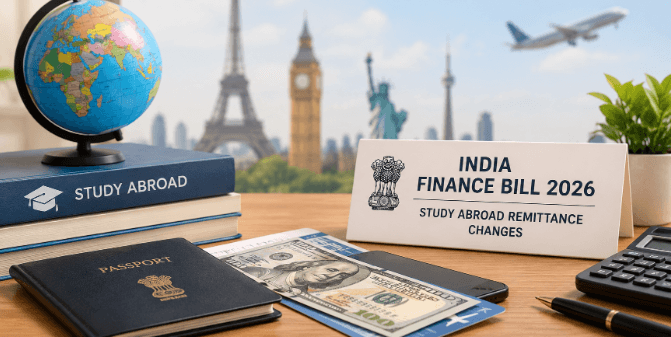
Studienkolleg in Germany for Indian Students 2026

Studienkolleg in Germany for Indian Students 2026

12 Oct 2026

Most Indian students cannot join a German bachelor’s programme straight after Class 12. They first complete the Studienkolleg, a one-year foundation course that ends with the Feststellungsprüfung exam. From Winter Semester 2026/27, APS India requires at least 70% in Class 12 for this route. This guide explains the course tracks (T, M, W, G, S), the German level needed, the application steps and deadlines, costs, the student visa and work rules. It also covers what happens after you pass, common mistakes, and options for students who scored below 70%.

By Divyanshi Singh
Read →

Study Bachelor’s in Germany for Indian Students: The Complete 2026 Guide

Study Bachelor’s in Germany for Indian Students: The Complete 2026 Guide

9 Oct 2026

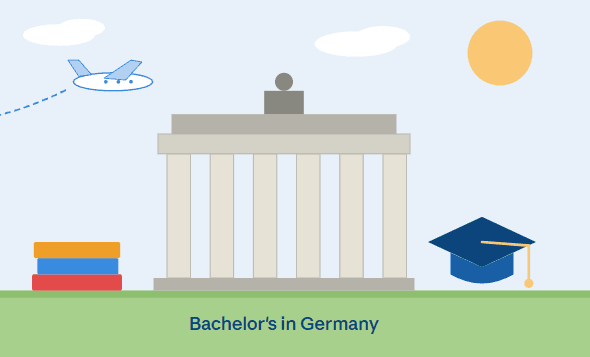
Germany offers Indian students a low-cost route to a bachelor’s degree, since most public universities charge no tuition fee. But the path needs early planning. Class 12 alone is usually not enough for direct admission, so many students go through a Studienkolleg or complete some university study in India first. Most courses are taught in German, so language preparation matters as much as grades. This guide covers the application timeline, blocked account and living costs, the student visa process, health insurance, housing, part-time work limits and scholarships. It also explains life after graduation, including the 18-month job-seeker permit, the EU Blue Card and the route to PR, plus common mistakes to avoid.

By Divyanshi Singh
Read →

 Eligibility After 12th for Bachelor's in Germany

Eligibility After 12th for Bachelor's in Germany

8 Oct 2026

Germany has introduced a 70% minimum rule for Indian Class 12 students applying for bachelor’s pathways from Winter 2026/27. Students scoring 70% or more may pursue Studienkolleg followed by the Feststellungsprüfung, or potentially direct subject-restricted admission after one year of university study in India. JEE Advanced may provide an alternative pathway for eligible students. Language requirements depend on the university and programme. Important documents include Class 12 certificates, passport and APS-related documents. Students below 70% generally cannot use the standard routes and should explore other recognised pathways or qualifications.

By Divyanshi Singh
Read →

Plagiarism, AI Tools & Academic Misconduct Abroad What Every Indian Student Must Know in 2026

Plagiarism, AI Tools & Academic Misconduct Abroad What Every Indian Student Must Know in 2026

7 Oct 2026

Plagiarism, AI Tools & Academic Misconduct Abroad: What Every Indian Student Must Know in 2026 explains the academic rules international students should understand before studying abroad. Universities in countries such as the UK, USA, Canada, Australia, Germany, and New Zealand have strict policies against plagiarism, unauthorized AI use, cheating, contract cheating, and submitting someone else’s work. This guide explains what academic misconduct means, how universities may detect it, and the possible consequences, including warnings, failed assignments, suspension, expulsion, or visa-related concerns. Indian students can also learn how to use AI tools responsibly, cite sources correctly, and maintain academic integrity throughout their studies.

By Divyanshi Singh
Read →
Top 10 US MBA Programs for Indian Students

Top 10 US MBA Programs for Indian Students

3 Oct 2026

This guide compares the ten top US business schools for Indian students: Stanford GSB, Wharton, Chicago Booth, Harvard Business School, Kellogg, MIT Sloan, Columbia, NYU Stern, Dartmouth Tuck and UC Berkeley Haas. For each school it covers the MBA programs on offer, the curriculum, hands-on learning (such as HBS FIELD, MIT Action Labs and Booth's New Venture Challenge) and student life. Nine of the ten are private, and only Haas is public. It also explains the GMAT/GRE, work experience, 3-year degree rules, tuition of roughly $230-280k over two years, funding, and post-MBA work visas. It ends with ten FAQs.

By Divyanshi Singh
Read →

Indian Families Spent ₹31,000 Crore on Overseas Education in 2026 – Is It Worth It?

Indian Families Spent ₹31,000 Crore on Overseas Education in 2026 – Is It Worth It?

18 Sept 2026

Indian families continue to invest heavily in overseas education, with ₹31,000 crore reportedly spent in 2026. But with rising tuition fees, living costs, and currency fluctuations, students and parents need to carefully evaluate whether studying abroad offers a strong return on investment. Comparing total costs, career opportunities, expected salaries, scholarships, and post-study work options can help families make a financially informed decision.

By Miss Mishii
Read →
Is Studying Abroad Still Worth It in 2026? Honest ROI Calculator for Indian Students

Is Studying Abroad Still Worth It in 2026? Honest ROI Calculator for Indian Students

17 Sept 2026

Studying abroad in 2026 can still be a worthwhile investment for Indian students, but the return depends on factors such as tuition fees, living costs, scholarships, career opportunities, expected salary, and the country or university chosen. An honest ROI calculation should compare the total cost of education with potential post-study earnings and career growth. Students should look beyond rankings and consider employability, visa policies, and the time needed to recover their investment.

By Mishi
Read →
Germany Arrival Checklist for International Students: What to Do After Landing

Germany Arrival Checklist for International Students: What to Do After Landing

16 Sept 2026

After arriving in Germany, international students should first complete city registration (Anmeldung), arrange accommodation, open a German bank account, and obtain health insurance if not already arranged. They should also complete their university enrollment, collect their student ID, and apply for or finalize their residence permit if required. Setting up a local SIM card, understanding public transport, and registering for university orientation can also make the transition easier.

By Vanshika
Read →
Cost of Living in Germany: How much does it cost to live in Germany

Cost of Living in Germany: How much does it cost to live in Germany

15 Sept 2026

The cost of living in Germany is moderate to high, with housing being the largest expense. On average, a student may need around €900–€1,400 per month, while a single working professional may spend around €1,500–€2,500 or more, depending on their lifestyle and city. Rent, food, transportation, health insurance, and utilities are the main expenses. Cities such as Munich, Frankfurt, Hamburg, and Berlin are generally more expensive, while smaller cities like Leipzig and Dresden can be more affordable. Overall, Germany provides a good quality of life, but careful budgeting is important.

By Vanshika
Read →
Study Sustainability & Green Tech Abroad: The Fastest-Growing Field in 2026

Study Sustainability & Green Tech Abroad: The Fastest-Growing Field in 2026

12 Sept 2026

Sustainability and Green Technology are among the fastest-growing career fields in 2026, driven by global demand for renewable energy, climate solutions, and environmental innovation. As countries invest in clean energy and sustainable development, skilled professionals are increasingly needed across industries. For Indian students, studying sustainability or green tech abroad can open doors to high-demand international careers. Yastudy provides free guidance to help students choose the right universities, courses, scholarships, and application process for a successful study-abroad journey.

By Firthows
Read →
 IELTS vs PTE in Noida: Which Test Should You Take in 2026 and Where to Register

IELTS vs PTE in Noida: Which Test Should You Take in 2026 and Where to Register

10 Sept 2026

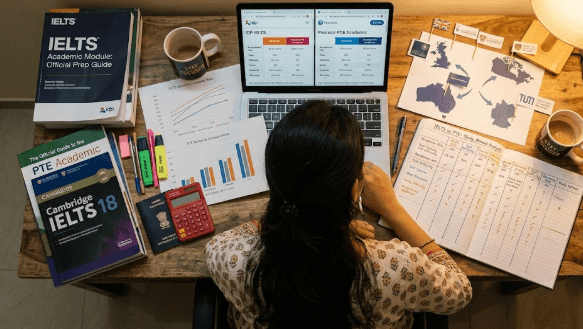
Choosing between IELTS and PTE depends on your target country, university requirements, test format preference, and budget. While both exams are widely accepted by universities worldwide, IELTS is often preferred by students comfortable with face-to-face speaking tests, whereas PTE offers a fully computer-based experience with faster results. Before booking your exam, compare fees, acceptance, scoring, and difficulty to select the option that best matches your study abroad goals. Yastudy's expert counsellors in Noida also provide free guidance to help students choose the right English proficiency test and plan their overseas education journey.

By Nitisha Dashore
Read →
Yastudy Noida Vs Going Alone: Why 80% of Students Who Used a Consultant Got Their Visa

Yastudy Noida Vs Going Alone: Why 80% of Students Who Used a Consultant Got Their Visa

8 Sept 2026

Looking for a study abroad consultant in Noida? Before trusting claims like "99% visa success rate," learn what those numbers really mean. This guide explains how to verify visa success rates, identify reliable consultants, avoid common scams, and choose the right overseas education advisor for your 2026 study abroad journey. Make an informed decision with practical tips and expert insights.

By NItisha Dashore
Read →
Holistic University Admissions Abroad 2026 | Beyond IELTS

Holistic University Admissions Abroad 2026 | Beyond IELTS

3 Sept 2026

In 2026, gaining admission to top international universities requires much more than a strong IELTS score. Institutions now use a holistic admissions approach, evaluating applicants based on academic performance, personal statements, extracurricular activities, leadership, work experience, recommendation letters, and overall potential. While English proficiency remains an important requirement, universities are increasingly looking for well-rounded students who demonstrate critical thinking, community involvement, and a clear sense of purpose. This guide explains how holistic admissions work, why IELTS is only one part of the application, and how students can build a compelling profile to improve their chances of studying abroad.

By Nitisha Dashore
Read →
Hybrid Degree Abroad: Study India & Overseas in 2026

Hybrid Degree Abroad: Study India & Overseas in 2026

2 Sept 2026

Hybrid and blended degree programs are transforming international education by allowing students to complete part of their studies in India before transferring to an overseas university. These flexible programs combine online learning, local campus education, and international study, helping students reduce tuition and living costs while gaining a globally recognized degree. In 2026, many universities across the UK, Canada, Australia, the USA, and Europe are expanding hybrid pathways, offering Indian students an affordable and seamless route to study abroad. This guide explores how these programs work, their benefits, eligibility, costs, top destinations, and tips for choosing the right hybrid degree program.

By Nitisha Dashore
Read →
 Study in Ireland for Indian Students: Complete Guide 2026 — Visa, Costs & Post-Study

Study in Ireland for Indian Students: Complete Guide 2026 — Visa, Costs & Post-Study

1 Sept 2026

Ireland is quietly becoming a strong alternative to the UK, Canada, and Australia for Indian students in 2026. This guide covers everything needed to plan a move — the D-Type student visa process, tuition fees (€10,000–€35,000 depending on the course), realistic living costs across Dublin and smaller cities, and part-time work rules (20 hours/week during term). The real highlight is the Stamp 1G post-study work visa, offering up to 24 months to work without needing a sponsor first. With major employers like Google, Meta, and Pfizer based in Dublin, Ireland offers strong career access at a lower cost than London.

By Divyanshi Singh
Read →

 Deported, Banned, Blacklisted: What Happens If You Use Fake IDs or Commit Fraud Abroad (UK, US, Canada, Germany, Australia & New Zealand Rules 2026)

Deported, Banned, Blacklisted: What Happens If You Use Fake IDs or Commit Fraud Abroad (UK, US, Canada, Germany, Australia & New Zealand Rules 2026)

29 Aug 2026

Studying abroad comes with rules most students never read carefully — and breaking them can cost far more than a warning. This guide explains what really happens if you're caught using a fake ID or submitting fake documents like forged bank statements, fake offer letters, or inflated test scores, across the UK, US, Canada, Germany, Australia, and New Zealand. From visa cancellation and deportation to re-entry bans lasting years (sometimes permanently), the consequences are serious and often follow you across countries through shared immigration data. A clear, no-scare-tactics breakdown for students and parents planning to study abroad safely in 2026.

By Divyanshi Singh
Read →

Yastudy’s Guide to Crafting  LORs and LOMs for Study Abroad Success

Yastudy’s Guide to Crafting LORs and LOMs for Study Abroad Success

27 Oct 2025

Dreaming of studying abroad? Yastudy’s guide to Letters of Recommendation (LOR) and Letters of Motivation (LOM) offers expert tips and samples to help international students from Central Delhi, Amritsar, Ludhiana, and across India create compelling applications. Learn how to craft standout LORs and LOMs, and explore Yastudy’s tailored services to secure admissions to top global universities.

By Rajdeep Singh
Read →
German Language Courses in 2025: A Beginner's Complete Guide to Fluency

German Language Courses in 2025: A Beginner's Complete Guide to Fluency

25 Oct 2025

Discover the benefits of learning German in 2025 with our comprehensive guide to German language courses. Explore why German is a valuable skill, understand CEFR proficiency levels, compare online and offline learning options, and find top institutes in India. Learn about course costs, duration, and globally recognized certifications like Goethe-Zertifikat to boost your career and academic prospects

By Rajdeep Singh
Read →

Footer ImageFooter ImageFooter ImageFooter ImageFooter ImageFooter ImageFooter ImageFooter Image
Static Image