Why Tier-2 Cities in India Are Now Producing More Study Abroad Students Than Metros in 2026
Tarun Chandel
Recently • 8 min read

Something is changing in India’s study abroad story — and the change is impossible to ignore anymore.
For years, international education in India was largely associated with students from big metropolitan cities. When people imagined Indian students flying to Germany, Canada, the UK, or Japan, they pictured students from Mumbai, Bengaluru, Delhi, or Hyderabad.
But in 2026, a different picture is emerging at airports, visa centers, university admissions offices, and study abroad consultancies across the country.
Planning to Study Abroad?
Get personalized guidance from experienced education counselors.
The students boarding international flights today are increasingly coming from cities that were barely part of the global education conversation a decade ago.
They are from Indore.
From Patna.
From Bhopal, Nagpur, Lucknow, Jaipur, Surat, and Coimbatore.
Cities once considered “smaller markets” are now becoming some of the fastest-growing sources of Indian students heading overseas.
And this is not a side trend anymore.
This is the new headline.
Because the story of Indian students studying abroad is no longer being driven only by elite metropolitan circles. It is now being shaped by ambitious students from India’s tier-2 cities — students who grew up in developing urban centers, often without the same exposure or resources as metro-city applicants, but with the same hunger for opportunity and global careers.
What universities, visa offices, and education consultancies have quietly observed over the last two years is now becoming impossible to deny: aspiration in India has expanded far beyond the metros.
Families in tier-2 cities are thinking differently.
Students have greater access to information than ever before.
International education is no longer seen as something reserved only for the wealthy urban elite.
And perhaps most importantly, young people from these cities are beginning to believe that global opportunities belong to them too.
This shift says something much larger about modern India.
It reflects changing access to education, rising digital connectivity, improving financial awareness, stronger career ambition, and the growing confidence of students from cities that were historically overlooked in conversations about global mobility.
This article explores why this transformation is happening, what is driving it, what challenges these students and families still face, and why tier-2 India may ultimately become the biggest force shaping the future of Indian students studying abroad.
The Numbers — What the Data Shows:
The Passport Surge from Tier-2 India:
Sometimes, the biggest social changes begin quietly — hidden inside numbers most people never pay attention to.
In India, one of those numbers is passport applications.
Because before a student books a flight, applies for a visa, or receives a university offer letter, there is one small but powerful first step: applying for a passport. And right now, that data is telling an important story about the future of Indian students studying abroad.
Over the last few years, officials, universities, and study abroad consultancies have started noticing a pattern that can no longer be dismissed as coincidence.
The surge is not only coming from India’s biggest metropolitan cities anymore. It is increasingly coming from tier-2 cities across the country.
The passport issuance statistics released by the Ministry of External Affairs reveal a clear directional shift. While the data is not officially separated city by city, states dominated by tier-2 urban centers are witnessing passport application growth rates that are significantly outpacing many metro-heavy regions.
Take Madhya Pradesh, for example — home to rapidly growing education hubs like Indore, Bhopal, and Jabalpur. In both 2023 and 2024, passport application growth in the state rose well above the national average.
A similar trend has appeared in Rajasthan, where cities like Jaipur, Jodhpur, and Kota are producing more globally ambitious students than ever before. The same pattern is emerging across secondary cities in Gujarat, Uttar Pradesh, and Bihar as well.
And behind every passport application is a deeply personal story.
A student attending IELTS coaching after college classes.
Parents quietly discussing education loans at the dinner table.
A first-generation graduate researching scholarships late at night on a borrowed laptop.
Families who once never imagined international education as a realistic option now beginning to believe it might actually be possible.
That is what these numbers truly represent.
Not just travel documents.
But rising ambition.
Growing confidence.
And a generation from India’s developing cities slowly preparing to step onto a global stage their parents never had access to.
University Admissions Data Confirms the Shift:
The shift is no longer just visible inside India.
Universities and governments around the world are starting to see it too.
For years, international admissions offices became used to receiving Indian applications from a familiar set of cities — Delhi, Mumbai, Bengaluru, Hyderabad, Chennai. The assumption was almost automatic: India’s global student pipeline belonged mainly to the metros.
But quietly, that map has started changing.
In Germany, universities that publish detailed demographic data about international students have begun reporting a noticeable rise in applicants from India’s tier-2 cities. The German Academic Exchange Service, better known as DAAD, has specifically highlighted the growing geographic diversity of Indian students in its annual reports since 2022.
That means the Indian students arriving in Germany today are no longer coming only from elite metro institutions. Increasingly, they are coming from cities that were once considered outside the mainstream global education ecosystem.
A student from Indore applying for engineering in Munich.
A graduate from Lucknow preparing documents for a research program in Berlin.
A family in Nagpur discussing blocked accounts and visa paperwork around the dining table.
The same pattern is becoming visible in Canada as well.
Even after stricter study permit regulations and the introduction of the Provincial Attestation Letter system in 2024 — changes that made the process more complicated and paperwork-heavy — applications from Indian students outside the top four metro cities have continued rising steadily.
And perhaps one of the most striking changes is happening in Japan.
The prestigious MEXT Scholarship, once heavily associated with IIT graduates and students from major metropolitan institutions, is now seeing increasing participation from tier-2 Indian cities. Students from places like Nagpur, Indore, and Lucknow are appearing more frequently in scholarship selection lists and application pools processed through the Japanese Embassy in New Delhi.
And that change matters far beyond statistics.
Because it signals something powerful: access to global opportunity in India is slowly becoming less concentrated.
Ten years ago, many talented students from tier-2 cities simply lacked exposure, mentorship, financial awareness, or confidence to even attempt studying abroad. Today, those same cities are producing students who are competing for international admissions, scholarships, and research opportunities on the global stage.
The geography of Indian ambition is expanding.
And the world is beginning to notice.
The Five Forces Driving Tier-2 City Study Abroad Growth:
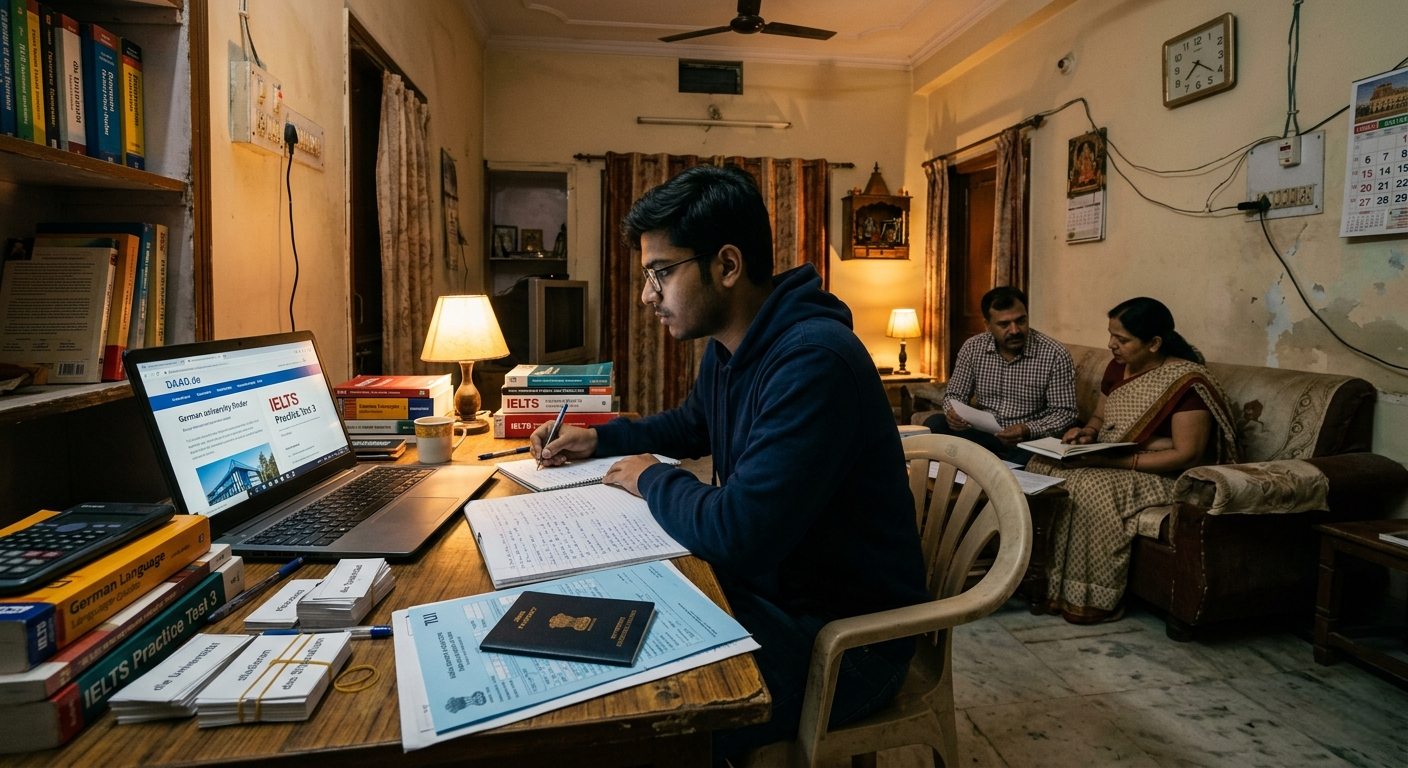
Force 1 — The Collapse of the Information Asymmetry:
For a long time, people assumed students from India’s tier-2 cities stayed behind in the study abroad race because they lacked ambition, talent, or financial ability.
But the real barrier was often much simpler — and much more invisible.
It was access to information.
A decade ago, studying abroad in India was heavily influenced by geography. If you lived in a metro city, attended a well-connected school, had career counselors who understood international admissions, or came from a family where someone had already gone overseas, you automatically had an advantage.
You knew what the GRE was.
You knew how scholarships worked.
You understood application timelines, visa procedures, SOPs, and English proficiency exams long before many other students even heard those terms for the first time.
Meanwhile, in cities like Patna, Indore, or Coimbatore back in 2015, that ecosystem barely existed consistently. Students were intelligent and ambitious, but many simply did not have the same exposure or guidance networks available in Delhi, Mumbai, or Bengaluru.
But by 2026, something extraordinary happened.
The internet erased distance.
Today, a student sitting in Bhilai or Bhagalpur can access the exact same information once available only to metro-city students. YouTube channels now explain German university applications, IELTS preparation strategies, visa documentation, and MEXT Scholarship procedures in Hindi and regional languages with incredible clarity.
Instagram pages run by students already studying abroad have become something even more powerful than content creators. They have become proof that it is possible.
A student from a tier-2 city scrolling through their phone no longer sees studying abroad as some distant dream reserved for elite urban families. They see someone who sounds like them, comes from a similar background, attended a similar college — and successfully made it overseas.
That changes psychology completely.
Because once information becomes equally available, aspiration spreads rapidly.
The study abroad movement emerging from India’s tier-2 cities is not just an education story. It is a story about the democratization of knowledge itself.
The old metro advantage depended heavily on information being concentrated in certain places. But when application guidance, scholarship awareness, visa strategies, and international exposure become digitally accessible everywhere, geography starts losing its power.
And suddenly, the student from a developing city no longer feels excluded from the global conversation.
They feel included in it.
Force 2 — The Domestic Private Education Cost Crisis:
The cost escalation of private engineering and management education in India has disproportionately affected families in Tier-2 cities. Nowadays, a B.Tech from a private college in Jaipur or Indore costs between ₹6 and 12 lakh annually, with often disappointing results in terms of pay and job quality.
When tier-2 city households actually manage the figures, the comparison is striking and becoming more and more influential:
₹32–48 lakh for a four-year private B.Tech in Indore, with no guarantee of domestic work
Germany's two-year master's program costs ₹14–24 lakh in total (no tuition, only living expenses), gives students access to European careers, and is internationally recognised.
The study abroad option, especially Germany's free tuition model, does not feel like a luxury upgrade for families in Nagpur or Surat who are already heavily investing in private domestic education with unsatisfactory results. It seems like a more sensible use of the money they already have set aside.
One of the main drivers of the study abroad trend in tier 2 cities in India is this economic reasoning, which is fundamentally different from the motive of metro students who seek study abroad as an aspirational step up from already compelling domestic possibilities.
Force 3 — The NIT and Regional Engineering College Pipeline:
The majority of India's National Institutes of Technology, including NIT Trichy in Tiruchirappalli, NIT Warangal in Warangal, NIT Surathkal in Mangaluru, NIT Calicut in Kozhikode, NIT Patna, NIT Raipur, and numerous more, are situated in tier-2 and tier-3 cities. German, Japanese, and Canadian universities place a high priority on engineering graduates with the academic qualifications and specialized technical preparation that these institutes generate.
Graduates of NIT from tier-2 cities have always been eligible for top-notch graduate programs overseas. The community infrastructure that IIT graduates in metropolitan areas had established, such as peer networks, consulting access, and alumni mentorship, was what they lacked. NIT-to-Japan and NIT-to-Germany pipelines have significantly strengthened as that community infrastructure has developed both physically and digitally in tier-2 cities.
Force 4 — The Growth of Physical Study Abroad Infrastructure in Tier-2 Cities:
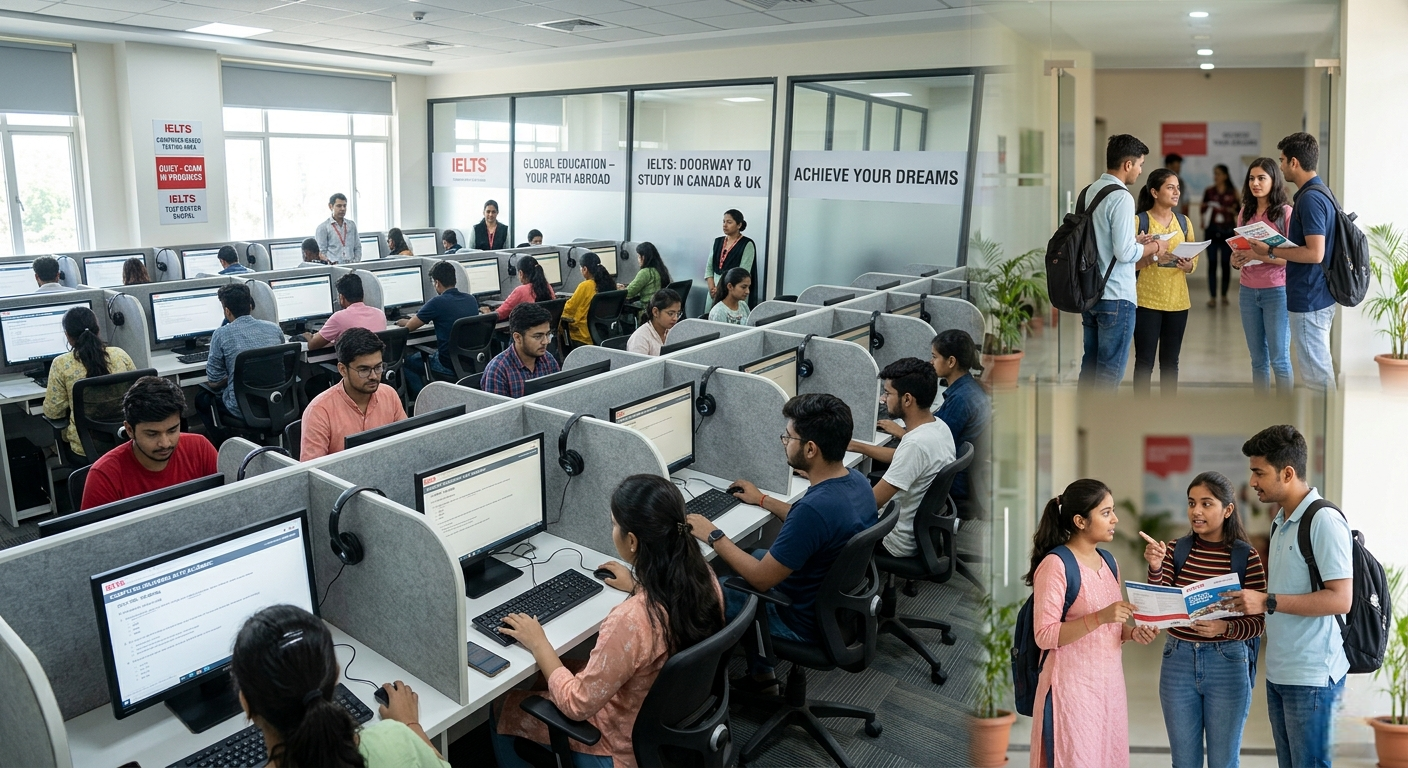
Over the past five years, IELTS and TOEFL test locations have greatly extended into tier-2 cities. Exam centers for the British Council and IDP IELTS are now located in Indore, Jaipur, Lucknow, Nagpur, Coimbatore, Bhopal, and numerous more places. Previously, students had to travel to major cities to take their language exams.
In order to meet the increasing demand from tier-2 cities, Goethe-Institute, which offers German language courses necessary for entrance to German universities, has increased its online program delivery and presence.
For language testing, document certification, and APS certificate interviews, the physical infrastructure that previously needed travel to Delhi or Mumbai is now accessible in tier-2 cities or through digital procedures that do not necessitate physical presence in metropolitan areas.
Force 5 — Community Proof and Peer Networks:
The self-reinforcing nature of the tier 2 cities India study abroad trend makes it more potent over time. The journey of the first Indore student admitted to TU Munich is chronicled. There is a local peer to learn from for the second Indore student accepted to TU Munich. The tenth Indore student at TU Munich has created a community of knowledge, a YouTube channel, and a WhatsApp group that help the eleventh student see and navigate the road.
The tendency is rising more quickly than it was even two years ago since the community proof effect is currently in an escalating phase throughout dozens of tier-2 cities concurrently.
City by City — How the Tier-2 Study Abroad Trend Looks on the Ground:
Indore — Madhya Pradesh's Study Abroad Capital:
Perhaps the most well-known illustration of the India study abroad trend in tier 2 cities is Indore. A fast expanding study abroad community has resulted from the city's robust engineering college environment, which includes IIT Indore, private engineering colleges, and close proximity to regional IELTS centers, as well as a corporate community used to international trade.
Germany is the top choice for engineering students from Indore because of its free tuition, which appeals to the city's business-minded family that carefully consider their educational investments. This emphasis is reflected in the city's expanding German language learning community, which includes online resources and specialised German coaching centres.
Jaipur — Rajasthan's Rising Study Abroad Hub:
Strong management aspirants—students pursuing MBA and management master's programs overseas—as well as an expanding engineering community from Rajasthan Technical University and allied colleges are the main drivers of Jaipur's study abroad boom.
Jaipur's management aspirants have traditionally chosen Canada and the UK, but as awareness of the APS certificate and German language requirements has increased, Germany's zero tuition approach is gaining traction. Applications from the UK and Canada in particular have increased thanks to the city's robust IELTS preparation infrastructure.
Lucknow — UP's Study Abroad Epicentre:
Students from Uttar Pradesh, Bihar, and neighboring states choose Lucknow as their practical base for IELTS preparation, APS certificate interviews, and consulting access, representing the study abroad aspirations of a much bigger hinterland.
The city's robust medical and engineering college environment has produced a particular pipeline of students aiming for engineering master's programs in both Germany and Japan, as well as MBBS counterparts in Germany. Lucknow serves as a useful center for MEXT scholarship applicants from the entire UP-Bihar corridor due to its close proximity to the Japanese Embassy's presence in northern India.
Coimbatore and Trichy — South India's Tier-2 Study Abroad Leaders:
The NIT Trichy pipeline and a robust engineering culture that has been exporting graduates overseas for decades assist Tamil Nadu's tier-2 cities, especially Coimbatore and Tiruchirappalli. The destination mix has shifted, with Germany and Japan benefiting greatly at the expense of the United States and the United Kingdom as students in Coimbatore and Trichy become more aware of the zero tuition and MEXT scholarship alternatives.
As a result of South Indian tier-2 city engineering students' increasing desire for Germany as a destination, both cities now have established German language learning groups.
What Tier-2 City Students Do Differently — And What It Reveals:
They Are More Cost-Conscious — Which Makes Germany Their Natural Home:
Every significant financial decision is subjected to a thorough cost-benefit analysis by Tier-2 city families, a trait that results from accumulating wealth in economies with less resources than in metropolitan areas. Because of this analytical rigor, tier-2 city students are more likely to thoroughly investigate Germany's zero tuition model, to apply for MEXT scholarships, and to refuse to pay tuition in the UK or the US when there are German or Japanese alternatives.
This cost-consciousness is a competitive advantage that tends to result in more financially sensible and, hence, more sustainable study abroad options; it is not a limitation.
They Are More Motivated — Which Makes Their Applications Stronger:
Compared to many applicants from metro areas, applicants from tier 2 cities in India are typically more intrinsically motivated. Studying overseas is not often the next step in a family's foreign education tradition for a student from Raipur or Siwan. It is a conscious, self-motivated, research-driven decision made in the face of limited institutional support and resources.
SOPs reflect this motivation. It is evident in the intensity of IELTS preparation. It is evident in the identity of professors and the distinctiveness of university research. Additionally, admissions committees and visa officials are aware of it and appreciate it.
They Face Specific Challenges — That Can Be Overcome With the Right Guidance:
The tier 2 cities India study abroad trend is not without its specific challenges. Tier-2 city students frequently face:
Limited access to native English conversation practice — affecting Speaking band scores
Fewer local peers who have done the process — reducing community learning opportunities
Potentially weaker document certification infrastructure compared to metros
Greater family pressure to remain local — the first-in-family dimension that makes every decision carry more weight
Each of these challenges is real and each is manageable — particularly with the right guidance from consultants who understand the tier-2 city student profile specifically.
YaStudy — Built for Every Indian Student, Including Tier-2 City Students:
Beyond academic credentials and IELTS preparation, the most crucial thing a tier-2 city student needs is access to the same kind of study abroad advice that metro students receive through reputable consultant networks.
YaStudy — Noida's most trusted and genuinely student-first study abroad consultancy — provides that guidance to students from every city in India. Including tier-2 cities. Including students who have never had access to a quality study abroad consultant before.
At zero cost. Always. For every student.
Not a metro premium. Not a tier-1 city discount for tier-2 students. Zero. Free. For every student, everywhere in India.
Why YaStudy's Free Model Is Particularly Transformative for Tier-2 City Students:
The majority of study abroad advisors charge between ₹50,000 and ₹2,00,000 in consultation fees, which are proportionately more significant for tier-2 city families than for metro households with greater family incomes. In Bhopal or Bhagalpur, a consulting cost that is a little nuisance in Mumbai can be a significant financial obstacle.
That barrier is completely eliminated by YaStudy's free model, which gives tier-2 city students access to professional, thorough, and customized study abroad advice on the same conditions as metro students.
Universities in Germany, Japan, the UK, Canada, and other countries pay YaStudy to connect eligible Indian students to their programs; this is how YaStudy is supported. Students are never the source of income. This implies that each suggestion is made with the student's best interests in mind, independent of the university that offers the greatest agent commission.
What YaStudy provides at zero cost for tier-2 city students:
Profile assessment — honest evaluation of academic background and realistic study abroad options
University shortlisting — Germany, Japan, UK, Canada matched to grades, field, and goals
SOP writing and review — crafted by counsellors who understand what tier-2 city student applications need to demonstrate
IELTS guidance — resources and preparation strategy for students without metro coaching infrastructure
APS certificate coordination — documents, timeline, interview guidance for Germany
MEXT scholarship support — research plan, professor outreach, Embassy documentation for Japan
Education loan guidance — Vidya Laxmi Portal and partner banks
Visa documentation review — complete checklist before any consulate submission
Pre-departure orientation — practical, country-specific, honest
YaStudy's entirely free platform has enabled hundreds of students from Indore, Jaipur, Lucknow, Patna, Nagpur, Coimbatore, and numerous other tier-2 towns in India to complete study abroad trips that, just two or three years ago, would have appeared unattainable to them and their families.
The Broader Significance — What This Trend Means for India:
Geographic Democratisation of Opportunity:
One of the key economic and social narratives of India in the 2020s is the democratization of access to global opportunities, which includes the tier 2 cities India study abroad trend. Growing community knowledge networks, expanded physical infrastructure, and digital infrastructure are all working together to lessen the spatial advantage that urban living has traditionally offered aspirational students.
This is truly positive news for India, not only for the individual students who gain from it, but for the entire nation. The talent pool that India sends to the top colleges, research centers, and workplaces in the globe is expanding and deeper. Instead of being concentrated in four or five metropolitan areas, the information, networks, and skills that Indian students return with them or use to create links between India and the global economy are becoming more widely dispersed throughout the nation.
What It Means for Study Abroad Destinations:
As the tier 2 cities India study abroad trend picks up speed, a more varied, driven, and generally better-prepared generation of Indian students is being sent to Germany, Japan, Canada, and the UK. The truth that more Indian students are coming from cities that their admissions teams may not have previously prioritized is forcing universities that have built their admissions procedures and support systems around metro Indian students to adjust.
Tier-2 city pipelines to these colleges are being strengthened by the feedback loops created by this adaptation.
Conclusion — The Geography of Ambition Has Changed
The trend of students studying abroad in tier 2 cities in India is neither a post-pandemic anomaly nor a passing statistical anomaly. Information democratization, domestic education economics, the expansion of digital infrastructure, and the self-reinforcing strength of community proof are driving this structural transition, which is quickening.
The students who are at the forefront of this movement are not particularly unusual. They are the logical result of tier-2 India's combination of strong economic incentive, competitive academic preparation, and, at last, genuine access to the knowledge and advice that makes the decision to study abroad logical rather than enigmatic.
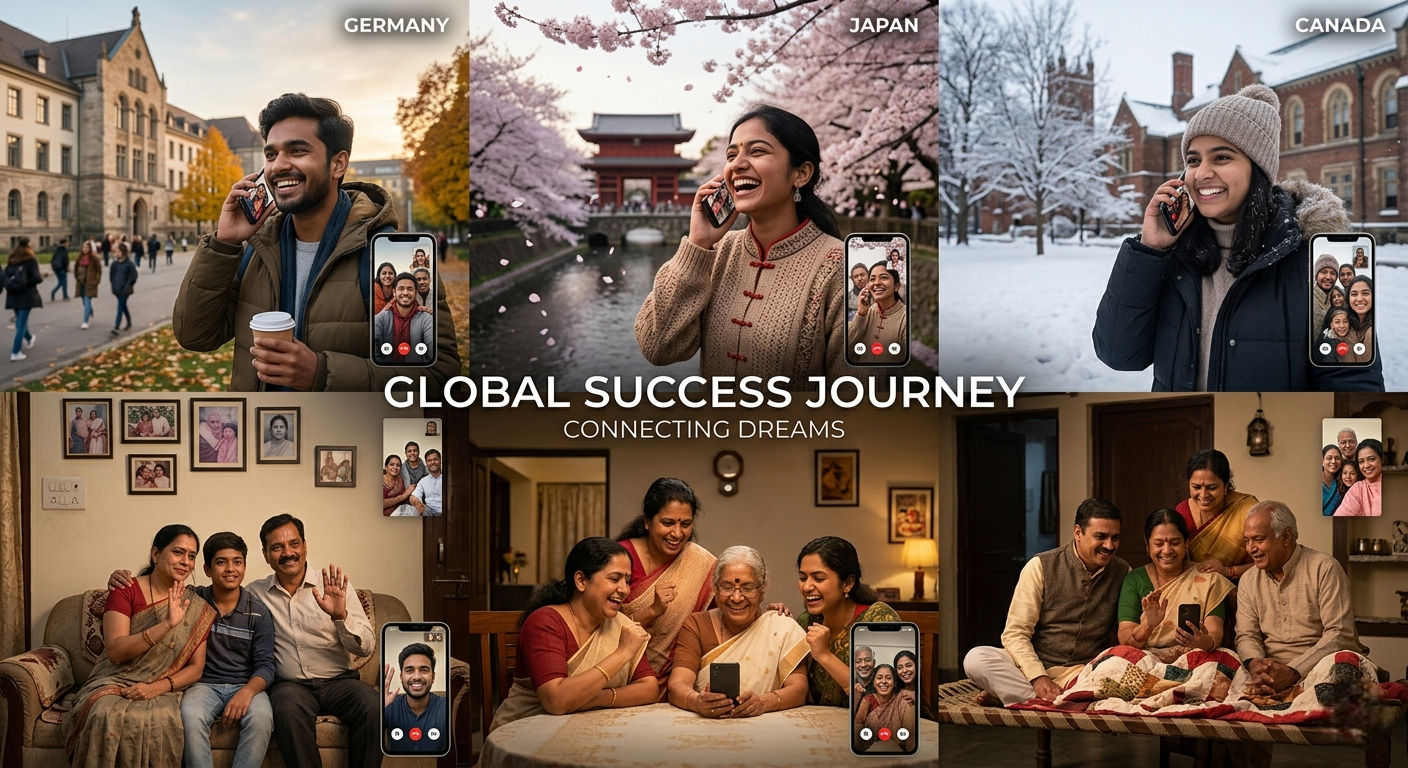
Indore to Munich. Jaipur to Vancouver. Lucknow to Tokyo. Nagpur to London. These journeys are happening. They are being documented. They are inspiring the next wave.
And the guidance to execute them — for every student, from every city, at every income level — is available right now at Yastudy. For free.
Start Your Study Abroad Journey
Join thousands of students who achieved their dreams with Yastudy.