How to Choose the Right Country to Study Abroad in 2026?
Sakshi Singh
Recently • 8 min read

Okay, real talk, the moment you decide "yes, I want to study abroad," it feels amazing. You're picturing yourself sipping coffee in some European café, crushing your degree, maybe picking up a second language. Absolute main character moment.
And then someone asks: "So where are you thinking?"
And suddenly your brain goes completely blank.
Planning to Study Abroad?
Get personalized guidance from experienced education counselors.
Germany? Canada? Australia? The UK? Your cousin went to the US and loved it. Your neighbor's kid went to New Zealand and also loved it. Your college WhatsApp group is full of opinions and honestly? None of it is helping.
Choosing the right country to study abroad isn't just about vibes. It's one of the most important decisions you'll make, and there are real, practical things you need to think through before you book that IELTS prep class or book an appointment with study abroad consultants in Delhi.
If you're still exploring the process overall, first understand the complete Study abroad process before locking in a country.
Let's actually walk through this together.
First, Get Honest About Your "Why"
Before we even talk about countries, you need to get clear on what you actually want from this experience. Because the best country for you depends entirely on your goals, and those are different for everyone.
Are you going abroad because you want a globally recognized degree that opens doors back home in India? Or are you hoping to build a career and maybe even settle abroad? Do you want to work while studying to offset costs? Are you chasing a specific field , AI, medicine, sustainable design, film, where certain countries are genuinely better?
Your answers to these questions will eliminate half the options before you even start researching. Seriously. Someone who wants to work part-time and then convert to a post-study work visa has completely different priorities from someone who wants a two-year master's program, a solid degree, and a flight back home.
Figure out your "why" first. Everything else follows from there.
The Big Five – What Actually Makes a Country Right for You?

When Indian students are researching the best countries to study abroad, they tend to focus on rankings and brand names. But there are five things that should actually drive your decision:
1. Cost (the real cost, not just tuition)
Everyone calculates tuition. Almost nobody accounts for rent, food, transport, health insurance, visa fees, the flight home at Christmas, and the random hundred things that cost money when you're living somewhere new. Germany and Norway, for example, have very low or zero tuition fees, but your living costs in Munich are going to be substantially higher than in a smaller German city. Canada looks affordable on paper until you're looking at Toronto rent prices.
Do the full math. Tuition plus living expenses plus travel. For at least one full year.
2. Post-study work opportunities
This is huge and honestly under-discussed. If you're even slightly open to working abroad after graduation, the country's post-study work visa policy matters enormously. The UK's Graduate Route lets you stay two years after completing your degree. Canada's PGWP can give you up to three years depending on your program length. Australia has the Temporary Graduate visa. Some countries, particularly in Europe, have much more limited options. If long-term career growth abroad is on your radar, check the work visa landscape before you commit to a country.
3. The job market in your field
Some countries are genuinely stronger for specific industries. The US for tech startups and Silicon Valley-adjacent careers. Germany for engineering. Canada for AI research. The UK for finance and consulting. Australia for mining and resources. If you're going abroad to build a career in a specific field, go where that industry is actually thriving. A degree from a well-ranked program in a country where your industry barely exists isn't going to serve you the way you hope.
4. Cultural comfort and safety
This one's personal, and that's okay. Some people are excited by the challenge of navigating a completely unfamiliar culture. Others want somewhere with a large Indian community, familiar food, and a culture that isn't a total shock to the system. Canada has large South Asian communities in cities like Brampton and Surrey. The UK has Indian communities across most major cities. Both matter when you're homesick at 11pm on a Tuesday. Safety also matters, research overall safety ratings, how international students are treated, and what support systems universities have in place.
5. Language
If your English is strong and you want the path of least resistance, English-speaking countries are obvious choices. But if you're open to learning another language, or already speak one, European countries can be phenomenally affordable and academically excellent. Germany, France, the Netherlands, Sweden, many offer programs in English too, at a fraction of what you'd pay in the UK or Australia. Don't rule them out just because they're not your first thought.
Let's Talk Exams, Because You Need Them No Matter Where You Go
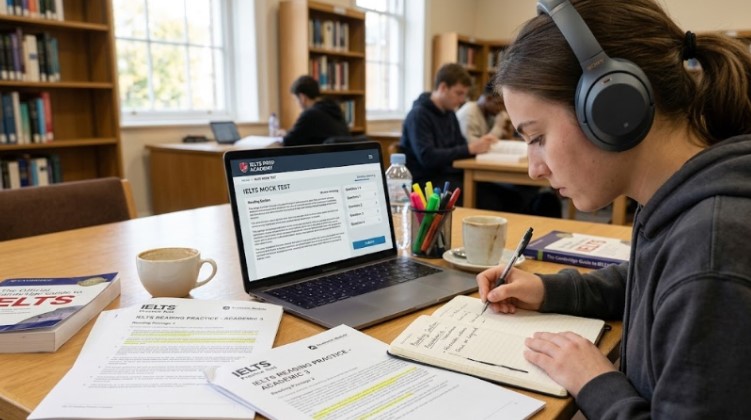
Here's a question that trips up a lot of students: what exams do you need to study abroad?
The answer depends on where you're going and what you're studying, but here's the general picture:
English proficiency is required almost everywhere if English is not your first language. IELTS and TOEFL are the two main ones, most UK, Australian, and Canadian universities accept both. Some US universities prefer TOEFL. Check your specific target universities for cutoffs because these vary significantly.
Graduate management programs (MBA and related) usually require the GMAT or GRE. Many universities have started accepting either, or have gone test-optional, but top programs still weigh these heavily.
Undergraduate applicants in the US may need SAT or ACT scores, though again, test-optional policies have become more common post-pandemic.
Country-specific language exams like the DELF/DALF for France, TestDaF for Germany, or JLPT for Japan if you're considering non-English-speaking destinations.
If you're preparing your applications alongside exams, reviewing the sop page helps connect your academic narrative with your destination choice.
Start your exam prep early. IELTS prep alone takes most students three to four months minimum to get a competitive score. Don't underestimate it.
The Scholarship Conversation (Yes, There Are Options)

Studying abroad is expensive. But writing it off as unaffordable without researching scholarships is a mistake that costs a lot of students their dream.
Indian government scholarships for studying abroad exist and are more accessible than people realize. If you're seriously evaluating funding before finalizing a country, read our full guide on Scholarships for Indian Students Studying Abroad
Before assuming affordability is impossible, compare structured repayment planning on the loan page as well.
The effort of applying for scholarships is nowhere near the effort of paying off loans for a decade.
A few worth knowing about:
The National Overseas Scholarship (NOS) is for students from scheduled castes, scheduled tribes, and other marginalized communities, it covers tuition, living allowance, and travel for postgraduate and doctoral programs.
The ICCR Scholarships are slightly different, these are scholarship seats offered to Indian students under cultural exchange agreements with various countries.
Fulbright-Nehru Fellowships for those going to the US are prestigious and cover a lot of ground for research scholars and faculty.
Beyond government options, don't sleep on university-specific scholarships, which are often merit-based and surprisingly generous. Commonwealth Scholarships, Chevening (UK), DAAD (Germany), Erasmus Mundus (Europe), these are real, competitive, and worth every hour you spend on the application.
The effort of applying for scholarships is nowhere near the effort of paying off student loans for a decade. Do the applications.
Should You See a Study Abroad Consultant?
Here's an honest answer: it depends on where you are in the process.
If you're just starting out and feeling overwhelmed and you're based somewhere like Delhi where there's a strong ecosystem of study abroad consultants in Delhi working with one can genuinely save you time and stress. A good consultant knows which universities are realistic targets for your profile, what documentation you need, how to position your application, and the visa process for your target country.
A not-so-good consultant will collect a fee and give you generic advice you could have Googled. So if you go this route, ask specific questions: How many students have they placed in your target country? Can they connect you with past students? What's their approach to scholarship applications?
That said, a lot of students navigate this process without a consultant, especially with the quality of information available online and through university international offices. If you're organized and research-oriented, it's entirely doable on your own.
Listing Study Abroad on Your Resume

Listing study abroad on your resume example for Indian students
Since you're thinking long-term here, a quick note on something that trips people up later. Listing study abroad on your resume is about more than just adding a university name.
Do it properly: include the institution, the degree and field, the dates, and, most importantly, what you actually did there. Research you contributed to, projects, internships completed while studying, languages developed, leadership roles in student organizations. The fact that you studied abroad signals adaptability and global exposure. The details signal what you actually built during that time.
This matters whether you're heading back to India after graduation or pivoting into the international job market.
Which Country Should You Actually Pick?
There's no universal right answer, which I know is frustrating. But here's a practical shortcut: write down your top three priorities (cost, career outcomes, location, language, culture, whatever matters most to you), and then rank the countries by how well they serve those priorities. If you're still debating whether going abroad at all makes sense, read Study Abroad vs Study in India – How Do You Actually Decide?
before locking in a destination.
If cost is everything: Germany, Norway, or the Netherlands. If post-study work flexibility is the priority: Canada or Australia. If you want a globally recognized brand name with strong alumni networks: UK or US. If your field is engineering or STEM research: Germany or the US. If you want somewhere with a strong Indian community and familiar culture: Canada or the UK.
The perfect country is the one that fits your actual life, goals, and budget, not the one that sounds most impressive at a family dinner.
Start with your "why." Do the real math. Take the exams seriously. Research scholarships before you assume you can't afford it. And make the decision that's right for you, not someone else's version of abroad.
You've got this.
If working abroad after graduation is a serious consideration, research the visa pathways thoroughly using the Visa page before finalizing your decision.
FAQ 1 Q: Which are the best countries to study abroad for Indian students?
The best countries to study abroad for Indian students depend on your goals, but the most popular choices are Canada, the UK, Australia, Germany, and the US. Canada and Australia are great for post-study work opportunities, Germany is excellent if you want low tuition fees, and the UK offers shorter, more affordable master's programs. There's no single "best", it's about what fits your career plans, budget, and lifestyle.
FAQ 2 Q: Should I consult study abroad consultants in Delhi before applying?
If you're feeling overwhelmed by the process, connecting with study abroad consultants in Delhi can be a smart move, especially for shortlisting universities, building your application, and navigating visa requirements. A good consultant will have placed students in your target country before and can give you honest feedback on your profile. That said, always verify their track record and ask to speak with past students before committing.
FAQ 3 Q: What exams do I need to study abroad from India?
The exams to study abroad depend on your destination and program. For English proficiency, IELTS or TOEFL is required in most countries, the UK, Canada, and Australia typically accept both. If you're applying for an MBA, you'll likely need the GMAT or GRE. For non-English-speaking countries like Germany or France, language tests like TestDaF or DELF may be required. Start prep at least 3–4 months before your application deadlines.
FAQ 4 Q: Are there Indian government scholarships for studying abroad?
Yes, Indian government scholarships for studying abroad are more accessible than most students realize. The National Overseas Scholarship (NOS) supports students from marginalized communities for postgraduate and doctoral studies. The ICCR offers scholarship seats under cultural exchange agreements. The Fulbright-Nehru Fellowship covers research and academic programs in the US. Beyond government options, university scholarships like Chevening (UK) and DAAD (Germany) are also worth applying for.
Start Your Study Abroad Journey
Join thousands of students who achieved their dreams with Yastudy.