Australia Fake Documents Crackdown — How It's Affecting Genuine Indian Students in 2026
Tarun Chandel
Recently • 8 min read

You did not fake anything.
Your bank statements are real.
Your degree certificate is genuine.
You spent months preparing for your IELTS instead of looking for shortcuts.
Your SOP reflects actual career goals, not copied promises from the internet.
Every document inside your Australian student visa application is legitimate.
Planning to Study Abroad?
Get personalized guidance from experienced education counselors.
And yet, your file is suddenly moving slower than expected.
Financial documents are being questioned.
Academic records are facing deeper scrutiny.
Verification requests are increasing.
Some students are even facing visa refusals despite submitting completely authentic applications.
For thousands of honest Indian students in 2026, this has become an incredibly frustrating reality.
Not because they did something wrong — but because the system itself has changed.
Over the last few years, Australia has experienced a serious rise in fraudulent student visa activity involving fake bank certificates, manipulated financial documents, forged academic credentials, and dishonest applications submitted through unethical agents and consultancies.
And whenever immigration systems face large-scale fraud, something predictable happens: scrutiny expands outward.
The system stops trusting first and starts verifying first.
That means genuine students often end up trapped in the same tightening process created to catch fraudulent ones.
At the initial screening stage, immigration officers are not emotionally evaluating whether a student “seems sincere.” They are working inside a risk-management system designed to detect inconsistencies, suspicious financial behavior, document manipulation, and patterns linked to previous fraud cases.
So even legitimate applicants can suddenly find themselves under intense examination simply because authorities now assume caution before authenticity is fully proven.
And emotionally, that can feel deeply unfair.
Imagine spending months building an honest application only to feel treated with suspicion anyway.
Imagine your family arranging genuine finances, only for every transaction to suddenly feel like it needs defending.
Imagine preparing carefully for a future abroad while constantly worrying that delays or verification checks may destroy timelines you worked incredibly hard to protect.
That anxiety is real for many Indian students right now.
But understanding why this is happening changes the situation from panic into preparation.
This guide exists to explain exactly what has changed inside Australia’s student visa environment in 2026, why legitimate applicants are increasingly caught in the middle of anti-fraud crackdowns, how advanced verification systems and biometric screening processes affect Indian applications, and most importantly — how genuine students can build visa files strong enough to survive this new level of scrutiny confidently.
Because in the current environment, honesty alone is no longer enough.
Your application must also be organized, transparent, verifiable, and structurally convincing from the very beginning.
What the Crackdown Is — and Why It Happened:
The Scale of Document Fraud That Triggered the Response:
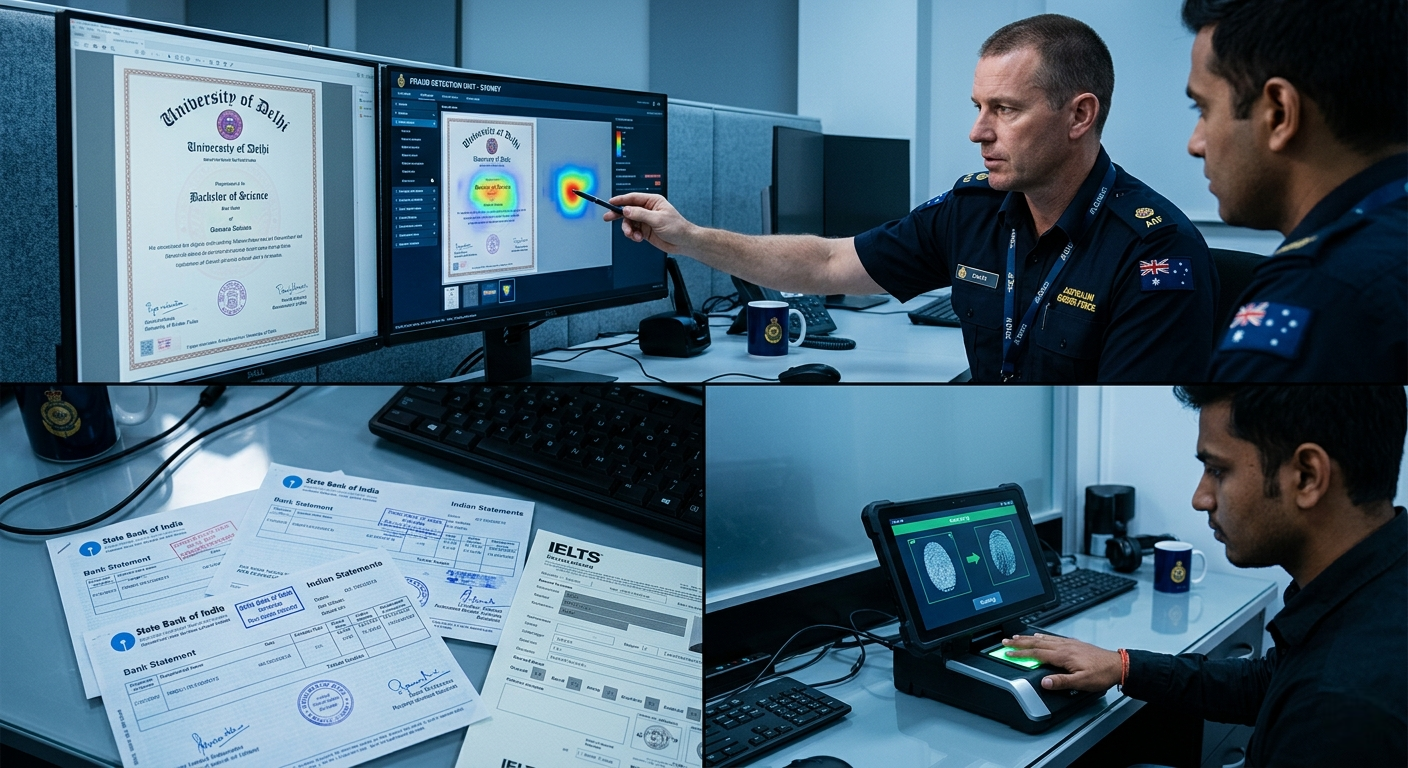
The tightening of Australia’s student visa system in 2026 did not appear out of nowhere.
It was not a sudden overreaction.
And it was not directed randomly at Indian students without context.
It was the result of years of growing fraud that slowly pushed the system toward distrust.
Between 2021 and 2025, Australian immigration authorities uncovered a disturbing pattern inside thousands of student visa applications coming from India. Over time, the volume became too large to ignore — and eventually, the entire verification system changed because of it.
What makes this situation painful is that the actions of dishonest applicants and unethical agents are now affecting genuine students too.
Because once large-scale fraud enters an immigration system, suspicion spreads across everyone.
One of the biggest problems involved fake financial documents.
Some applications included forged bank certificates showing balances that never actually existed. Others contained manipulated account histories, fake deposits, or financial transactions created only to satisfy visa requirements temporarily.
To families making honest applications, this may sound shocking. But Australian authorities, working alongside Indian banks and verification agencies, reportedly identified thousands of suspicious financial records connected to student visa submissions over multiple years.
And once that pattern became widespread, every bank statement started receiving more scrutiny — including genuine ones.
Then came the issue of forged academic credentials.
There were cases involving altered mark sheets, falsified degree certificates, and manipulated university transcripts. In many situations, the institutions themselves were real — but the documents had been modified. Formats were copied. Scores were changed. Entire academic records were fabricated to make weak applications appear stronger.
Australian offshore verification teams eventually began identifying systematic fraud patterns linked to certain regions, institutions, and application channels.
And perhaps most damaging of all was the manipulation of English-language test scores.
Some IELTS and PTE certificates were allegedly tampered with to display higher bands than students had actually earned. On paper, applicants appeared academically prepared for international education — but the scores themselves were fraudulent.
That kind of fraud is especially serious because it directly attacks the credibility of academic readiness itself.
Over several years, these cases accumulated into something much bigger than isolated dishonesty. They created a trust crisis.
And eventually, the Department of Home Affairs responded by fundamentally tightening the way Indian student visa applications are reviewed.
The result is the system students are facing today in 2026:
more verification,
more financial scrutiny,
more background checks,
longer processing times,
and far less automatic trust.
Unfortunately, genuine students are now caught inside the consequences created by people who tried to cheat the system before them.
That is why today’s visa environment feels emotionally exhausting for many honest applicants.
You can submit real documents, follow every rule carefully, and still feel as though your application is being examined under suspicion.
But understanding the reason behind this crackdown matters.
Because once students recognize that the system is no longer built around assumption of honesty — but around proof of authenticity — they can prepare differently.
And in 2026, preparation is no longer just about submitting documents.
It is about building a file so transparent, consistent, and verifiable that it survives scrutiny without creating doubt at any stage.
The Australia Interpol Biometric Check Indian Applicants Now Face:
One of the biggest changes Indian students are experiencing in Australia’s visa system in 2026 is something most applicants never actually see happening behind the scenes.
But it is quietly shaping almost every application now.
The system has become deeply biometric, data-driven, and internationally connected.
A few years ago, many students still viewed visa applications mainly as paperwork — documents, bank statements, admission letters, and SOPs. Today, the verification process goes far beyond paper.
Now, your identity itself becomes part of the screening system.
For Indian applicants, this begins with biometric collection.
Before a student visa can move forward, applicants must visit designated VFS Australia centers across India to submit fingerprints and facial photographs. For many students, it feels like a routine procedural step. A quick appointment. A photograph. Finger scans. Then home again.
But behind that simple appointment sits a much larger international verification network.
Once biometric data enters the system, Australia’s Department of Home Affairs can cross-reference identity information across multiple layers of immigration and security databases. That includes previous Australian immigration records, international data-sharing arrangements, and law-enforcement cooperation frameworks connected to organizations like Interpol and partner immigration systems within the Five Eyes intelligence network.
In practical terms, this means your current application is no longer evaluated in isolation.
If you previously applied for an Australian visitor visa, student visa, dependent visa, or any other immigration category, those records can now be compared against your current submission for consistency. Names, dates, travel history, identity details, and documentation patterns are examined together far more carefully than before.
And because of this expanded biometric infrastructure, identity fraud has become dramatically harder than it was even three years ago.
That is the good news.
The difficult part is what happens on the other side of increased security: processing slows down.
Modern immigration systems rely heavily on automated risk-screening tools. Applications can be flagged for deeper review based on patterns, inconsistencies, verification delays, financial irregularities, or even similarities to previous fraud cases. And once a file enters manual review, timelines can stretch significantly longer — even for completely genuine students.
That uncertainty creates enormous emotional pressure.
Students begin checking email constantly.
Families grow anxious over delayed updates.
Flight plans remain uncertain.
Accommodation bookings become stressful.
And every extra week of silence starts feeling personal, even when it often is not.
The reality is that many delays today are not necessarily accusations of fraud. They are symptoms of a system that now verifies far more aggressively than it used to.
And while that stronger verification environment has made identity fraud more difficult, it has also created a situation where honest applicants must now prepare for higher scrutiny, longer processing times, and more detailed consistency checks across every part of their application history.
In 2026, applying for an Australian student visa is no longer just about submitting correct documents.
It is about building an identity trail that remains clear, consistent, and trustworthy under multiple layers of international verification.
How Genuine Indian Students Are Being Affected:
The Collateral Damage of System-Wide Suspicion:
Genuine applicants face a particular challenge as a result of the Australia fake papers crackdown on Indian students in 2026: the verification technologies used to detect fraud are unable to differentiate between a fabricated document and an unusual but authentic one during the initial screening stage.
Particular ways that real pupils are impacted:
Australia bank statement verification Digital format difficulties in India: For sincere candidates, this is one of the most frequent causes of delays. Concerns have been raised by Australian immigration officials over bank statements from Indian applicants, both authentic and fraudulent.
Were printed from internet banking portals rather than issued on bank letterhead with physical stamp
Show large, recent deposits that appear inconsistent with prior account history
Come from smaller cooperative banks or regional banks less familiar to Australian verifiers
Contain formatting that differs from what Australian officers are accustomed to seeing from major Indian banks.
The crackdown has resulted in a specific digital format requirement for Australia bank statement verification in India: statements must be formally issued by the bank on letterhead with a stamp, signature, and bank contact information; self-printed portal exports are not acceptable. Many sincere students submitted portal-printed statements in good faith, yet their financial paperwork was either rejected outright or asked to be resubmitted.
Processing time extensions: Due to the addition of extra verification stages to the usual processing workflow, applications that were previously completed in 4–6 weeks are now requiring 8–16 weeks.
Increased Document Verification Requests (DVRs): Compared to before to 2024, Australian immigration officials are issuing DVRs at much higher rates. DVRs are formal requests for additional proof or third-party verification of submitted documents.
Genuine qualification verification delays: Even when their degrees are entirely authentic, students who graduated from rural or more recent Indian universities—institutions that Australian verification firms are less familiar with—face longer credential verification durations.
How to Prove Genuine Student GTE Australia India — The GTE Requirement Explained:
What the GTE Assessment Is and Why It Matters More Than Ever:
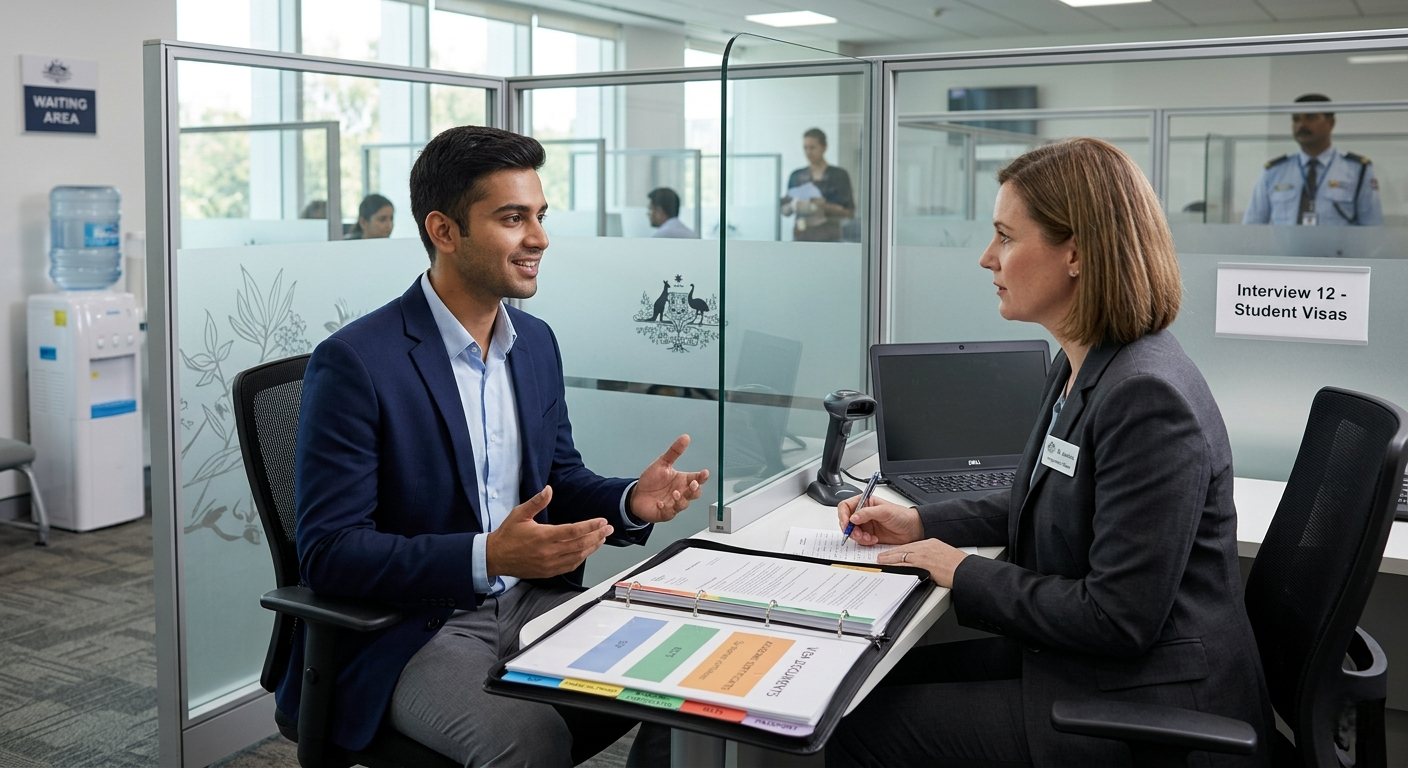
One of the most significant changes in Australian student visa processing is reflected in the search phrase "How to prove genuine student GTE Australia India." Following the fraud crackdown, the Genuine Temporary Entrant (GTE) criteria has been imposed more strictly.
According to the GTE criterion, you must show that you intend to remain in Australia temporarily for legitimate research purposes rather than as a means of obtaining permanent immigration. Every Australian student visa application is evaluated in accordance with GTE criteria, and since immigration officers are explicitly trained to recognize patterns consistent with visas as immigration vehicles rather than study vehicles, the evaluation has grown much stricter.
What the GTE assessment examines:
Your personal circumstances in India — family ties, property, career history, financial situation
Your potential circumstances in Australia — whether you have family or connections that create immigration intent
Your immigration history — prior visa applications, refusals, periods of overstay
Your study pathway — does the chosen course logically connect to your existing education and career goals?
Your employment prospects — would a student with your background realistically pursue this qualification for career purposes?
How to prove genuine student GTE Australia India — what works:
A study plan that directly links your previous education to the Australian program, a specific job objective in India, or a respectable overseas route.
Evidence of a sincere desire to return to India, such as property records, family obligations, and, if relevant, a letter from an employer confirming a position upon return.
A sensible academic progression—the Australian certification shouldn't be an inexplicable detour from your Indian study, but rather a logical next step.
Your study plan should use straightforward, first-person language rather than generic terms that sound the same in hundreds of applications.
How to Prepare a Watertight Australia Student Visa File — Complete Guide:
How to Prepare Watertight Australia Student Visa File India Applicants Must Build:
This part of the guide is the most useful. Every document category that has been subject to increased scrutiny due to the crackdown is covered by the framework for creating a watertight Australia student visa file in India:
The category with the highest risk is financial documents.
Nowadays, the main reason for genuine applications to be delayed or rejected is the digital format required for Australia bank statement verification in India. Adhere to these guidelines without fail:
Only bank-issued statements; neither PDF exports nor portal printing are allowed. Request legally issued statements on bank letterhead with a real branch stamp and an authorized signature by going to your bank branch.
A minimum of 12 months' worth of statements that demonstrate a steady, authentic balance and bolster your financial claim are required. Regardless of its legitimacy, a balance that unexpectedly surfaced within the previous two to three months will be reported.
Documentation proving the source of funds: If your account displays significant deposits, provide supporting documentation such as pay stubs, property sale records, certificates of fixed deposit maturity, or a formal gift letter containing the donor's financial proof.
Bank statements, fixed deposit certificates, property ownership documents, and income tax returns (ITR files for three years for the sponsoring parent or guardian) are examples of many financial instruments. A single huge bank balance is not as trustworthy as a variety of financial proof.
Education loan sanction letter: Provide the official sanction letter from a reputable Indian bank if you're using an education loan. Because it has been independently evaluated by a regulated financial institution, this is one of the most reliable types of financial paperwork.
Academic Records: Avoiding Suspicion of Forged Degree Certificates
Given the pattern of faked degree certificates being rejected for an Australia visa, sincere applicants need to do more than just submit their paperwork; they also need to make it simple to establish their authenticity:
Original documents plus copies that have been authenticated by a notary or gazetted officer
Official transcripts straight from the school: If at all feasible, have your school submit transcripts to the DIBP site or send them straight to the VFS application center, completely avoiding student handling.
Contact information for your institution's registrar or examination controller should be included in order to provide independent verification for the assessing officer.
When appropriate, apostille attestation from the Ministry of External Affairs gives an extra degree of confirmed authenticity to documents submitted for Australian visa purposes.
Documents for English Language Tests.
Only original Test Report Forms should be submitted; for IELTS, the official TRF should include your unique Test Report Form Number, which may be checked on the IELTS website.
Language certificates should never be submitted in photocopy form; instead, original or verifier-accessible digital credentials should always be submitted.
Identity and Background Records
Considering the Australian Interpol biometric verification system for Indian applicants:
Make sure that your name is spelled exactly the same on all documents, including your passport, bank statements, degree certificates, and IELTS.
Any name alteration should be explained in a statutory declaration; even little variations raise verification alarms.
Police Clearance Certificate: Although it's not necessarily required for student visas, proactively providing an Indian Police Clearance Certificate shows openness and eliminates a possible processing issue.
Navigate the Crackdown Safely — Yastudy Does It Free:
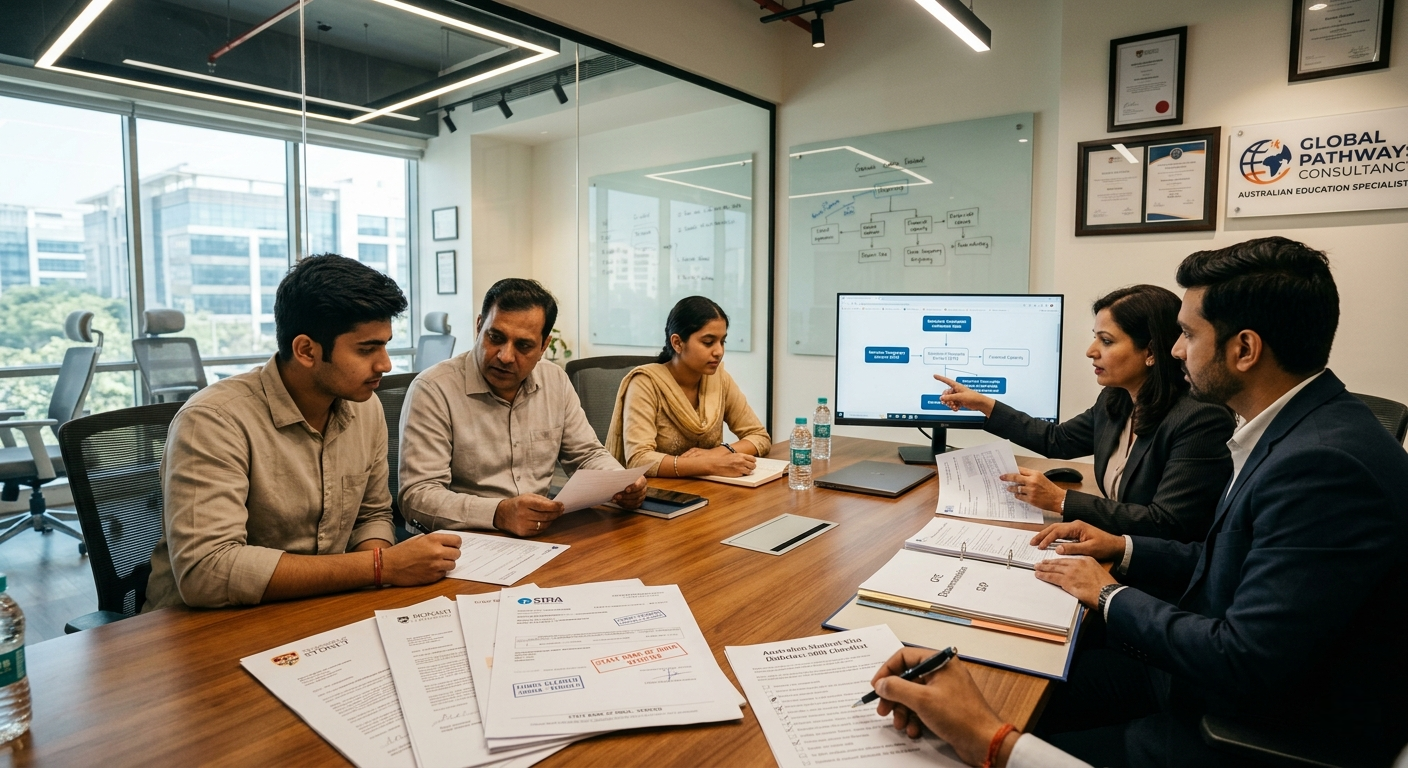
Preparing for an Australian student visa has become much more difficult than it was two years ago because to the Australia false documents crackdown on Indian students in 2026. Even with perfectly valid underlying materials, genuine students who submit incomplete, inconsistent, or incorrectly formatted documentation risk delays, DVRs, and in certain situations, rejections that should never have occurred.
Yastudy — Noida's most trusted and genuinely student-first study abroad consultancy — reviews every component of your Australian student visa file before submission, at absolutely zero cost to students.
Not a document review fee. Not a visa guidance charge. Zero. Free. Always.
Yastudy is funded by university partnerships — universities across Australia, Germany, Japan, UK, and Canada pay Yastudy for connecting qualified Indian students to their programs. Students are never the revenue source, which means every review is genuinely in your interest.
What Yastudy provides at zero cost for Australian visa applicants:
Complete visa file review — every document checked against current Australian verification standards before submission
Bank statement format guidance — ensuring your financial documents meet the Australia bank statement verification India digital format requirements
GTE statement preparation — helping you articulate genuine student intent clearly and specifically
Academic document verification preparation — formatting your credentials to make authentic verification straightforward
APS equivalent document preparation — for students also considering Germany as an alternative
Honest Australia vs Germany vs Japan comparison — if the crackdown environment makes Australia genuinely riskier for your profile, Yastudy will tell you honestly
Education loan guidance through Vidya Laxmi Portal
Pre-departure orientation for students who receive visa approval
Conclusion — Genuine Students Should Not Pay the Price for Other People's Fraud:
Australia's 2026 crackdown on phony IDs for Indian students is a justifiable and essential reaction to a serious and harmful fraud issue. However, the collateral damage is real and unjust, with legitimate Indian students having to deal with lengthier processing periods, more scrutiny of their documents, and higher rejection percentages due to fraud they were not involved in.
Accepting the situation quietly is not the solution for sincere pupils. The goal is to create applications that eliminate any room for doubt by being so transparent, comprehensive, and verifiably real. This guide's "how to prepare watertight Australia student visa file India framework" is your instrument for doing just that.
Your paperwork is authentic. Ensure that's how they are perceived.
Start Your Study Abroad Journey
Join thousands of students who achieved their dreams with Yastudy.