Is a Master's Degree Abroad Still Worth It When H-1B Costs $100,000?
Tarun Chandel
Recently • 8 min read

There is one number quietly reshaping the entire conversation around studying in the United States for Indian students in 2026.
$100,000.
Planning to Study Abroad?
Get personalized guidance from experienced education counselors.
At first glance, it sounds unreal — almost like a rumor exaggerated on social media. But inside immigration discussions and policy debates in the United States, the idea of dramatically increasing H-1B visa costs has become serious enough that students can no longer afford to ignore it.
And for Indian STEM students especially, this number matters more than almost anything else.
Because for years, the traditional American study abroad pathway followed a familiar logic:
Complete a master’s degree in the US.
Get OPT work authorization.
Secure an H-1B sponsorship.
Build an international career.
That post-graduation employment pipeline is what justified the enormous financial investment many Indian families were willing to make. Students weren’t only paying for a degree. They were investing in the possibility of long-term global career mobility.
But now, that equation feels far less stable than it once did.
Currently, H-1B filing costs already represent a significant expense for employers, often reaching several lakh rupees once government and legal fees are included. But proposals discussed during US immigration reform conversations in 2025 introduced something far more dramatic: the possibility of an H-1B fee structure approaching $100,000.
If implemented at anything close to that level, the consequences would be enormous.
The H-1B system would effectively become inaccessible for many companies except the largest and wealthiest employers. Smaller firms, startups, mid-sized consultancies, and organisations that historically hired international graduates could simply stop participating altogether because the financial burden would become impossible to justify.
And suddenly, the entire financial logic many Indian students used to justify studying in America would begin to break down.
Because for countless families, the return on investment calculation behind a US master’s degree has always depended heavily on post-study work opportunities. Remove or weaken that pathway, and the emotional dream of America collides very quickly with financial reality.
This is not an argument against studying abroad itself. Far from it.
In many ways, earning an international master’s degree remains one of the most transformative investments a student can still make in 2026 — academically, professionally, and personally.
But the conversation is becoming more nuanced now.
The question is no longer simply: “Should I study abroad?”
It is increasingly becoming:
“Which countries still offer a sustainable balance between education cost, immigration policy, career opportunity, and long-term stability?”
And for many students whose financial plans rely heavily on the H-1B pathway as the primary mechanism for recovering their investment, the United States no longer feels as predictable as it once did.
That does not mean America has lost its value.
It means students now need to evaluate it with clearer eyes, deeper research, and far more realistic expectations than previous generations often did.
Because in 2026, blind optimism is no longer a strategy.
Careful planning is.
The US Master's Degree Investment — Recalculating Under the New Reality:
The Old Financial Model for US STEM Education:
The financial case for an Indian student pursuing a master's degree in engineering, computer science, or data science in the United States has adhered to a pretty consistent framework for the last 20 years:
Investment: ₹51,00,000–₹1,03,00,000 in tuition and living expenses over 2 years
OPT bridge: 12 months standard + 24 months STEM OPT = 3 years of US work authorisation
H-1B probability: 3 lottery attempts = approximately 65–75% cumulative success rate
Return: US-based salary of ₹77,00,000–₹1,28,00,000 annually for 5–10 years
For the majority of Indian STEM students ready to take on the lottery risk, the master's degree abroad worth it H1B calculation proved to be ambitious but credible under this paradigm.
The New Financial Model — What Has Changed in 2026:

For years, the American study abroad dream for Indian students followed a clear and emotionally powerful formula.
Get into a US university.
Complete your master’s degree.
Work through OPT.
Transition to an H-1B visa.
Build a high-paying global career.
It was expensive, yes — but the pathway felt understandable. Predictable enough that families were willing to risk enormous amounts of money because the long-term opportunity appeared worth it.
But in 2026, almost every part of that model is facing pressure at the same time.
And that is what has made so many students and parents suddenly anxious about the United States in a way they were not just a few years ago.
The first challenge begins before students even enter the country.
F-1 student visa approvals for Indian applicants have become significantly more difficult and unpredictable. Reports from early 2025 showed a dramatic decline in visa issuance rates, creating a new reality where even academically strong students are approaching interviews with uncertainty instead of confidence.
And for families already investing ₹70 lakh, ₹80 lakh, sometimes even over ₹1 crore into international education, uncertainty changes everything emotionally.
Because now the risk begins before the journey even starts.
Then comes the second layer of instability: OPT, the post-study work authorization system that has historically been one of the biggest reasons Indian STEM students chose the US in the first place.
For years, OPT acted as the bridge between education and long-term employment. It gave students time to gain experience, earn salaries, and attempt the transition toward H-1B sponsorship.
But in 2026, that bridge no longer feels untouchable. Political discussions and regulatory reviews around OPT have created growing anxiety among international students who fear that future policy changes could fundamentally alter the post-graduation pathway they originally planned around.
And finally comes the issue that has shaken confidence most dramatically: the proposed H-1B fee surge.
If H-1B sponsorship costs move anywhere near the levels being discussed in policy circles, the consequences would ripple across the entire employer ecosystem. Small and mid-sized companies — the same companies that currently hire huge numbers of international STEM graduates — could simply stop sponsoring visas altogether because the economics would no longer make sense.
That would leave H-1B sponsorship concentrated mainly among the world’s largest tech corporations and highly capitalized employers.
And suddenly, the pathway that once felt achievable for many students begins narrowing sharply.
When you combine all of this together, the emotional equation around a US master’s degree changes dramatically.
Students are no longer evaluating only universities and salaries.
They are evaluating uncertainty itself.
A financial investment that may range anywhere between ₹68 lakh and over ₹1 crore now exists alongside questions that previous generations of students did not have to think about with the same intensity:
Will the visa process remain stable?
Will post-study work options still exist in their current form?
Will employers continue sponsoring international graduates at scale?
And most importantly — does the risk still justify the cost?
None of this means the United States has stopped being valuable. It remains home to some of the world’s best universities, strongest research ecosystems, and most influential industries.
But it does mean one important thing:
The American dream is no longer being viewed as automatic.
For the first time in years, Indian students are beginning to evaluate it not just with excitement — but with caution, financial realism, and a deeper awareness that the old assumptions about stability may no longer fully apply.
Higher visa acquisition difficulty at the entry point
Threatened OPT reducing the bridge from 36 months to potentially 12 months
A $100,000 H-1B fee that most employers will refuse to pay
A resulting dramatic reduction in the probability of converting the US degree into a US career
The US-specific master's degree abroad worth it H1B financial model has been structurally damaged, not by a single regulatory change but rather by the concurrent deterioration of all the pathway's components.
The Opinion — Where a Master's Degree Abroad Is Still Absolutely Worth It:
Germany — Where the Investment Case Has Never Been Stronger:
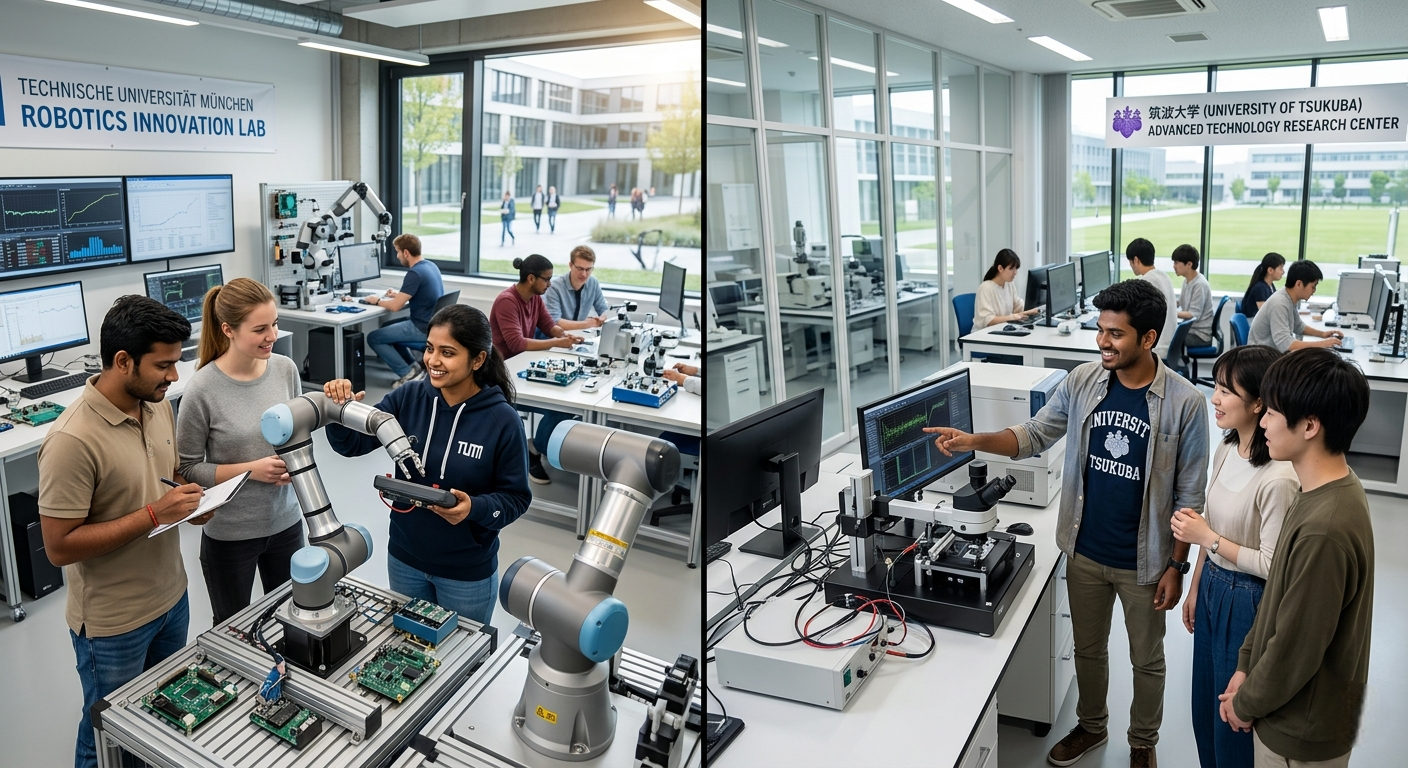
This is the viewpoint that needs to be expressed clearly: the investment case for a German master's degree has concurrently become stronger than it has in the previous ten years, while the US master's degree abroad worth it H1B calculation has been damaged.
International students, including Indians, are not required to pay tuition at any of Germany's public colleges. Living expenditures for a two-year master's program in engineering, computer science, or sciences at TU Munich, RWTH Aachen, or the University of Stuttgart range from ₹13–22 lakh. No fees. Zero.
In contrast, a US master's degree at a mid-tier public university would cost between ₹51,00,000 and ₹68,00,000 in tuition alone, plus an additional ₹25,50,000 to ₹34,00,000 for living expenses. ₹77,00,000 to ₹1,03,00,000 in total, with an unknown post-graduation route.
The post-graduation route in Germany:
Automatic, non-lottery, 18-month job seeker visa; no employer charge. You have eighteen months after graduating from a German institution to look for work in Germany without needing employer sponsorship.
EU Blue Card: The EU Blue Card offers multi-year work rights and a clear route to permanent residency in 21–33 months after employment above the income criteria. Not a lottery. No employer fee of $100,000. No yearly cap.
Due to Germany's established yearly need of more than 400,000 competent workers, Indian STEM graduates can get employment there without having to win a lottery against tens of thousands of other applications.
When Germany is taken into consideration, the question of whether a master's degree overseas is worthwhile for an H1B visa becomes clear. The cost of a master's degree in Germany is lower than that of a year's tuition in the US. There is no $100,000 employer charge and its post-graduation track is more dependable and open. The finest technical colleges in Germany have academic standards that are truly on par with those of mid- and upper-tier American universities.
Japan — The MEXT Case That Makes Every Other Calculation Look Expensive:
Japan's MEXT scholarship makes the US investment rationale appear nearly crazy for qualified students, while Germany's zero tuition model casts doubt on it.
The MEXT, Japan's government scholarship, pays for all tuition, round-trip airfare, health insurance, and a monthly living allowance of ¥143,000 (about ₹80,000–₹85,000). The entire cost of a two-year Japanese master's degree at the University of Tokyo or Kyoto University is roughly nothing for an eligible Indian student.
In 2026, Japan's post-graduation road has significantly improved; immigration reforms have made it easier for foreign STEM graduates to obtain work permits than it was even two years ago. There is a real need for skilled foreign graduates due to Japan's severe labor shortage in the robotics, technology, automotive, and pharmaceutical industries.
Because Japan's post-graduation pathway does not require an H-1B, the master's degree abroad worth it H1B question simply does not apply to Japan. It entails obtaining a Japanese work visa in a nation that is actively looking for your abilities through a non-lottery, non-fee-dependent employer sponsorship process.
Where the US Still Makes Sense — The Honest Assessment:
This is not a polemic; rather, it is an opinion piece. For a particular type of student, the US still makes sense:
Even in the current climate, the academic quality, research infrastructure, alumni network, and industry connection of top-10 US universities like MIT, Stanford, CMU, Berkeley, and Caltech truly worth the investment. The biggest, most capitalised businesses that would be able to absorb a $100,000 H-1B charge without significantly altering their hiring procedures are the ones that hire from these universities.
The risk assessment shifts if your family can afford to pay for your education in the US without relying on the H-1B pipeline and if the degree itself is worth enough, whether or not you remain in the US.
If there is a distinct US advantage in your profession that Germany or Japan just cannot match, such as specific biotech research ecosystems, specific Wall Street financial roles, or specific media and entertainment industry links.
Outside of these particular circumstances, the master's degree abroad worth it H1B calculation in 2026 increasingly favors Germany and Japan over the US. This is not because the US has become a bad country or educational destination, but rather because the policy environment has simultaneously increased the cost of entry and decreased the dependability of the post-graduation career pathway that justified the investment.
The Comparison That Every Indian Student Should See:
Factor | USA | Germany | Japan (MEXT) |
Tuition (2-year master's) | ₹60,00,000–₹80,00,000 | €0 | ¥0 (scholarship) |
Living cost (2 years) | ₹25,00,000–₹40,00,000 | ₹24 lakh to ₹40 lakh | ¥0 (stipend provided) |
Total cost | ₹95–₹1.2 lakh | ₹24–₹40 lakh | ₹0 |
Post-study work | OPT (under threat) | 18-month job seeker visa | Work permit |
Long-term residency | H-1B lottery + $100K fee | EU Blue Card (clear) | Improving pathway |
Employer cost | $100,000 (proposed) | Zero | Standard sponsorship |
Visa reliability 2025 | Low (69% drop) | Moderate-High | Moderate-High |
The table does not require commentary. It speaks clearly.
Navigate This Decision With Expert Guidance — Yastudy Does It Free:
Instead of a generic response from a consultant who has a financial stake in your decision, the master's degree abroad worth it H1B question demands professional, individualized, and honest research.
Yastudy — Noida's most trusted and genuinely student-first study abroad consultancy — provides exactly that analysis at absolutely zero cost to students.
Zero consultation fees. Zero application fees. Zero SOP charges. Zero hidden costs. Free. Always.
Why Yastudy Is Free — And Why That Matters Here:
Universities in Germany, Japan, the UK, and Canada pay Yastudy to connect eligible Indian students; this is how Yastudy is financed. Students are never the source of income. This implies that every proposal is made with your best interests in mind; there is no financial incentive to encourage you to travel to the US if Germany or Japan would be a better option.
What Yastudy provides at zero cost:
Honest US vs Germany vs Japan investment comparison for your specific profile and field
University shortlisting across destinations matched to your academic record
MEXT scholarship application support — research plan, professor outreach, Embassy documentation
DAAD scholarship guidance for Germany
Complete application support — SOP, CV, Letters of Recommendation
Visa documentation review before any consulate submission
Education loan guidance through Vidya Laxmi Portal
Pre-departure orientation — country-specific and practical
Conclusion — The Answer Is Yes, But Ask Better Questions:
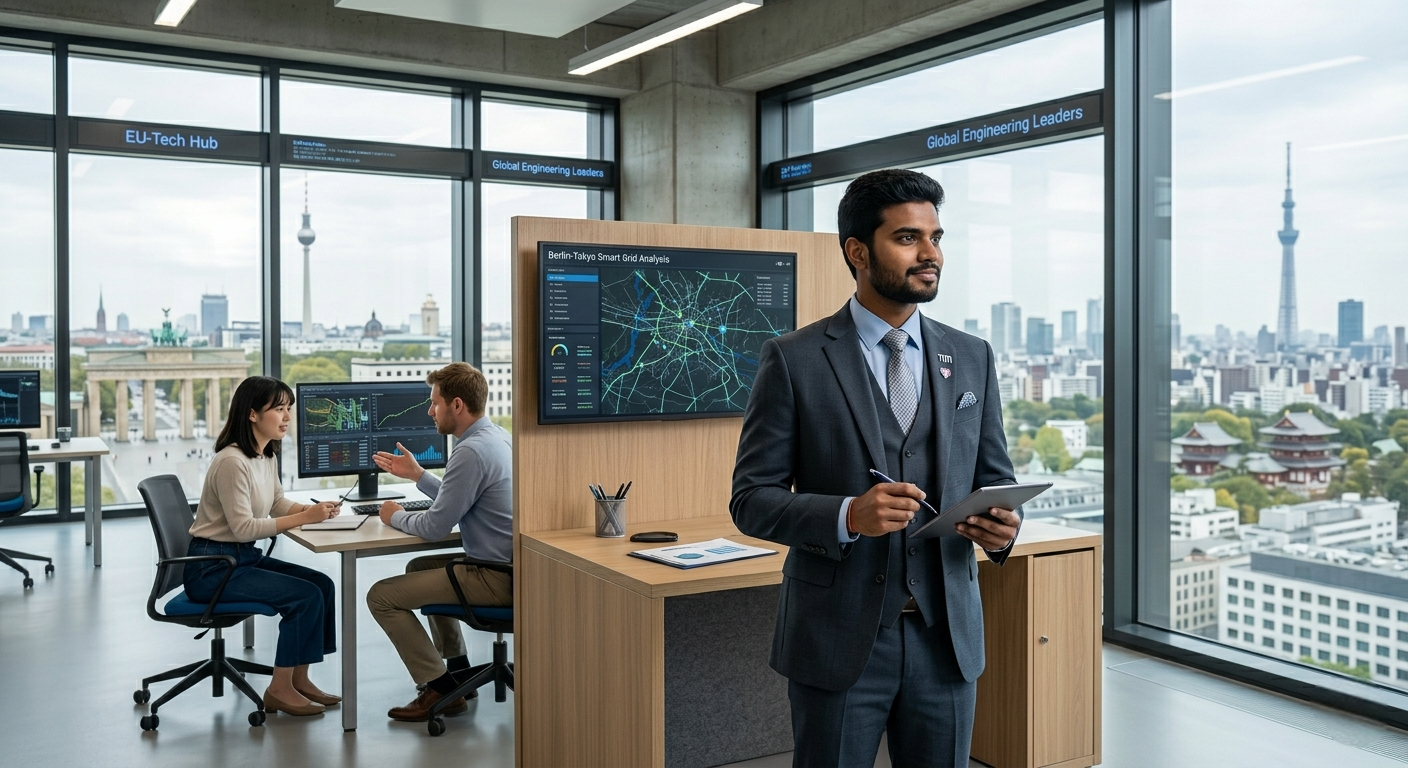
With H1B fees potentially nearing $100,000, is it worthwhile to pursue a master's degree overseas?
Yes, if you are inquiring about Japan or Germany.
Considerably less obvious—if you are particularly talking about the United States in 2026, with OPT in jeopardy, F-1 visas down 69%, and a $100,000 employer charge that would price H-1B out of the mid-market job ecosystem that Indian STEM graduates have traditionally depended on.
"Is study abroad still worth it?" shouldn't be the question. "Which study abroad place delivers the best return on investment in 2026?" should be the inquiry. And when that question is posed in light of current data, such as free tuition in Germany, MEXT scholarships in Japan, an 18-month job seeker visa in place of the H-1B lottery, and an EU Blue Card in place of immigration uncertainty, the answer increasingly shifts away from the US and toward a truly better set of options.
The help to navigate this decision – honest, expert, and free — available at Yastudy.
Start Your Study Abroad Journey
Join thousands of students who achieved their dreams with Yastudy.