Cost of Living in Japan for Indian Students 2026 — Complete Monthly Budget Breakdown
Tarun Chandel
Recently • 8 min read

Japan is on your list. The universities are world-class. The MEXT scholarship is fully funded. The career opportunities after graduation are exceptional.
After that, you begin looking into the cost of living in Japan for Indian students. Depending on the source you consult and the city you are looking at, the figures either completely reassure you or cause you to become slightly alarmed.
In actuality, when part-time work, student discounts, and prudent housing choices are taken into consideration, Japan is significantly more cheap for Indian students than the UK, Australia, or the USA. Japan isn't the most cost-effective place in Southeast Asia, though. Financial issues are almost always experienced by students who travel to Japan without a sensible budget strategy. The successful students are those who understood the numbers before to boarding the aircraft.
Planning to Study Abroad?
Get personalized guidance from experienced education counselors.
This manual presents these numbers in an accurate, thorough, and truthful manner. We provide a monthly breakdown of all living expenses for students in Japan in 2026, city by city and category by category, so you may come to Japan prepared financially.
The Big Picture — What Does It Actually Cost to Live in Japan as an Indian Student?
Before the detailed breakdown, here is the realistic monthly range for cost of living Japan Indian students in 2026:
City | Monthly Living Cost (₹) | Monthly Living Cost (¥) |
Tokyo | ₹65,000–₹90,000 | ¥115,000–¥160,000 |
Osaka | ₹55,000–₹75,000 | ¥95,000–¥130,000 |
Kyoto | ₹55,000–₹75,000 | ¥95,000–¥130,000 |
Nagoya | ₹50,000–₹70,000 | ¥85,000–¥120,000 |
Tohoku (Sendai) | ₹45,000–₹65,000 | ¥80,000–¥115,000 |
Fukuoka | ₹45,000–₹60,000 | ¥80,000–¥105,000 |
These sums cover rent, food, transportation, utilities, health insurance, and personal expenses for a single student living in dorms or a shared apartment. They don't pay tuition, which is $0 for MEXT scholars and very less for other students at national universities.
The exchange rate used in this tutorial is ₹1 = around ¥1.75 (approximate rate for 2026; check current rates before making plans).
Accommodation — The Largest Monthly Expense
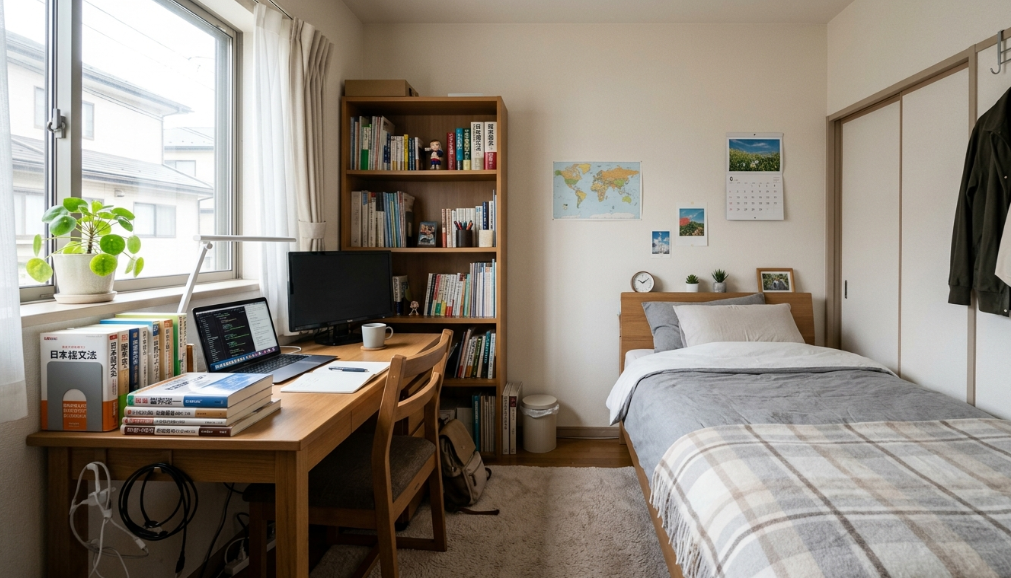
Rent is the largest monthly expense for the majority of Indian students studying in Japan. The full breakdown is as follows:
University Dormitories (Ryokan / Gakusei Ryou)
Applying for university-managed dorms, which are the most affordable accommodation option available to international students in Japan, should be your first priority after being accepted into a university.
Cost per month: ¥15,000–¥35,000 (about ₹8,500–₹20,000)
Dormitories typically include:
Furnished private or shared room
Shared kitchen and bathroom facilities
Internet connection
Utilities included or minimally charged separately
On-campus or near-campus location
The catch: dormitory places are limited and demand is high. Apply immediately upon receiving your admission letter — waiting lists are real.
Private Apartments (1K or 1R)
A private apartment, usually a 1K (one room with separate kitchen, 20–25 sqm) or 1R (single room with kitchenette, 15–20 sqm), is the next option if a university dorm is not available.
Tokyo rent ranges from ¥50,000 to ¥80,000 per month (₹28,500 to ₹45,500). Osaka/Kyoto rent: ¥40,000–¥65,000 per month (₹22,800–₹37,000) Rent in Nagoya, Fukuoka, and Sendai ranges from ¥30,000 to ¥55,000 per month (₹17,000 to ₹31,400).
Important: When moving into a Japanese apartment, a security deposit (shikikin) of one to two months' rent and a key money payment (reikin) of one to two months' rent are normally required. Set aside ¥150,000 to ₹300,000 (about ₹85,000 to ₹1,70,000) for the first move-in expenses in Tokyo.
Share Houses
Share houses are becoming more and more popular and affordable for Indian students. You rent a private room in a shared house with other young professionals or students, but the kitchen, bathroom, and common areas are shared.
Benefits: Monthly cost: ¥30,000–¥55,000 (₹17,000–₹31,400) including utilities Reduced initial deposit (often zero), utilities included, social setting, and no need for a guarantor—a major obstacle for international students living in regular apartments
For Indian students coming to Japan for the first time, share houses are highly recommended because they simplify social integration and lessen financial strain at the same time.
Food and Groceries — Where Indian Students Are Pleasantly Surprised
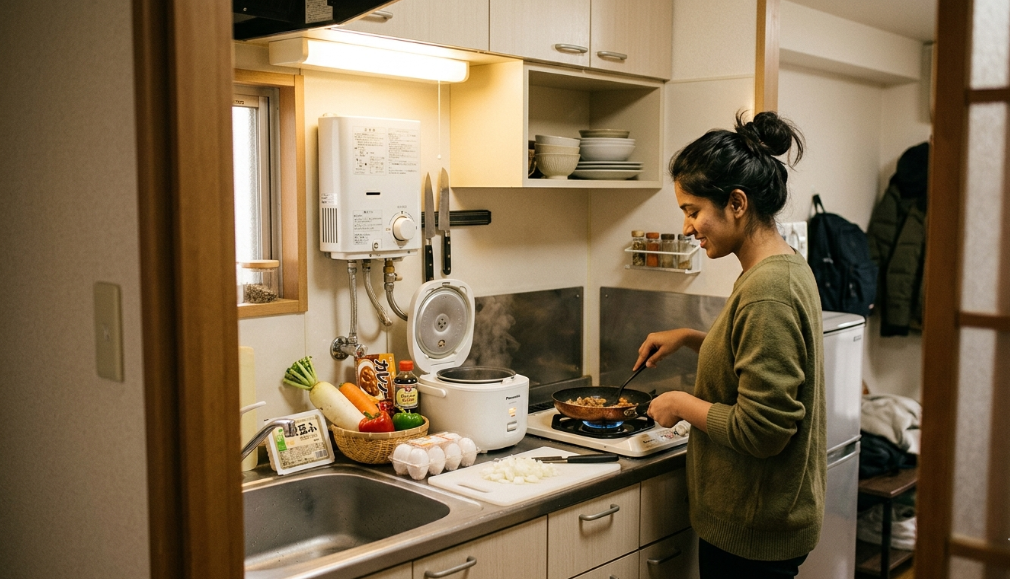
Food is one area where the cost of living Japan Indian students experience is often more manageable than expected — if you cook.
Cooking at Home — Monthly Grocery Budget
Supermarkets in Japan are moderately priced and well-stocked, especially when it comes to essentials. When cooking at home in Japan, Indian students can handle their grocery budget in the following ways:
¥1,500–¥2,500 (₹850–₹1,400) for a 5 kg bag of rice Weekly vegetable costs: ¥1,500–¥2,500 (₹850–₹1,400) Ten packs of eggs cost between ¥200 and ¥300 (₹115 and ₹170). Products made from tofu and soy: ¥100–¥200 per block (₹57–₹115) Indian and Asian grocery stores sell packets of dal, lentils, and chickpeas for between ¥300 and ¥600. Indian ingredients and spices: Indian culinary essentials can be purchased at specialty stores in large cities for between ¥3,000 and ¥5,000 (₹1,700 and ₹2,850) a month.
¥20,000–¥30,000 (about ₹11,400–₹17,100) is the monthly grocery expenditure for home cooking.
Japanese retailers discount down fresh food and bento boxes by 20–50% after 7 PM every day, while rice cookers (available for ¥2,000–¥3,000 secondhand) are a necessary initial purchase for many Indian students studying in Japan.
Eating Out — Campus and City Options
University canteen (学食 — gakushoku): The most economical and wholesome option on campus is ¥300–¥600 each meal (₹170–₹340). Japanese university canteens are well-funded and actually excellent.
Convenience store meal (konbini): ¥500–¥800 (₹285–₹455) — Fresh, hot, high-quality meals are available 24/7 at Japan's convenience stores (7-Eleven, FamilyMart, Lawson). For Japanese students, a bento or konbini onigiri is the equivalent of a quick lunch.
Ramen or udon restaurant: ¥700–¥1,200 (₹400–₹685) — affordable, filling, widely available.
Indian restaurants: ¥1,200–¥2,500 (₹685–₹1,425) — Japanese cities have Indian restaurants, but they are a treat, not a daily option.
Monthly food budget (mixed home cooking and occasional eating out): ¥25,000–¥40,000 (approximately ₹14,250–₹22,800)
Transport — Japan's World-Famous Public Transit System
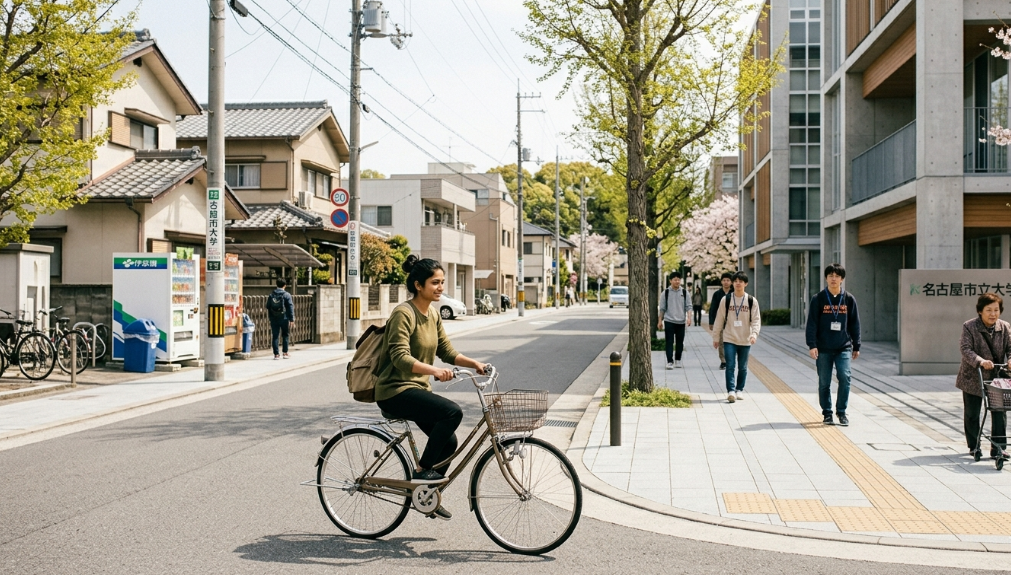
Japan has the greatest public transportation system in the world, but without the right passes, it can be quite expensive. This makes it an interesting component of the country's monthly living expenses for students.
Student Commuter Pass (通学定期券)
If you live near your university, you must have a student commuter pass (tsugaku teiki-ken). With this card, you can travel freely between your home and the institution on a predetermined path.
The cost of a monthly commuter pass ranges from ¥5,000 to ¥15,000 (₹2,850 to ₹8,550), depending on the city and distance. Three-month or six-month passes are significantly less expensive; always purchase the longest pass possible.
IC Card (Suica / Pasmo) for City Travel
For travel beyond your commuter pass route, an IC card (Suica or Pasmo) loaded with credit is the standard payment method for all trains, subways, and buses in Japan.
Monthly IC card top-up budget: ¥3,000–¥8,000 (₹1,700–₹4,570) depending on how much you explore
Bicycle — The Indian Student's Secret Weapon
In Japan, a used bicycle costs between ¥3,000 and ¥8,000 (₹1,700 and ₹4,570) and may be found in recycling stores close to every university campus. In locations like Kyoto, Sendai, and Nagoya, a large number of Indian students commute daily by bicycle, which almost eliminates transportation expenses for on-campus trips.
Realistic average monthly transportation budget: ¥8,000–¥18,000 (about ₹4,570–₹10,280)
Health Insurance — Mandatory and More Affordable Than You Think
All students in Japan — including international students — are required to enroll in Japan's National Health Insurance — Kokumin Kenko Hoken) system.
National Health Insurance for Students
Monthly premium: ¥1,500–¥3,000 (approximately ₹850–₹1,700) for students with low declared income
When it comes to living expenses, this is one of the most pleasant things Japanese Indian students learn. Japan has a comprehensive and affordable national health insurance policy. Your insurance card only covers 30% of the total cost of medical care, including doctor visits, prescription medications, and hospital stays. The government covers the remaining 70%.
MEXT scholarship recipients: The scholarship pays for all health insurance premiums; the student incurs no additional costs.
Utilities — Monthly Cost for Japanese Student Apartments
While the winters in northern towns like Sendai and Sapporo are fairly cold, the summers in Japan are hot and humid. As a result, monthly electricity costs are very seasonal for Japanese students.
Standard Monthly Utility Bills
Electricity: ¥3,000–¥8,000 (₹1,700–₹4,570) — higher in summer (air conditioning) and winter (heating) Gas: ¥1,500–¥4,000 (₹850–₹2,285) — for cooking and hot water Water: ¥1,000–¥2,000 (₹570–₹1,140) — often billed bi-monthly, typically low Internet: ¥3,000–¥5,000 (₹1,700–₹2,850) — Japan has fast, reliable fibre internet; most dormitories include this
Monthly utilities budget: ¥8,000–¥19,000 (approximately ₹4,570–₹10,850)
Note: Share house rents typically include utilities, eliminating this budget category entirely for share house residents.
Mobile Phone — Staying Connected in Japan
SIM Card and Mobile Plan Options
Budget SIM (MVNO — IIJmio, Mineo, OCN Mobile): ¥1,000–¥2,500 per month (₹570–₹1,425) for data-only or data + calls plans
Major carrier plans (Docomo, SoftBank, au): ¥3,000–¥7,000 per month (₹1,700–₹4,000) — more expensive but better coverage
Most Indian students in Japan use budget MVNO SIMs combined with Wi-Fi calling apps (LINE, WhatsApp) to keep monthly mobile costs under ¥2,000 (₹1,140).
Monthly mobile budget: ¥1,500–¥3,000 (approximately ₹850–₹1,700)
Personal and Miscellaneous Expenses
Clothing and Seasonal Items
There is a lot of seasonal variety in Japan. Northern Japan's winters call for appropriate cold-weather attire. Lightweight, moisture-wicking apparel is essential during the summer. Set aside between ¥10,000 and ¥20,000 (₹5,700 and ₹11,400) for clothing each season; however, these expenses are significantly lowered by Japan's top-notch used clothing stores and 100-yen stores (Daiso, Seria).
Monthly clothing allowance (averaged annually): ¥2,000–¥4,000 (₹1,140–₹2,285)
Entertainment and Social Life
Museums and cultural sites: Many are free or discounted for students with university ID Cinema: ¥1,500–¥1,800 per ticket (₹855–₹1,025) — student discount brings this to ¥1,000–¥1,300 Eating out with friends: ¥2,000–¥5,000 monthly if socialising moderately Travel within Japan: Japan's shinkansen (bullet train) is expensive at full price — use highway buses for long-distance travel at ¥2,000–¥5,000 per trip
Monthly personal and entertainment budget: ¥5,000–¥12,000 (approximately ₹2,850–₹6,850)
Complete Monthly Budget Summary — Japan Student Living Expenses
Here is the full Japan student living expenses monthly consolidated breakdown for 2026:
Expense Category | Budget Range (¥) | Budget Range (₹) |
Accommodation (dormitory/share house) | ¥15,000–¥55,000 | ₹8,500–₹31,400 |
Food and groceries | ¥25,000–¥40,000 | ₹14,250–₹22,800 |
Transport | ¥8,000–¥18,000 | ₹4,570–₹10,280 |
Health insurance | ¥1,500–¥3,000 | ₹850–₹1,700 |
Utilities | ¥8,000–₹19,000 | ₹4,570–₹10,850 |
Mobile phone | ¥1,500–¥3,000 | ₹850–₹1,700 |
Personal and entertainment | ¥5,000–¥12,000 | ₹2,850–₹6,850 |
Total Monthly | ¥64,000–¥150,000 | ₹36,500–₹85,500 |
A prudent student should budget between ¥85,000 and ¥100,000 (₹48,500 and ₹57,000) every month. Living expenses for a student on a tight budget outside of Tokyo range from ₹5.8 to ₹6.8 lakh annually.
Part-Time Work in Japan — How Indian Students Offset Living Costs
International students are permitted to work part-time up to 28 hours per week during the academic year in Japan and full-time during official holidays if they have a Resource Activity Permission stamp on their residence card.
Common Part-Time Jobs for Indian Students in Japan
Convenience store staff : The most popular first employment for overseas students pays between ¥1,000 and ¥1,300 per hour, is generally available, has flexible hours, and is accessible in N4–N3.
Restaurant and café service: ¥1,000–¥1,400 per hour — requires basic Japanese communication
University research assistant (RA): Students with high academic backgrounds can earn between ¥1,200 and ¥2,000 per hour, usually through supervisors.
Tutoring (English or other subjects): ¥1,500–¥3,000 per hour — for students with strong English or subject expertise
Monthly part-time income (20 hours/week): approximately ¥80,000–¥100,000 (₹45,700–₹57,100)
This makes Japan one of the most economically viable study abroad locations because a working Indian student there can earn between 50 and 100% of their monthly living expenses from part-time employment alone.
Plan Your Japan Journey for Free — YaStudy Handles Everything
Now that you have a clear idea of the cost of living for Japanese Indian students in 2026, the obvious question is how to get there.
university applications. documentation for MEXT scholarships, research goals, and faculty outreach. A qualification certificate. paperwork for a visa. preparation before departing. Every one of them is a unique process with its own timetable, documentation requirements, and risk of costly mistakes.
Most students attempt this on their own and lose months as a result of errors that an experienced adviser might have corrected in ten minutes. For advise that should be free, others pay specialists between ₹50,000 and ₹2,000,000.
YaStudy — Noida's most trusted and genuinely student-first study abroad consultancy — provides complete Japan study abroad guidance at absolutely zero cost to students.
Not reduced fees. Not a free first session that leads to charges. Zero cost. For every student. Every time.
The YaStudy Model — Why It Is Free and Why It Works
YaStudy's business approach is based on partnerships with universities. Universities and other organizations pay YaStudy to link qualified Indian students with their courses. All of your comments, document reviews, and hours of advise are truly helpful to you because students are never the source of income. Promoting a certain curriculum, city, or university is not motivated. The guidance is knowledgeable, impartial, and straightforward.
There are no additional fees. After the third session, there are no more costs. There are no fees for document processing. No charge for visa advice. Nothing at all from the pupil.
What YaStudy provides at zero cost for Japan-bound students:
Financial planning guidance — realistic Japan student living expenses monthly breakdown matched to your specific university city and lifestyle
MEXT scholarship application — research plan writing, professor outreach, Embassy documentation, complete support
University shortlisting — Japan's national and private universities matched to your field, budget, and goals
Complete application assistance — SOP, CV, Letters of Recommendation, academic transcripts
Certificate of Eligibility coordination — the document your Japanese university obtains on your behalf for the visa
Visa documentation checklist — reviewed before your consulate appointment so nothing is missed
Part-time work guidance — how to get your work permission, what jobs are realistic, how to balance work and study
Scholarship search beyond MEXT — JASSO, university-specific funding, and other Japan scholarships identified for your profile
Pre-departure orientation — dormitory application, health insurance registration, IC card setup, mobile SIM, first-week survival in Japan
YaStudy creates your entire Japan plan and guides you through every stage of carrying it out, regardless of whether you are a final-year student just starting to look at Japan costs or someone who has already passed JLPT N3 and is prepared to apply. For nothing.
Money-Saving Tips — How Smart Indian Students Reduce Japan Living Costs
The 100-Yen Store Strategy
Japan's 100-yen retailers, Daiso, Seria, and Can Do, sell thousands of household goods, kitchenware, stationery, food items, and personal care items for exactly ¥100 (plus tax). You can save between ₹15,000 and ₹25,000 by setting up your apartment from a 100-yen store instead of purchasing the same items at regular retail prices.
Supermarket Evening Discounts
After 7 PM every day, fresh vegetables, meat, seafood, and prepared goods are marked down by 20–50% in Japanese supermarkets. You can cut your monthly food budget by ¥5,000–¥8,000 (₹2,850–₹4,570) without sacrificing quality if you schedule your grocery shopping around this timeframe.
University Library and Study Facilities
Study rooms, computer labs, and libraries in Japanese universities are outstanding and free for enrolled students. Monthly savings of ¥3,000 to ¥5,000 can be achieved by investing in university resources instead of commercial alternatives (paid study areas, private printing services, costly software subscriptions).
Student Discount Cards
Japanese universities issue student ID cards that unlock discounts at museums, cinemas, theme parks, transportation, and many restaurants. Always carry your student ID and always ask whether a student discount applies before paying full price.
Recycle Shops for Everything
Secondhand furniture, appliances, bicycles, clothing, textbooks, and electronics are sold at 10–30% of their original retail price in Japan's recycling stores, such as Book Off, Hard Off, and local counterparts. In Japan, recycling stores can save you between ¥30,000 and ₹80,000 (₹17,000 and ₹45,700) on the initial setup of your first residence.
One-Time Arrival Costs — Budget for Your First Month
Beyond monthly expenses, plan for these one-time costs when you first arrive in Japan:
One-Time Expense | Approximate Cost (¥) | Approximate Cost (₹) |
Security deposit (private apartment) | ¥60,000–¥160,000 | ₹34,300–₹91,400 |
Initial groceries and kitchen setup | ¥15,000–¥25,000 | ₹8,550–₹14,250 |
Bedding and household items | ¥10,000–¥20,000 | ₹5,700–₹11,400 |
Mobile SIM and initial top-up | ¥3,000–¥5,000 | ₹1,700–₹2,850 |
IC card (Suica/Pasmo) initial load | ¥5,000–¥10,000 | ₹2,850–₹5,700 |
Residence card registration (free) | ¥0 | ₹0 |
Total first-month additional costs | ¥93,000–¥220,000 | ₹53,100–₹1,25,600 |
For dormitory residents, the first-month additional costs drop dramatically — typically under ¥30,000 (₹17,100) since most dormitory items are provided.
Conclusion — Japan Is Affordable When You Know the Numbers
The cost of living for Japanese Indian students in 2026 is competitive with Canada and Germany when part-time income is taken into consideration, but it is still significantly more than in the UK, USA, or Australia.
A cautious Indian student can live comfortably on ¥70,000 to ¥85,000 per month in a non-Tokyo Japanese city with a university dorm placement, part-time job at a convenience store, and home cooking as the default. The income from part-time work will cover most of that on their own..
Arriving with a realistic budget plan, securing the ideal lodging prior to travel, and fully comprehending the monthly expenditure of each yen are crucial.
That plan is provided by the numbers in this handbook. Additionally, YaStudy ensures that the procedure costs you nothing at all when you are ready to convert the financial plan into an actual admission to a Japanese university.
Start Your Study Abroad Journey
Join thousands of students who achieved their dreams with Yastudy.