IELTS Preparation in Patna — The 30-Day Study Plan That Actually Works in 2026
Tarun Chandel
Recently • 8 min read

30 days.
That’s all it can take to completely change the direction of your future.
Planning to Study Abroad?
Get personalized guidance from experienced education counselors.
Yet every year in Patna, thousands of students miss their dream IELTS score — not because they are incapable, not because they are less intelligent, and not because they lack ambition. Most fail for one simple reason: they never follow a clear, structured plan.
Some spend months jumping between random YouTube videos. Others buy expensive coaching programs but study without consistency. Many start preparing seriously only a few weeks before the exam, overwhelmed by stress and unsure where to begin. And slowly, the dream of studying abroad starts feeling further away than ever.
But here’s the truth most people don’t realize: IELTS success is not built on endless studying. It is built on focused, disciplined preparation done correctly every single day.
This 30-day IELTS preparation guide for Patna students was created for exactly that purpose.
For the student who has an exam date approaching fast and cannot afford to waste another day.
For the student who has been studying randomly without seeing improvement.
And for the beginner who wants to prepare the right way from day one instead of repeating the mistakes others make.
This is not another generic article filled with surface-level IELTS tips.
It is a complete day-by-day roadmap designed specifically around the challenges many students in Patna genuinely face — challenges that are rarely talked about openly. Challenges like limited exposure to British and Australian accents in everyday life. Difficulty building strong academic writing skills because schools and colleges often focus more on theory than practical English communication. And the lack of regular conversation practice with fluent English speakers.
That is why this guide breaks the entire preparation journey into four focused weeks, with each day designed to build confidence, improve accuracy, and strengthen the exact skills the IELTS exam tests.
No confusion. No wasted effort. No random preparation.
Just thirty carefully planned days that can move you one step closer to the university, country, and future you have been dreaming about.
Follow the plan fully. Show up every single day. And by the end of these 30 days, your IELTS score will reflect the work you put in — because consistency always speaks louder than panic.
Before Day 1 — The Foundation You Must Build First:
Understanding What IELTS Actually Tests:
For many students, the IELTS exam feels intimidating long before they even enter the test center.
Not because the exam is impossible — but because one number seems to carry so much weight. A single band score can decide whether you get into your dream university, secure a student visa, or move one step closer to the life you have imagined abroad.
And that is why understanding how IELTS actually works is so important.
The International English Language Testing System (IELTS) does not judge you on just one skill. Instead, it measures how confidently and effectively you can use English in four different areas of real communication: Listening, Reading, Writing, and Speaking.
Each of these four sections is scored separately on a band scale from 0 to 9. After that, your scores are combined, and the average becomes your overall IELTS band score — rounded to the nearest 0.5 band.
So your final result is not determined by one perfect performance or one small mistake. It reflects your overall ability to understand, communicate, think, and express yourself in English across multiple situations.
And for most students planning to study abroad, that number matters more than they realize.
Because universities, visa officers, and immigration systems often use IELTS scores as proof that you are ready to survive academically and socially in an English-speaking country. A higher score can open doors to better universities, stronger scholarship opportunities, and smoother visa approvals.
That’s why students across the world spend months preparing for these four skills — not just to pass an exam, but to prove they are ready for the next chapter of their lives.
For the majority of study abroad goals:
Germany (English-taught programmes): Overall 6.5, minimum 6.0 in each component
Canada: Overall 6.0–6.5, with specific component minimums varying by programme
UK: Overall 6.0–6.5 for most universities
Japan (English-taught programmes): Overall 6.0–6.5
Knowing your goal score before Day 1 is crucial since it dictates how hard you must work and which areas require the most focus.
Taking a Diagnostic Test Before Day 1:
Take a complete, timed IELTS practice test under actual exam conditions prior to the start of your 30-day plan. You are preparing blindly without this diagnostic test, so it is not negotiable.
How to take your diagnostic test:
Download or access a full IELTS Cambridge Practice Test (Cambridge IELTS series, books 1–17 are the gold standard)
Complete all four sections under timed conditions — do not pause, do not look things up
Score yourself honestly using the answer key
Record your component scores: Listening / Reading / Writing / Speaking
Your diagnostic results indicate where you should devote the most time to your 30-day IELTS preparation plan in Patna. Students with the opposite profile require a completely different plan than those who score 5.0 in listening but 6.5 in reading.
Registering for Your IELTS Test:
Before Day 1 of your preparation, register for your IELTS exam if you haven't already. A set test date establishes the responsibility necessary for a 30-day strategy to succeed.
IELTS test centres in and near Patna:
British Council Patna — IDP IELTS Patna office
Check current availability and registration at the official portal
Week 1 (Days 1–7) — Foundation Building:
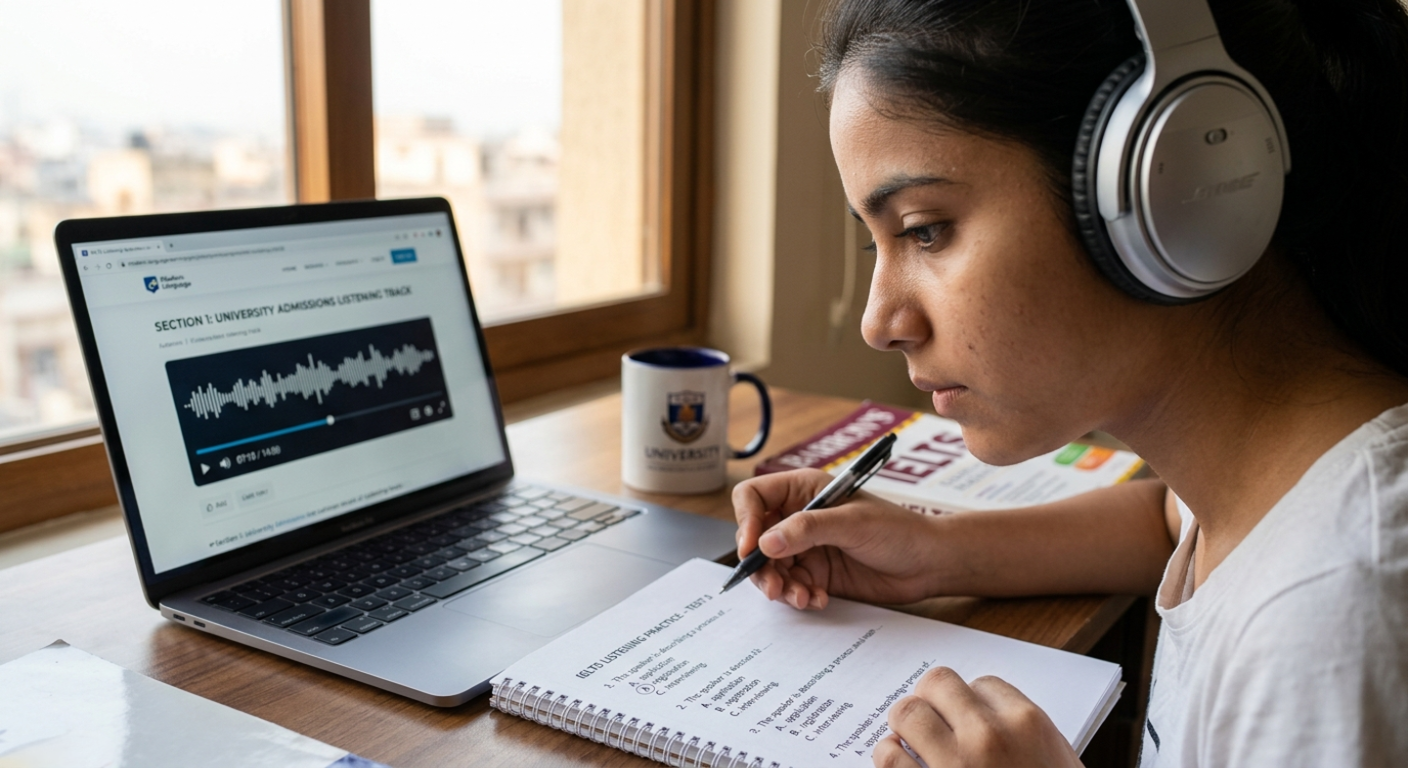
The Week 1 Philosophy:
Most students begin IELTS preparation by jumping straight into mock tests.
They open practice papers, start solving questions under pressure, and hope that repeating enough tests will somehow improve their score. But after weeks of effort, many are left frustrated, exhausted, and confused about why their bands are not improving.
The problem is not always weak English.
Sometimes, the real problem is not understanding the exam itself.
That is why Week 1 of this 30-day IELTS study plan for Patna students is different.
This week is not about chasing scores. It is about building clarity. Because before you can perform well in IELTS, you need to understand the test so deeply that nothing inside the exam hall feels unfamiliar, rushed, or intimidating.
Every year, many students in Patna lose valuable marks for reasons that have nothing to do with intelligence or language ability. Some misunderstand the instructions. Others panic because they do not know how much time each section allows. Many attempt questions in the wrong order, spend too long on difficult tasks, or become mentally overwhelmed simply because the format catches them off guard.
And once panic begins, confidence disappears quickly.
Week 1 is designed to prevent that from happening.
Before you focus on high scores, you first learn the structure behind the exam — how every section works, what each question type expects from you, where students commonly make mistakes, and how to manage your time without stress.
By the end of this week, the IELTS exam will no longer feel like an unpredictable challenge. It will feel familiar. Organized. Understandable.
And that confidence alone can save you more marks than most students realize.
Because when you walk into the exam hall already knowing exactly what is coming next, your mind stops fighting confusion — and starts focusing entirely on performance.
Day 1 — Listening Section Mastery:
Morning (1 hour): Study the complete IELTS Listening format
4 sections, 40 questions, 30 minutes of audio + 10 minutes transfer time
Section types: form completion, multiple choice, matching, map/diagram labelling, sentence completion
Afternoon (1 hour): Complete one full Listening section (Section 1 and 2 from a Cambridge practice test)
Evening (30 minutes): Review every incorrect answer — understand why the correct answer was correct
Important information for Patna students: IELTS Listening is dominated by Australian and British accents. For Patna students, listening to 30 minutes of British English audio each day of the 30-day plan—whether it be from BBC Radio, BBC podcasts, or Cambridge IELTS audio—is the most productive daily routine. Begin this habit today.
Day 2 — Reading Section Mastery:
Morning (1 hour): Study the complete IELTS Academic Reading format
3 passages, 40 questions, 60 minutes (no extra transfer time)
Question types: True/False/Not Given, matching headings, sentence completion, multiple choice, short answer
Afternoon (1 hour): Complete one IELTS Reading passage (Passage 1 from a Cambridge test)
Evening (30 minutes): Analyse every error — was it a vocabulary gap, a misread instruction, or time pressure?
Crucial realization: Most Indian students struggle with True/False/Not Given questions because they search for information that "looks right" rather than information that is stated clearly in the text. The distinction between FALSE (the text says the opposite) and NOT GIVEN (the text does not address it at all) should be the main emphasis of Day 2's practice.
Day 3 — Writing Task 1 (Academic) Mastery:
Morning (1 hour): Study IELTS Academic Writing Task 1
Describe a graph, chart, table, diagram, or process
150 words minimum, 20 minutes recommended
Assessment criteria: Task Achievement, Coherence and Cohesion, Lexical Resource, Grammatical Range and Accuracy
Afternoon (1 hour): Write one complete Task 1 response (a bar chart description from a Cambridge practice test) in exactly 20 minutes
Evening (30 minutes): Self-evaluate using the official band descriptors — compare your response to a model answer
Template structure to memorise:
Introduction (paraphrase the question)
Overview (2 main features — the most important trends or comparisons)
Body paragraph 1 (detailed description with specific data)
Body paragraph 2 (detailed description with specific data)
Day 4 — Writing Task 2 (Essay) Mastery:
Morning (1 hour): Study IELTS Writing Task 2
Write an essay responding to a point of view, argument, or problem
250 words minimum, 40 minutes recommended
Most common types: Opinion essay, Discussion essay, Problem-Solution essay, Advantages-Disadvantages essay
Afternoon (1 hour): Write one complete Task 2 essay on a real IELTS topic in exactly 40 minutes
Evening (30 minutes): Evaluate your essay for: clear position stated in introduction, relevant and developed body paragraphs, specific examples, clear conclusion, varied vocabulary, sentence structure variety
Day 5 — Speaking Section Mastery:
Morning (1 hour): Study the complete IELTS Speaking format
Part 1: Introduction and interview (4–5 minutes) — questions about familiar topics
Part 2: Long turn (3–4 minutes) — speak for 1–2 minutes on a cue card topic
Part 3: Discussion (4–5 minutes) — abstract discussion related to Part 2 topic
Afternoon (1 hour): Practice Part 1 questions aloud — record yourself on your phone
Evening (30 minutes): Listen to your recording critically — identify filler words (um, uh), repetition, grammar errors, pronunciation issues
Key insight for Patna students: The Speaking examiner assigns a score based on your Pronunciation, Grammatical Range, Lexical Resource, and Fluency and Coherence. A Bihari accent does not lose you points because accents are not graded. Vocabulary, fluency, and clarity do. Instead than trying to sound British, concentrate on these.
Days 6–7 — Vocabulary and Grammar Foundation:
Day 6 — Vocabulary:
Create a daily word list of 15 academic words from the Academic Word List (AWL)
Learn each word in context — not just definition, but example sentences
Day 7 — Grammar:
Focus on the grammar errors most common in Indian student IELTS writing: article usage (a/an/the), subject-verb agreement, tense consistency, preposition accuracy
Complete targeted grammar exercises from a grammar reference book or online resource
Week 2 (Days 8–14) — Skill Development
The Week 2 Philosophy:
Week 2 of your IELTS preparation plan Patna 30 days moves from understanding to development. You know the format. Now you systematically build the skills within each section.
Day 8 — Listening: Accent Training:
3 hours total:
1 hour: Listen to 2 complete Listening sections with scripts — pause, replay, understand every word
1 hour: BBC Learning English "6 Minute English" podcast — 10 episodes, focus on vocabulary in context
1 hour: Dictation practice — listen and write exactly what you hear, then check.
Day 9 — Reading: Speed and Skimming:
3 hours total:
1 hour: Skim-reading practice — read 3 passages in 15 minutes total (5 minutes each), write the main idea of each paragraph without stopping
1 hour: Complete one full Reading section under timed conditions
1 hour: Analyse True/False/Not Given answers — underline the specific text that proves each answer
Day 10 — Writing Task 1: Chart Types
3 hours total:
1 hour: Practice line graph descriptions — focus on trend vocabulary (rose sharply, declined gradually, remained stable, fluctuated)
1 hour: Practice pie chart descriptions — focus on proportion vocabulary (accounted for, comprised, represented)
1 hour: Write one complete Task 1 response for each chart type — 20 minutes each
Day 11 — Writing Task 2: Argument Structure
3 hours total:
1 hour: Study and memorise essay structures for opinion, discussion, and problem-solution essay types
1 hour: Write a complete opinion essay — "Some people think universities should focus on academic studies only. To what extent do you agree or disagree?"
1 hour: Review and rewrite the weakest paragraph of your essay
Day 12 — Speaking: Part 2 Cue Card Practice
3 hours total:
1 hour: Practice 5 Part 2 cue card topics — 1 minute preparation, 2 minutes speaking, recorded on phone
1 hour: Listen to recordings and identify: Did you speak for the full 2 minutes? Did you address all bullet points on the card? Did you use specific examples?
1 hour: Repeat the 2 weakest cue card responses with focus on fluency and specific detail
Days 13–14 — Integrated Practice Days
Day 13: Complete a full timed practice test — Listening (30 min) + Reading (60 min) Score and analyse every error. For each wrong answer: was it vocabulary, format misunderstanding, or time pressure?
Day 14: Complete Writing Task 1 (20 min) + Writing Task 2 (40 min) Self-evaluate both pieces against the IELTS band descriptors
Week 3 (Days 15–21) — Intensive Practice:
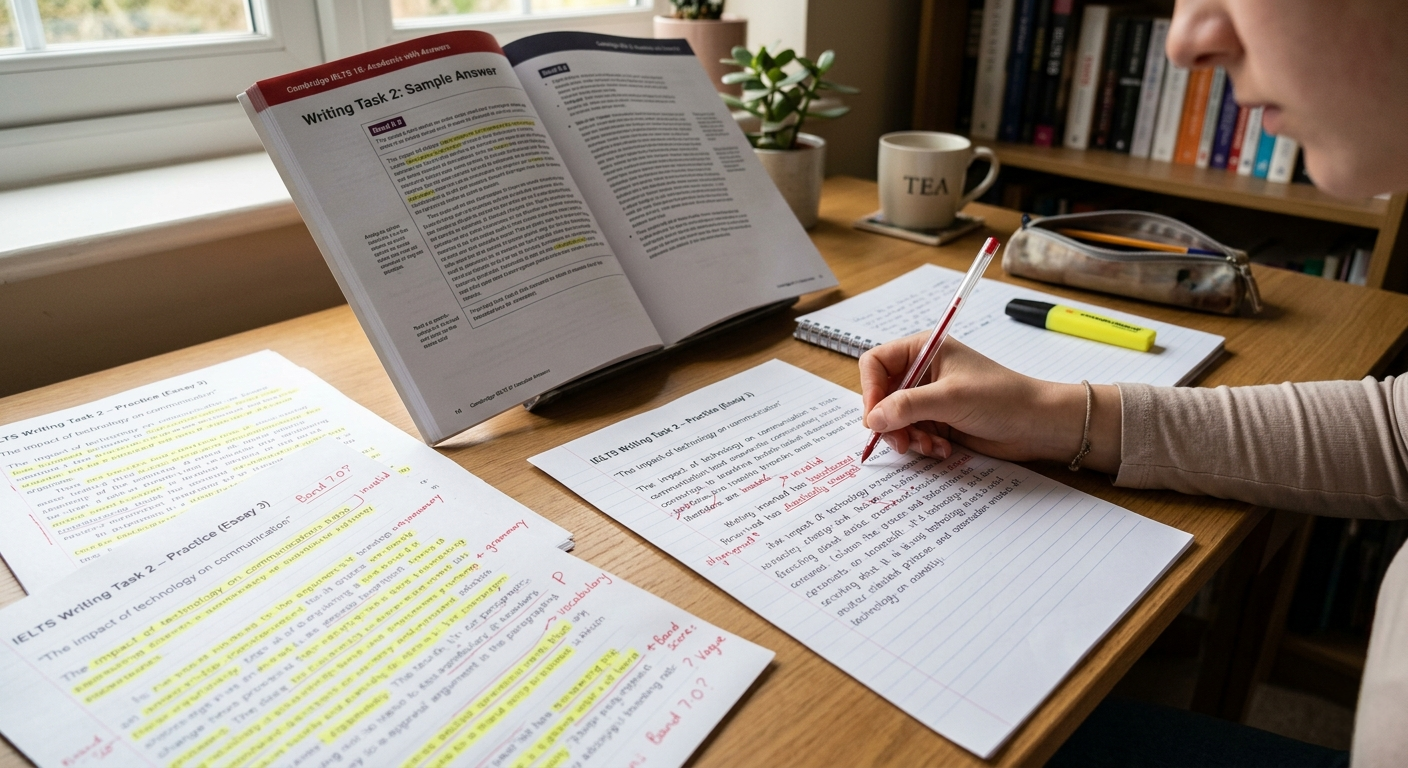
The Week 3 Philosophy
The third week of your Patna 30-day IELTS preparation schedule is the most difficult. High-volume, high-intensity practice with prompt, thorough feedback on each mistake is where the actual score development takes place.
Days 15–17 — Daily Full Section Practice
Each day:
Morning (90 minutes): One complete Listening section + One complete Reading section — timed, scored, errors analysed
Afternoon (90 minutes): One complete Writing Task 2 essay — timed, self-evaluated against band descriptors
Evening (60 minutes): 30 minutes Speaking practice (recorded) + 30 minutes vocabulary review (15 new AWL words)
Days 18–19 — Writing Feedback and Correction
Day 18: Examine all of the completed Task 2 essays. Determine your three most frequent error patterns; these are the mistakes that cost you the most points. These will include weak body paragraphs, word repetition, and article errors for the majority of Patna students.
Day 19: Write a fresh response to the same question in your two poorest Task 2 essays, without making any corrections to the original. Any amount of error correction on pre-existing drafts is not as effective as this rewriting exercise.
Days 20–21 — Mock Speaking Sessions
Day 20: Set up a mock Test your speaking skills with a friend, relative, or language exchange partner. Ask them questions from a Cambridge practice book for Parts 1, 2, and 3. The entire 11–14 minute session should be recorded.
Day 21: Play the entire recording. Evaluate your performance on the four Speaking criteria. Determine the precise times when your vocabulary waned, your grammar failed, or your fluency declined. Your Speaking training goals for Week 4 are these particular instances.
Week 4 (Days 22–30) — Final Preparation and Peak Performance:
The Week 4 Philosophy:
Consolidation, peak performance, and mental preparation are the topics of week four of your IELTS study plan Patna 30 days. You've developed the abilities. You now routinely exhibit them in an examination setting.
Days 22–24 — Full Mock Tests Under Exam Conditions:
Each day:
Morning: Complete Listening (30 min) + Reading (60 min) under exact exam conditions — no pausing, no looking things up, answers transferred at the end
Afternoon: Complete Writing Task 1 (20 min) + Task 2 (40 min) under exam conditions — no dictionary, no review of previous essays
Score everything immediately. Track your scores over the three days — are they consistent? Improving? Which component has the most variability?
Days 25–26 — Targeted Weak Area Sprint:
Determine your lowest-performing component based on the results of your three mock exams, then devote these two days to focused practice in that area:
Listening below goal: four hours of focused listening practice; no practice with individual questions, just whole parts Reading the target below: True/False/Not Given targeted training combined with speed-reading drills Two finished essays a day is the writing goal. + a thorough comparison of model answers Speaking below the goal: three whole mock Daily responses to Part 2 cue cards plus recorded Part 3 conversation practice.
Day 27 — Consolidation Day:
No new practice material. Review all your notes, your error patterns, your vocabulary lists, and your writing templates. Consolidation — not new input — is what Day 27 requires.
Day 28 — Light Practice and Mental Preparation:
2 hours maximum. One Listening section and one Reading passage — light practice to keep skills sharp without fatiguing your mind before the test.
Review your test day logistics:
What time do you need to leave home to reach the test centre comfortably?
What documents do you need to carry?
What is the test centre's policy on what you can bring into the examination room?
Day 29 — Rest Day:
total relaxation. No practice for the IELTS. No review of vocabulary. No practice exams. While you are sleeping, your brain solidifies what you have learned; this is not a waste of time; rather, it is crucial preparation. Go to bed early.
Day 30 — Test Day:
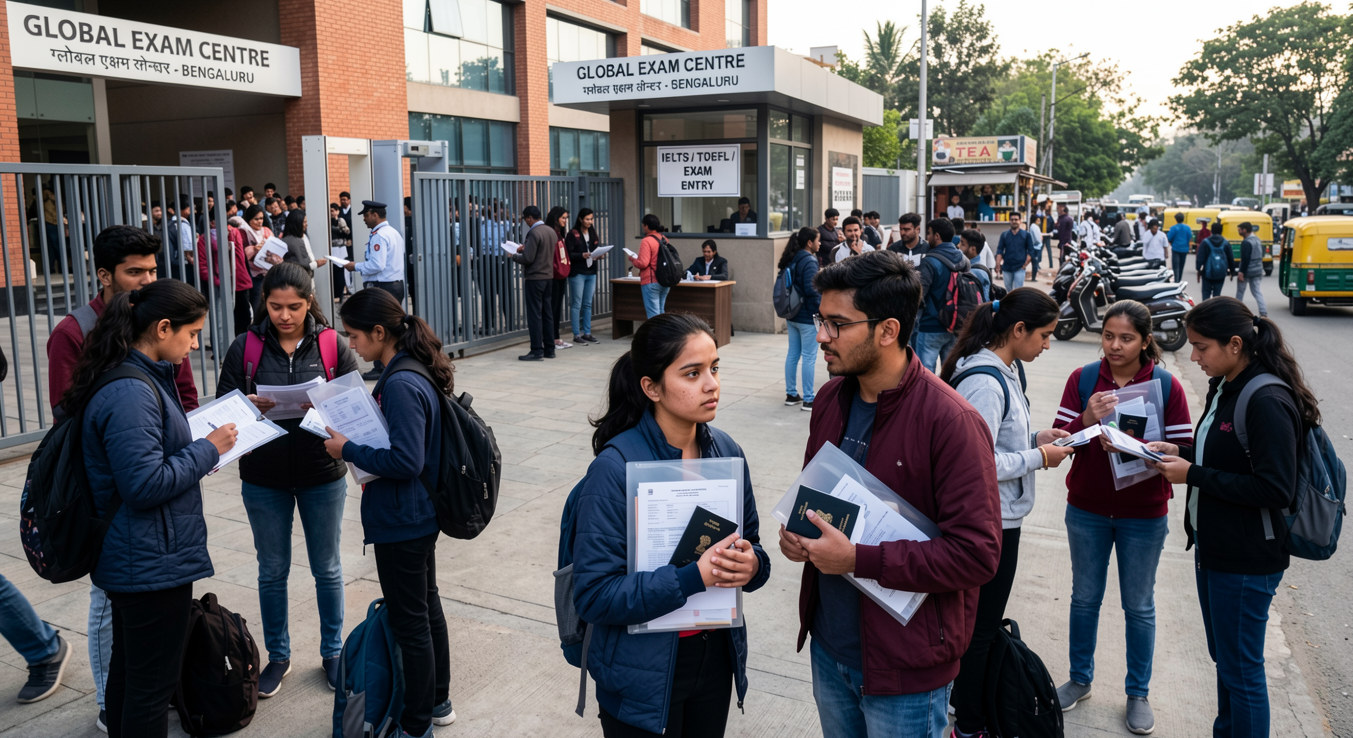
Morning routine:
Wake up at your normal time — do not sleep in
Eat a proper breakfast
Arrive at the test centre 30 minutes before your scheduled time
Carry your original passport (the same document used for registration) — no other ID is accepted
During the test:
Listening: Write answers on the question paper as you listen, transfer in the 10-minute window at the end — never during listening
Reading: Do not spend more than 20 minutes on any single passage
Writing: Always write more than the minimum — Task 1 aim for 160–180 words, Task 2 aim for 260–280 words
Speaking: The examiner is not judging your opinions — they are judging your language. Speak confidently, use specific examples, and do not apologise for your English
After IELTS — What Your Score Unlocks:
Getting an IELTS score of 6.5 or higher is not the end goal. Germany, Japan, Canada, the UK, and every other significant study abroad location can be accessed with this key. Knowing how to use your result is the next step after obtaining it, and this calls for advice that goes far beyond IELTS preparation.
Yastudy — Noida's most trusted and genuinely student-first study abroad consultancy — provides that guidance to Patna students and students across Bihar and India at absolutely zero cost.
Zero consultation fees. Zero SOP writing charges. Zero visa documentation fees. Zero hidden costs. Always free. For every student.
Why Yastudy Is Free — And Why That Matters:
Universities in Germany, Japan, the UK, Canada, and other countries pay Yastudy to connect eligible Indian students to their programs; this is how Yastudy is supported. Students are never the source of income. This implies that every suggestion, document review, and hour of advice is honestly in your best interest and is not motivated by the university that pays Yastudy the largest commission.
What Yastudy provides at zero cost after your IELTS success:
Profile assessment — where your IELTS score, academic background, and career goals position you in the global university landscape
University shortlisting — matched to your IELTS band, undergraduate grades, and field of study
SOP writing and review — the document that determines admission as much as your IELTS score
APS certificate guidance for Germany
MEXT scholarship support for Japan
Canada and UK application assistance — complete from shortlisting to visa documentation
Education loan guidance through Vidya Laxmi Portal and partner banks
Scholarship identification — DAAD, MEXT, and university-specific funding matched to your profile
Pre-departure orientation — so your first weeks abroad are confident, not chaotic
Yastudy's totally free platform has helped hundreds of students from Patna, Muzaffarpur, Darbhanga, and around Bihar turn their IELTS scores into successful study abroad opportunities and university admissions.
Conclusion — 30 Days Is Enough. But Only If You Use Them Right:
This guide's Patna 30-day IELTS preparation schedule is challenging. For thirty days in a row, it requires three to four hours of concentrated, organized practice each day. There will be days when the practice seems monotonous, when the exam date seems both too near and too far away, and when the error log appears to be growing more quickly than the results.
The most important days are those ones. On those days, students who adhere to the plan keep their distance from those who don't.
Thirty days remain till you receive your IELTS score. The next chapter describes your study abroad experience, whether it is in Germany, Japan, Canada, the UK, or somewhere else.
This guide serves as preparation. Yastudy is the next step; it's free, knowledgeable, and ready.
Start Your Study Abroad Journey
Join thousands of students who achieved their dreams with Yastudy.