Common Mistakes Indian Students Make in Study Abroad Applications
Aastha Sharma
Recently • 8 min read

Every year, thousands of Indian students sit down to apply to universities abroad with the best intentions. They've done the research. They've taken the exams. They've got their documents in a folder. And then, somewhere between the first draft of the personal statement and the final submission, things go quietly, expensively wrong.
The frustrating part? Most of these mistakes are completely avoidable. They're not happening because students aren't smart enough or aren't trying hard enough. They're happening because nobody actually told them what the real landmines look like.
This blog is that conversation. Whether you're applying to the best countries to study abroad Canada, Germany, Australia, the UK, the US, or narrowing down which country is best to study abroad for your specific goals, these are the mistakes that cut across all of them.
Planning to Study Abroad?
Get personalized guidance from experienced education counselors.
If you're still deciding which destination fits your goals and budget, it helps to first understand How to Choose the Right Country to Study Abroad? before finalizing applications.
Mistake 1: Starting Too Late
This is the one that kills more applications than anything else. Students underestimate how long this process actually takes when you account for every moving part — and then scramble through the end of it making rushed decisions they later regret.
Here's what the timeline actually looks like when done properly: English proficiency exams like IELTS take three to four months of serious prep.
Shortlisting universities, researching programs, and building a balanced list takes another month at minimum. Writing a personal statement that's actually good, not just grammatically correct, but genuinely compelling, takes multiple drafts over several weeks. Getting letters of recommendation from professors or employers who will write something meaningful, not generic, requires giving them enough notice.
And visa applications, once you have an offer, have their own processing timelines, Canada student visa processing time currently runs 8 to 12 weeks, and Germany student visa checklists require documentation that takes time to gather.
Students planning their application schedule should review the full Study Abroad process to understand how these stages connect.
Most students who start this process in August for January intakes, or in December for September intakes, are already behind. The students who do this well start 12 to 14 months before their target intake date.
Start earlier than you think you need to.
Mistake 2: Treating the Personal Statement Like a Resume in Paragraph Form

This is possibly the most widespread mistake in study abroad applications, and it's the one that study abroad consultants in Delhi and Noida see constantly, students who write their personal statement as a chronological summary of their achievements instead of a genuine, specific, human story about why they want this program, at this university, at this point in their life.
Admissions officers at foreign universities read thousands of applications. They can spot a generic personal statement in about thirty seconds.
The ones that work are the ones where a specific student's specific journey leads logically and compellingly to this specific program. Not "I have always been passionate about business." Not "studying abroad will give me global exposure." Something real, a moment, a project, a problem you encountered that made you realise what you wanted to pursue and why this program is the next step.
Your grades and test scores get you considered. Your personal statement gets you selected. Treat it accordingly.
Mistake 3: Applying to Too Many or Too Few Universities
There's a version of this process where a student applies to fifteen universities because they're scared of rejection, spends a fortune on application fees, and then gets into several places without having thought carefully about which one they'd actually want to attend.
And there's the opposite version, applying to two or three universities because those are the ones they've heard of, without building a proper balanced list that accounts for their actual academic profile.
The right number is typically eight to twelve universities spread across three tiers: reach, target, and safety. Each one should be a place you'd genuinely be happy to attend. Each one should be a realistic possibility based on your profile.
The best country to study abroad for Indian students is different for every student, and so is the right university within that country. Resist the temptation to apply to universities by reputation alone. Research programs, outcomes, scholarship availability, and campus culture for each one on your list.
Mistake 4: Ignoring Scholarships Until It's Too Late
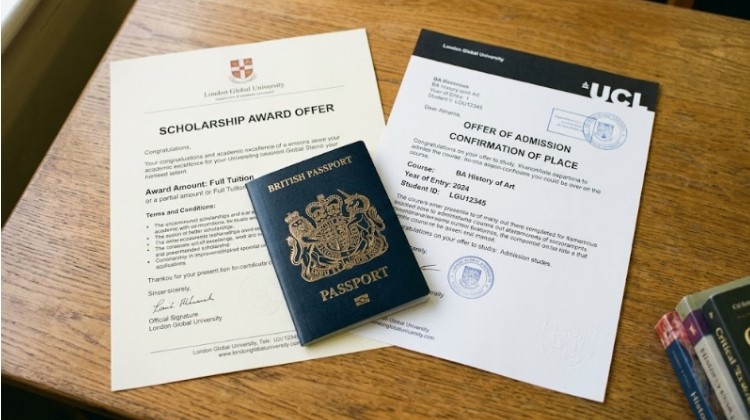
Here's a pattern that plays out repeatedly: a student applies to universities, gets in, then starts looking for scholarships, and discovers that most scholarship deadlines passed months ago.
Scholarship applications run on their own timelines, often earlier than university application deadlines. Indian government scholarships for studying abroad, like the National Overseas Scholarship and ICCR scholarships, have specific application windows. Chevening for the UK, DAAD for Germany, Australia Awards, all of these have deadlines that require you to be organised well in advance.
The students who successfully reduce their financial burden are the ones who built scholarship applications into their timeline from the beginning, not as an afterthought after they've already been accepted.
Students who actively research funding options should explore Scholarships for Indian Students Studying Abroad early in their application timeline.
Also worth knowing: many universities offer merit scholarships that are automatically considered when you apply, or require a brief additional essay at the time of application. These are easy to miss if you're rushing through the application process. Slow down and check.
Mistake 5: Underestimating the Importance of Exams And Their Timing
The exams to study abroad catch students off guard more than almost anything else in this process. Not just the preparation time, but the logistics of it all.
IELTS and TOEFL results are valid for two years. If you took your exam early but are applying in a later cycle, check whether your scores will still be valid at the time of enrollment not just at the time of application. Some universities specify this.
Different universities have different minimum score requirements, even within the same country. A 6.5 overall on IELTS might meet the minimum at one Canadian university and fall short at another. Check each university's specific requirements rather than assuming a passing score is a passing score everywhere.
And if you're applying to programs that require GRE or GMAT, relevant for postgraduate applicants but worth mentioning here, give yourself at least one attempt's worth of buffer time. These exams have a learning curve and one attempt is rarely your best.
Mistake 6: A Sloppy Visa Application
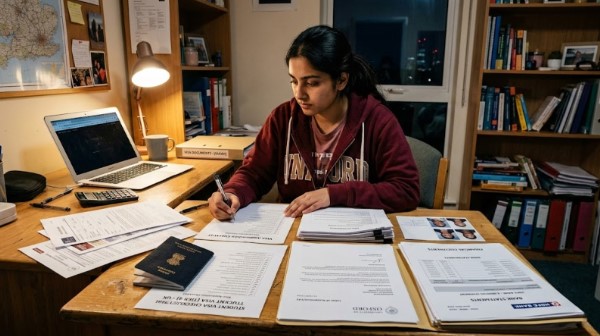
Getting into a university and then having your visa delayed or denied is one of the most stressful experiences in this entire process. And it happens more than it should, usually because of documentation issues that were entirely preventable.
For Germany, the student visa checklist is detailed and specific, and missing even one document can delay your application significantly.
For Australia, the student visa process requires proof of enrollment, evidence of financial capacity, and health insurance arrangements.
For Canada, the study permit application needs to clearly demonstrate ties to India and intent to return, vague or incomplete applications raise flags.
The honest advice: treat your visa application with the same seriousness as your university application. Read the official requirements from the embassy or immigration authority, not a third-party summary. Have everything documented, translated where required, and organised clearly.
If you're working with study abroad consultants in Delhi or Noida, make sure visa guidance is explicitly part of what they're helping with, not an afterthought.
Students should review the Visa page to understand documentation requirements and timelines before submitting their application.
Mistake 7: Not Thinking About What Comes After
This one is more of a mindset mistake than a process mistake, but it has real consequences.
Students who don't think about life after graduation while they're applying often end up in countries with limited post-study work options, or in programs with poor graduate employment outcomes, or in fields where the country they've chosen simply doesn't have a strong job market.
The advantages of studying abroad, global network, international work experience, exposure to different ways of thinking, only fully materialise if you plan for them. Before you finalise any application, know what the post-study work visa looks like in that country for your field. Know what salaries look like for fresh graduates. Know what the realistic career path is.
Study abroad is an investment. Treat it like one.
Mistake 8: Listing Study Abroad on Your Resume Incorrectly Or Not at All
This one comes at the end of the process, but it's worth mentioning here because the way you think about your international education shapes how you present it later.
Listing study abroad on your resume isn't just about adding a university name under education. It's about articulating what you built there, research, internships, projects, language skills, leadership in student organisations, cross-cultural competencies.
Future employers, whether in India or abroad, aren't just seeing where you studied. They're trying to understand what you actually did with the experience.
Think about this from day one of your time abroad, not when you're updating your resume two years later.
The Common Thread in All of These
Every mistake on this list comes down to the same thing: underestimating how much this process requires of you in terms of time, research, and honest self-assessment.
The best countries to study abroad are full of Indian students who got in, thrived, and built genuinely exciting careers. They're also full of Indian students who made rushed decisions, ended up somewhere wrong for them, and are still figuring out what to do about it.
The difference between the two groups is almost never intelligence. It's preparation.
Start earlier. Research deeper. Write better. Plan further ahead.
You've got this.
FAQ
What is the most common mistake students make in study abroad applications?
Starting the application process too late is the most common mistake. Students often underestimate how long exam preparation, university research, documentation, and visa processing actually take.
How early should students start preparing for studying abroad?
Ideally students should begin planning 12–18 months before their target intake to allow time for exams, university research, and scholarship applications.
How many universities should students apply to abroad?
Most students apply to 8–12 universities, divided between reach, target, and safety options.
When should students apply for scholarships for studying abroad?
Scholarship applications should start 10–12 months before intake, as many major scholarships close before university deadlines.
Why are study abroad visas sometimes rejected?
Visa rejections often happen due to incomplete documentation, unclear financial proof, or weak explanation of study plans.
Start Your Study Abroad Journey
Join thousands of students who achieved their dreams with Yastudy.