Is German Language Mandatory for Germany Student Visa?
Sakshi Singh
Recently • 8 min read

Have you ever wondered, “Do I need to learn German to study in Germany?” If you are an Indian student dreaming about studying in Germany, this is probably one of the biggest doubts stopping you from taking the next step. Germany is known for world-class universities, affordable education, and excellent job opportunities. But the language question often creates confusion and sometimes even fear.
The truth is German is not always mandatory for a Germany student visa. The requirement mainly depends on the language in which your chosen program is taught. According to verified guidelines from DAAD and the German Embassy, students can study in Germany through both English-taught and German-taught programs.
In this complete guide, you will learn when German is required, which language certificates are accepted, and how thousands of Indian students successfully study in Germany without German proficiency.
Planning to Study Abroad?
Get personalized guidance from experienced education counselors.
Germany attracts over 450,000 international students every year, and Indian students form one of the fastest-growing groups. While many students assume German is compulsory for a student visa, the reality is more flexible. Some programs require German proficiency, while others allow students to study fully in English.
This guide, verified using DAAD and German Embassy rules, will help you understand language requirements, accepted certificates, English alternatives, and real student examples. By the end, you will clearly know whether German is necessary for your study plan.
Short Answer – No, German Language Is NOT Always Mandatory
German language is not compulsory if your chosen program is taught in English. Germany currently offers more than 1,500 English-taught programs, especially at Master’s and PhD levels. In such cases, students only need to submit English language test scores like IELTS, TOEFL, or PTE.
However, German language becomes mandatory if you choose a German-taught program or apply for Studienkolleg (foundation course). German Embassy rules clearly state that visa language requirements depend on the course language not nationality.
In simple terms:
English Program → English Certificate
German Program → German Certificate
Understanding Germany Student Visa Language Requirements
Germany follows a straightforward visa evaluation process. The embassy ensures students can understand lectures and complete academic coursework successfully.
What DAAD and German Embassy Actually Say
DAAD and German Embassy guidelines clearly mention that students must submit language proof matching the program language. There is no universal rule stating that all international students must learn German before applying for a visa.
Universities also play a major role. If a university confirms admission into an English-medium program, the embassy accepts English proficiency proof.
English-Taught vs German-Taught Programs
Germany has significantly expanded English-medium education in the past decade. Programs in Engineering, Business Management, Artificial Intelligence, and Biotechnology are commonly offered in English.
German-taught programs, on the other hand, are popular in traditional academic fields such as law, humanities, and medicine. These programs usually require B2 or C1 German proficiency. Studienkolleg, which prepares students for German Bachelor’s degrees, also requires German knowledge.

When You DON’T Need German Language Proof
Many Indian students successfully obtain Germany student visas without German proficiency. This usually happens when students enroll in English-medium programs.
English-Taught Programs
If your admission letter clearly states that your program is taught in English, German language proof is not required. Universities verify language ability before issuing admission, and embassies rely heavily on that confirmation.
For example, Ankit from Pune secured admission to a Master’s in Artificial Intelligence at a German public university. He submitted IELTS with a score of 6.5 and received his visa without German certification.
Documents Required Instead of German
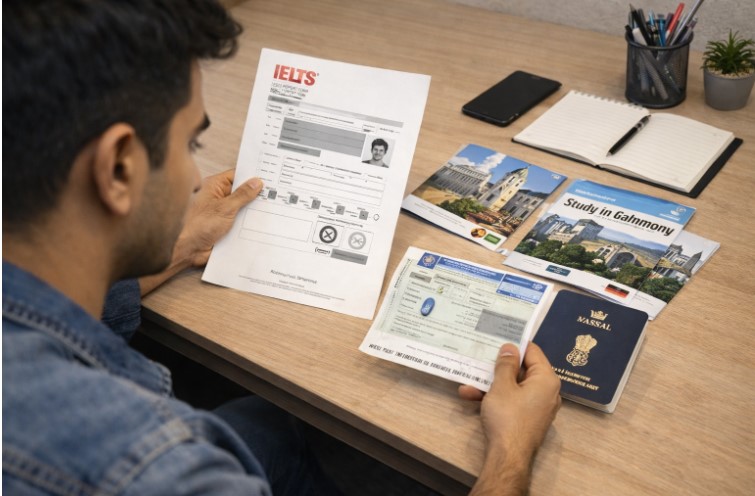
Typical English language requirements include:
IELTS Academic: 6.0 – 6.5
TOEFL iBT: 80 – 90
PTE Academic: 55 – 60
Duolingo English Test: 100+ (accepted by some universities)
Admission letters, academic transcripts, and APS certificates remain essential visa documents.
When German Language IS Required
While English programs are popular, several academic paths still require German proficiency.
German-Taught Programs
German-taught courses require students to demonstrate strong language skills. Accepted certificates include:
TestDaF (TDN 4 or higher)
DSH Level 2 or 3
Goethe-Zertifikat B2 or C1
telc C1 Hochschule
These programs are common in fields like humanities, law, and medical sciences.
Foundation Courses – Studienkolleg
Studienkolleg is a preparatory program for students whose school qualifications are not directly equivalent to German standards. Most Studienkolleg programs require at least B1 German proficiency at the time of admission. Students usually improve to B2 or C1 during the course.
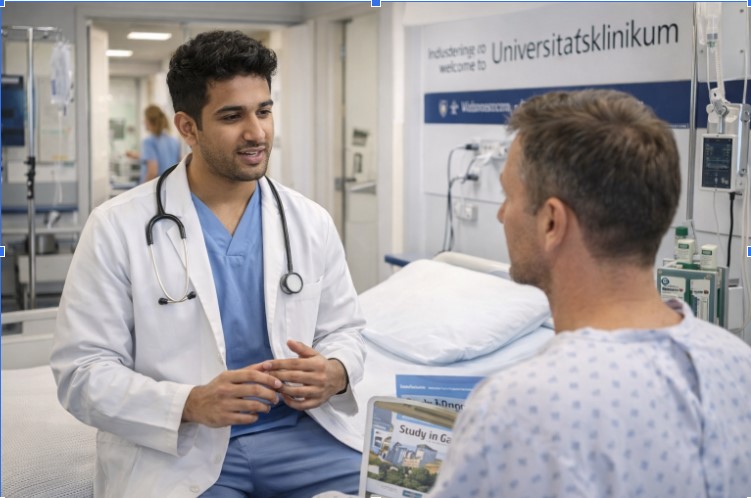
Medical and Law Programs
Medical and law degrees are predominantly German-taught because they involve patient interaction, legal documentation, and internships. Students typically require C1 or even C2 German proficiency to succeed in these programs.
Accepted Language Certificates
German Certificates
Germany recognises multiple German proficiency exams. TestDaF is widely accepted and evaluates reading, writing, listening, and speaking skills. DSH exams are conducted by German universities and accepted nationwide.
Goethe-Zertifikat B2 and C1 are globally recognised certifications, while telc C1 Hochschule is specifically designed for academic study in Germany.
English Certificates
Most universities accept IELTS Academic, TOEFL iBT, and PTE Academic. Minimum score requirements vary depending on course and university. Some universities waive English tests if students completed previous education in English, but this is not guaranteed.
University-Specific Requirements
Every German university has its own admission criteria. Universities such as TU Munich, RWTH Aachen, and University of Stuttgart publish detailed language requirements on their official websites.
Students should always check:
University program pages
DAAD course database
International office guidelines
Some universities may provide English waivers for Indian students, especially if prior education was conducted entirely in English.
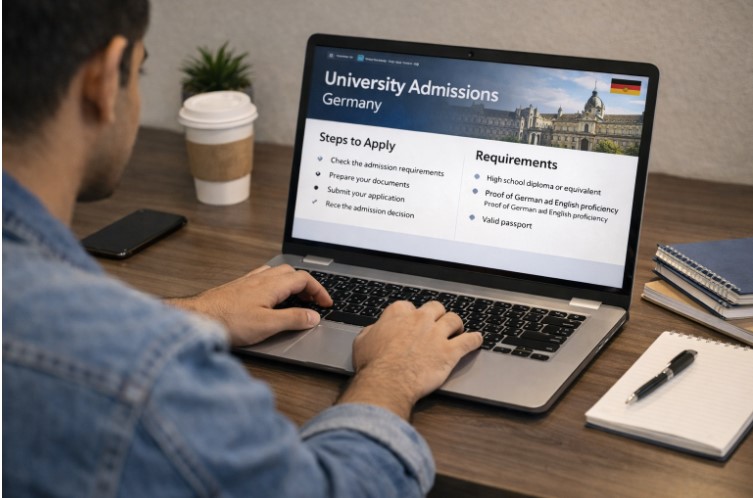
Can You Study in Germany Without German?
Yes, But Know This
Thousands of students complete their entire degree in English. However, basic German knowledge helps with daily activities, part-time jobs, and social integration. According to employment reports, students with B1 or B2 German proficiency have better job opportunities after graduation.
Learning German While Studying

Most universities offer free or low-cost German courses. Students can also learn through Volkshochschule (VHS), private institutes, or language exchange programs. Many international students begin with zero German knowledge and achieve B1 or B2 proficiency within one year.
Germany Student Visa Documents Checklist
Germany student visa applications typically require:
Valid passport
University admission letter
Language certificate (English or German)
APS certificate (mandatory for Indian students)
Blocked account financial proof
Health insurance
Academic transcripts
Statement of purpose
Resume
Passport-size photographs
Completed visa application form
Students applying for English programs submit English test scores, while German programs require German certificates.
Common Mistakes Indian Students Make
Many students assume German is compulsory for all courses. Another frequent mistake is ignoring university-specific requirements or submitting incorrect certificate levels.
Some students also forget APS certification, which is mandatory for Indian applicants. Others assume English waivers apply everywhere. Not learning basic German for daily life is another common oversight that creates challenges after arrival.
Final Thoughts
German language is not mandatory for English-taught programs in Germany, making the country highly accessible for Indian students. However, German proficiency becomes essential for German-taught programs, Studienkolleg, and professional degrees like medicine and law.
Researching university requirements through DAAD and official portals is crucial. While German may not always be compulsory, learning it significantly improves academic success, internship opportunities, and career prospects in Germany.
Yastudy supports Indian students with Germany admission guidance, visa assistance, and German language training programs designed for study abroad preparation.
FAQs
1.Is German mandatory for Germany student visa?
No, German is not mandatory if your program is taught in English.
2.Can I get Germany visa without IELTS?
Yes, if you choose a German-taught program and submit a German language certificate.
3.What is the minimum German level required?
Usually B2 or C1 for degree programs and B1 for Studienkolleg.
4.Do I need German for Master’s in Germany?
Only if the Master’s program is taught in German.
5.Can I study in Germany without German?
Yes, many English programs allow students to study completely in English.
6.Which German certificate is best?
TestDaF and Goethe certificates are widely accepted.
7.Is B1 German enough?
B1 is generally sufficient for Studienkolleg but not for most degree programs.
8.Can I learn German after reaching Germany?
Yes, universities and local institutes offer affordable German courses for international students
SOURCE OF LINKS
https://www.daad.de/en/study-and-research-in-germany/plan-your-studies/
https://www.daad.de/en/study-and-research-in-germany/universities/all-degree-programmes/
Start Your Study Abroad Journey
Join thousands of students who achieved their dreams with Yastudy.