How to Write SOP for UK University — Format, Tips & Sample
Nitisha Dashore
Recently • 8 min read

When it comes to studying abroad in the UK, a lot of things come into mind be it university shortlisting, filling out application forms, or visa processing, one of these is SOP writing. SOP stands for Statement of Purpose. SOP is a must step when it comes to applying for UK admissions.
This guide walks you through the entire process of SOP writing from how to write SOP to tips for writing good SOP. This is all you need: a one-stop solution for SOP writing.
Planning to Study Abroad?
Get personalized guidance from experienced education counselors.
What is SOP?
SOP refers to Statement of Purpose. It is an official document which you need to submit to your university explaining why you are a good fit – who you are, what you want to study and why.
SOP is not a generic statement, you cannot use the same SOP of someone else, it should define you.
A SOP, generally include these things:
· Your background (education, interests)
· Why UK?
· Why did you choose this field?
· Why did you choose this university?
· What are your skills and achievements?
· What are your future career goals?
This helps universities to decide which candidate to choose among the pool of candidates. SOP writing separates you from other candidates. Thus, a good SOP is a must to increase your chances of selection.
The Ideal SOP Writing Format for UK Universities
Now when you ask why we need to write an SOP, let’s dive into what structure should you follow and how long it should be!
How Long Should It Be?
Usually, the length of SOP varies between 500 to 1000 words. Some universities ask for 4000 characters. Check the length of SOP by visiting the university’s portal you wish to apply; to avoid making mistakes.
What Structure Should You Follow?
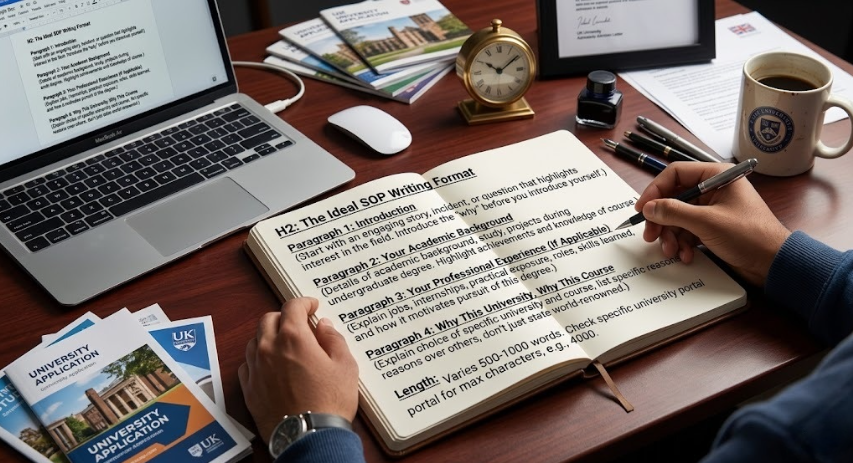
Here's the SOP writing format that works for UK applications:
Paragraph 1 Introduction: This is your first impression, so make it memorable. Do not just open with “your name” rather use an engaging story, incident, or question that strives your interest in that field. It’s like introducing your ‘why’ before you even introduce yourself.
Paragraph 2 Your Academic Background: This para should include details regarding your academic background. Talk about what you study, what projects you work on during your undergraduate, academic achievements. Show you have knowledge about your course.
Paragraph 3 Your Professional Experience (If Applicable): For how to write SOP for MBA or master's applicants with work experience, this is a golden opportunity. In this you can explain about your professional experiences like job, internship, or practical exposure. Explain what you did there, what you learned – key skills and tools, and how it motivates you to pursue this degree.
Paragraph 4 Why This University, Why This Course: This paragraph talks about why you decided to choose this particular or university. This is where most people get lazy. But you shouldn’t, don't just say "University of X is world-renowned.", list out the reasons for choosing this course or university: mention the name of any specific professors whose research excites you, particular things they offer that excites you, specific modules. Show you've done your homework.
Paragraph 5 Your Future Goals: This para talks about your future goals both long-term and short-term, UK universities love those candidates who have a clear vision. Mention your goals like what you want to do after graduation, what goals you want to achieve during your course.
Paragraph 6 Closing This para marks the end of SOP writing, wrap it confidently by summarizing your SOP, show enthusiasm.
Common Mistakes in SOP Writing (Don't Be This Person)
Here are the most common SOP writing mistakes that people do, make sure you avoid these:
Opening with a quote — Do not open it with a quote. Every admission reader has seen "As Albert Einstein said…" approximately 4,000 times.
Being too generic — If your SOP could apply to any university in the world, it's not the one you should use.
Listing your CV again — Your SOP should complement your resume, not duplicate it.
Exaggerating or lying — UK universities verify claims. Don't risk it.
Ignoring word limits — Going over the limit tells the university you can't follow instructions.
Bad grammar and spelling —Before submitting make sure you have proofread it at least 2 times to avoid any grammatical errors or spelling.
SOP Writing Examples
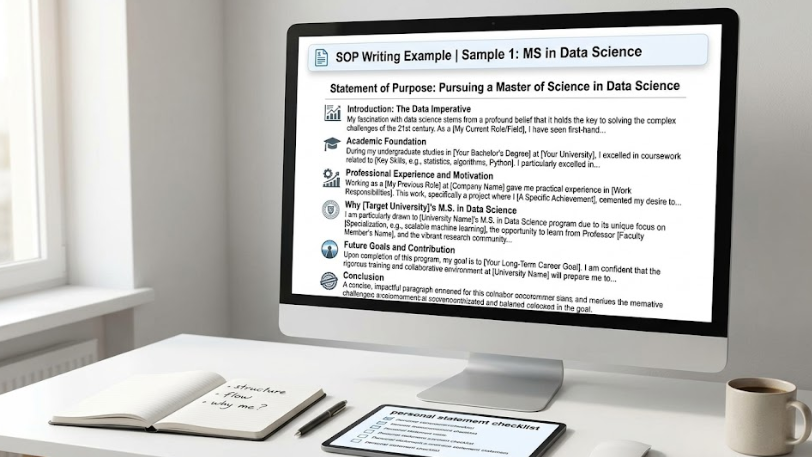
Here is an example, to make you understand what does strong opening actually means:
Bad SOP Opening: "I am writing this statement to express my interest in the MSc in Data Science at the University of Leeds. I have always been interested in data."
Good SOP Opening: "During my final year internship at a logistics firm, I watched a team of 12 analysts spend three weeks manually cleaning a dataset that a well-trained machine learning model could have processed in hours. That frustration became a turning point — it's what drives me to pursue the MSc in Data Science at the University of Leeds."
See the difference? The second one tells a story. It creates a picture. It makes the reader want to know more. That's what strong SOP writing examples look like in practice.
How to Write SOP for PhD
Every course demands a specific SOP that matches the course’s requirement.
When figuring out how to write SOP for PhD, you should focus more on:
Research background.
You must outline your area of research and why it matters.
Name faculty members from the university whose research are related to yours.
Explain where your PhD can fill in the research gap.
Demonstrate that you know what a PhD is.
A PhD SOP is not a personal statement but a research proposal. Keep it brief, relevant and tie your ambitions to the culture of the university.
For PhD applicants in the UK, you can also explore funding options and research council grants at UK Research and Innovation (UKRI).
SOP for UK Student Visa

You submit your SOP for UK student visa (technically called a Personal Statement or Cover Letter in visa terms for UK Student Visa (Tier 4) application. Here you need to explain:
Why you chose this specific course and university
Your immigration intentions (whether you plan to return home after studies or not)
Mentioning you have sufficient funds to sustain yourself in the UK.
Your connections with your home country.
Keep this document factual and to the point. The visa SOP is not a place for creative storytelling — it's a compliance document. Be honest, clear, and direct.
For official UK student visa information, visit the UK Home Office visa portal.
Should You Use SOP Writing Services?
Here's the truth about SOP writing services:
They organise your ideas, correct your grammar and make your story fit the university's requirements. They don't create a story; they make YOUR story better.
If you're in India, you might have Googled SOP writing services India, or SOP writing services in India and found many. But the thing is, most will charge you a lot, and most use a template that sounds like everyone else's SOP.
Then what should you do? Are there any SOP writing services that help you and do not charge an arm or a leg? Yes, meet Yastudy!
Why Yastudy Is the Smartest Choice for Your UK Study Abroad Journey
Yastudy is a student focused study abroad consultancy which offers consultancy to students for free. Yes, you read it right. It does not charge a single penny from students, as it earns from taking commissions from partnered universities.
How will Yastudy help you in writing SOP?
Yastudy offers end-to-end support to students not only in writing SOP but also in helping students to study abroad. They offer proper guidance; helps you write SOP that defines YOU – your purpose and your vision.
They guide you based on your goals, profile and budget making your experience personalised and charge nothing at all.
Quick Checklist Before You Submit Your SOP
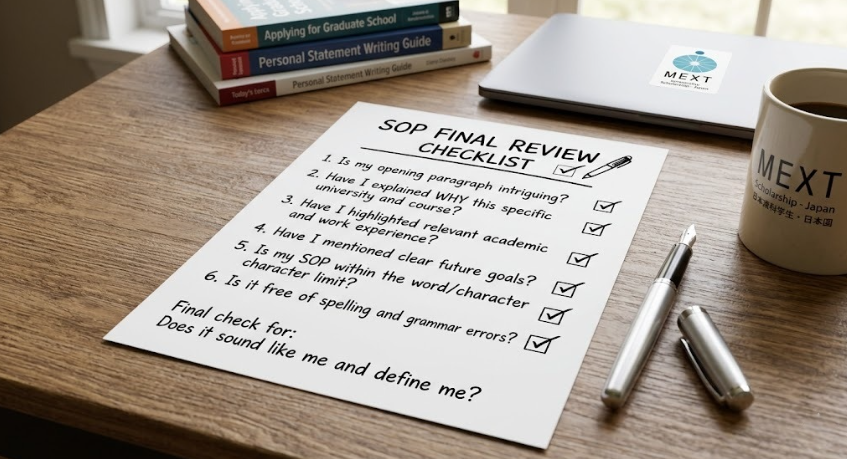
Before you hit send, check off this list:
Is my opening paragraph intriguing?
Have I explained WHY this specific university and course?
Have I highlighted relevant academic and work experience?
Have I mentioned clear future goals?
Is my SOP within the word/character limit?
Is it free of spelling and grammar errors?
Does it sound like me and define me?
If you have checked all the boxes, you're ready.
Final Words — Your SOP Is Your Voice
Admissions officers read thousands of SOPs. The ones they remember are the ones that are genuine. Be human. Be strategic. And be brave. Ask for help. How to write a good SOP isn't about impressing. It's about being authentic, being precise, and being YOURSELF - in a way that a UK university can follow and enjoy.
Take your time but make sure SOP stands out from the crowd. Use SOP writing examples to understand what universities want and write as per their requirements. Also, make sure you follow all the instructions to avoid being rejected.
And at last, if you need some help, you know where to find it: Yastudy - where advice is free, honest and always in your corner.
Start Your Study Abroad Journey
Join thousands of students who achieved their dreams with Yastudy.