Bachelor's in Germany from India — Eligibility, Process & Cost 2026
Tarun Chandel
Recently • 8 min read

Most Indian students assume Germany is only for master's degrees.
That assumption is costing thousands of Class 12 students one of the most extraordinary educational opportunities available anywhere in the world.
Planning to Study Abroad?
Get personalized guidance from experienced education counselors.
Bachelor's in Germany from India is not only possible — it is increasingly practical, affordable, and career-defining. Germany's public universities offer undergraduate education at Nearly free tuition, top-notch instructors, internationally recognized degrees, and easy access to the best job market in Europe.
However, less than 8% of Indian students are enrolled in undergraduate programs in Germany.
Why? Because most students — and their parents — simply don't know how it works.
That is entirely altered by this guide. By the time you finish reading, you will understand precisely what is needed for Indian students to get admitted to Germany for undergraduate studies, how the procedure operates step-by-step, how much it actually costs, and how to begin without having to spend a single rupee to a consultant.
Now let's get started.
Why Consider a Bachelor's in Germany as an Indian Student?
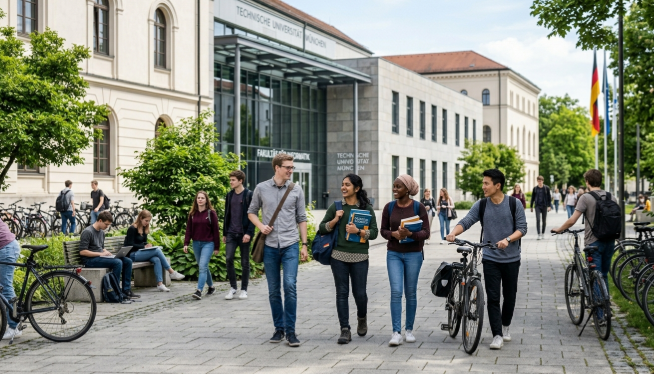
Let's start by addressing the most crucial question: why Germany at all when you may pursue an undergraduate degree in the UK or Australia, or study engineering or medical in India?
Here is the honest answer.
Near-Zero Tuition Fees
Undergraduate students from other countries, including India, are not required to pay tuition at Germany's public universities. You simply have to pay a €150–€350 semester contribution, which usually covers administrative services, a student union membership, and a public transportation pass. You will pay between €1,200 and €2,800 in total university fees during the course of a three or four-year bachelor's program. That's it.
Compare this to ₹40–80 lakh annually in the UK or Australia, or ₹15–40 lakh annually at a private engineering or management college in India.
World-Class Education and Industry Connections
Industry titans like Siemens, BMW, Bosch, SAP, Volkswagen, BASF, and hundreds of others have direct collaborations with German universities, especially technical colleges like TU Munich, RWTH Aachen, and KIT. The majority of Indian colleges just cannot match the integration of internships, research projects, and campus recruitment into the undergraduate experience.
Europe Work Rights and Long-Term Career Pathways
You can obtain an 18-month job seeker visa in Germany after earning a bachelor's degree from India. The EU Blue Card road, which leads to permanent residency, opens if you obtain job. Undergraduate education in Germany is one of the most straightforward and affordable options for Indian students who are considering a life and career in Europe rather than just a degree.
Eligibility for Bachelor's in Germany for Indian Students
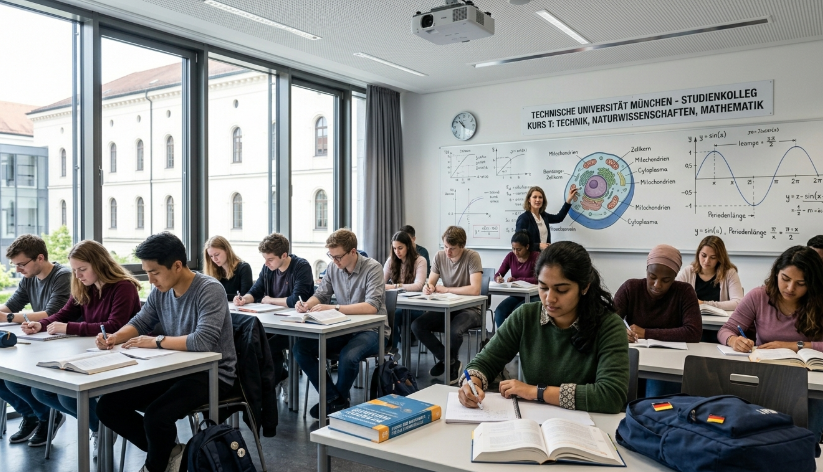
This is where the complexity begins — and where most students get confused. Germany UG admission for Indian students has specific eligibility requirements that differ from the UK, Australia, or the USA.
The Hochschulzugangsberechtigung (HZB) Problem
A Hochschulzugangsberechtigung, or "higher education entry qualification," is a prerequisite for admission to German institutions. Indian students only finish 12 years of schooling (Class 10 + Class 12), compared to 13 years in the German educational system before attending university.
A typical Indian Class 12 certificate is typically not directly comparable to the German Abitur (school leaving certificate) needed for undergraduate admission due to this one-year difference.
So what are your options?
Option 1 — Studienkolleg (Foundation Year)
Completing a Studienkolleg, a one-year foundation program offered by German institutions especially for international students whose academic credentials are not directly recognized, is the most popular and well-established path for Bachelor's degree applicants in Germany and India.
The Studienkolleg:
Is a one-year, full-time program taught in German
Covers subjects relevant to your intended field of study
Ends with a final examination called the Feststellungsprüfung (FSP)
Upon passing the FSP, you receive full university admission eligibility
The majority of public universities in Germany as well as a few private colleges offer Studienkollegs. At public Studienkollegs, the program is either free or inexpensive. A minimum Class 12 score and at least B1–B2 competency in German are prerequisites for admission to a Studienkolleg.
Option 2 — Direct Admission for High Scorers
Indian students who have completed one year of undergraduate education in India and have extraordinarily excellent Class 12 grades (usually 85% or above in relevant subjects) are eligible for direct admission to certain German states and institutions.
This means that some German institutions will accept you straight into their undergraduate programs if you have successfully completed your first year of a B.Tech, B.Sc., or B.Com. program in India.
This path is very university-specific and less popular. Examine the requirements for admission to each university.
Option 3 — Dual Enrollment or Transfer
A lesser percentage of Indian students move to a German institution in their second or third year after completing two years of an Indian undergraduate degree. Although thorough credit transfer agreements with the German institution are necessary, this is feasible.
APS Certificate — Mandatory for All Routes
Whichever path you choose, an APS (Akademische Prüfstelle) certificate is required for Indian students to be admitted to Germany's undergraduate program. Before any German university will accept your application, this credential verification procedure, which is exclusive to Indian students, verifies your academic records.
The APS process involves:
Submitting original mark sheets and certificates
Attending an in-person interview in New Delhi, Mumbai, or Chennai
Receiving your APS certificate within 4–8 weeks
Start this process at least 4–5 months before your intended application deadline.
German Language Requirement — The Honest Truth
Here is the part most blogs about Bachelor's in Germany India gloss over: the vast majority of undergraduate programs in Germany are taught entirely in German.
Undergraduate education in Germany is primarily taught in German, in contrast to the hundreds of English-taught programs available at the master's level. This is a preparation work, not a barrier. Additionally, studying German is perhaps one of the best investments you can make if you're a student who is serious about pursuing a job in Europe.
What Level of German Do You Need?
For Studienkolleg admission: B1–B2 level (intermediate) For direct university admission: C1 level (advanced) For German-taught programs: C1 level minimum, with TestDaF (minimum TDN 4) or DSH (minimum DSH-2)
How Long Does It Take to Learn German?
It usually takes 12 to 18 months of diligent study for a total beginner to reach the B2 level. C1 requires an additional six to twelve months. Thus, by the time they finish Class 12, students who start German in Class 11 will be in a great position to apply for a Studienkolleg.
Step-by-Step Process — Germany UG Admission for Indian Students
Here is the complete, sequential process for Germany UG admission for Indian students in 2026:
Step 1 — Start Learning German (Class 11 or Early Class 12)
Enroll in a structured German language course. Target B2 by the time you complete Class 12. If you are already past Class 12, begin immediately — this step cannot be skipped.
Step 2 — Research Universities and Programs
Use the DAAD database and Hochschulkompass to identify programs aligned with your interests.
Step 3 — Apply for APS Certificate
Submit documents and schedule your APS interview. Allow 4–8 weeks for the certificate.
Step 4 — Apply to Studienkolleg or Directly to University
Submit applications through uni-assist (the centralised application portal for most German universities) or directly through university portals.
Step 5 — Receive Admission Letter and Open Blocked Account
Once admitted, open a German blocked account (Sperrkonto) with a minimum of €11,208 to demonstrate financial resources for your visa.
Step 6 — Apply for Germany Student Visa
Book your appointment at the German consulate in India (New Delhi, Mumbai, Chennai, or Kolkata). Compile all required documents and attend the interview.
Step 7 — Arrive, Register, and Begin
Complete university enrollment, register at the local Einwohnermeldeamt (residents' registration office), set up German health insurance, and open a local bank account.
Cost of Bachelor's in Germany from India — Full Realistic Breakdown
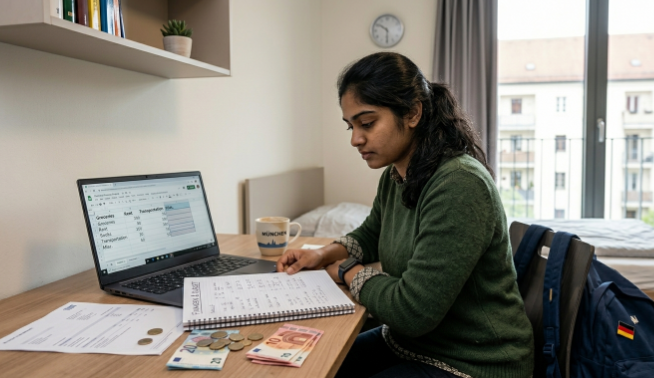
Bachelor's in Germany from India is genuinely affordable — but let's be specific so there are no surprises.
Expense | Annual Cost (Approx.) |
Tuition fees | ₹0(public universities) |
Semester contribution | ₹27,000 – ₹63,000 / year |
Rent | ₹3,78,000 – ₹6,48,000 / year |
Food and groceries | ₹1,62,000 – ₹2,70,000 / year |
Health insurance | ₹1,18,800 – ₹1,29,600 / year |
Books and materials | ₹27,000 – ₹45,000 / year |
Personal expenses | ₹54,000 – ₹1,08,000 / year |
Total Annual Cost | ₹7,65,000 – ₹12,15,000 / year |
In Indian rupees, this translates to approximately ₹7.5–12 lakh per year — significantly lower than equivalent-quality private education in India or undergraduate study in the UK, Australia, or Canada.
Part-time work (up to 120 full days per year for international students) can cover a meaningful portion of living costs, with student jobs typically paying €10–€15 per hour.
Best Universities for Bachelor's in Germany for Indian Students
Here are the top institutions offering strong Bachelor's in Germany India options:
TU Munich — Engineering, Computer Science, Natural Sciences (tum.de) RWTH Aachen — Mechanical, Civil, Electrical Engineering (rwth-aachen.de) KIT Karlsruhe — Physics, Computer Science, Engineering (kit.edu) University of Stuttgart — Aerospace, Architecture, Mechanical Engineering (uni-stuttgart.de) LMU Munich — Sciences, Economics, Humanities (lmu.de) TU Berlin — Engineering, Urban Planning, Computer Science (tu-berlin.de) University of Hamburg — Sciences, Economics, Law (uni-hamburg.de) University of Bonn — Mathematics, Agricultural Sciences, Economics (uni-bonn.de)
Each of these institutions is a public university with no tuition fees for international students.
YaStudy — Your Free Guide to Bachelor's in Germany
For first-time candidates, the procedure of seeking a bachelor's degree in Germany from India is intricate, linguistically demanding, and truly challenging. Most students either pay consultants ₹50,000 to ₹2,000,000 for advice they shouldn't have to pay for, or they navigate it alone and make preventable mistakes.
YaStudy is Noida's most trusted study abroad consultancy, and here is what makes them completely different from every other consultant you will encounter:
They charge students nothing. Zero. Not a single rupee.
How YaStudy's Free Model Works
Universities, not students, provide funding for YaStudy. YaStudy is paid by universities to match eligible Indian candidates with their programs. Because there are no hidden commissions, no pressure to select a specific university, and no fees at any point in the process, every piece of advise YaStudy offers is genuinely in your best interest.
What you receive from YaStudy at zero cost:
Eligibility assessment — Studienkolleg vs direct admission route for your profile
University shortlisting — matched to your Class 12 results, language level, and career goals
German language guidance — which courses, which timeline, which level to target
APS certificate support — document preparation and interview guidance
SOP and application assistance — tailored to Germany UG admission Indian students standards
Blocked account and visa documentation — complete checklist reviewed before submission
Scholarship identification — DAAD and other funding sources matched to your profile
Pre-departure orientation — Studienkolleg life, accommodation, registration explained
Hundreds of Indian students have used YaStudy's free guidance to successfully navigate Germany UG admission for Indian students — from Class 12 results to landing in Germany with full documentation in hand.
Scholarships for Indian Students Pursuing Bachelor's in Germany
Even with no tuition fees, scholarships can cover living costs and make your Germany journey even more financially comfortable:
DAAD Scholarships — available for undergraduate students in select programs
Deutschland Stipendium — merit-based €300/month scholarship co-funded by private companies
State-level scholarships — several German states offer additional support for international students in STEM fields
University-specific grants — many universities have international student support funds; check each institution's financial aid page directly
Conclusion — The Bachelor's Degree That Could Change Everything
It is not the simplest route to pursue a bachelor's degree in Germany from India; it necessitates learning German, obtaining an APS certificate, and patiently navigating a system that is unfamiliar to the majority of Indian students and their families. However, in 2026, it is among the most fulfilling options for Indian students.
World-class education. Near-zero tuition. European career access. A degree respected globally. And a process that — with the right guidance — is entirely navigable.
The guidance, as you now know, is available completely free.
Start Your Study Abroad Journey
Join thousands of students who achieved their dreams with Yastudy.